Ukraine’s entry rules in 2026 are straightforward once you separate three things: your citizenship, your purpose of travel, and how long you plan to stay. Many travelers can enter visa-free for short trips (up to 90 days in any 180-day period), while others must apply in advance for a short-stay visa (type C) or a long-stay visa (type D) tied to work, study, family reunification, volunteering, or residence.
This guide walks through the decision tree, the document packet, invitation letters, typical fees and timelines, and what happens after approval—so you can plan your trip and avoid the most common reasons for refusal or border delays.
Who needs a visa in 2026—and which type fits tourism, private visits, and business
Step 1: Check if you are visa-free for short stays. Citizens of many countries (including most EU states, the UK, the US, Canada, Japan, South Korea, and Australia) generally enter Ukraine without a visa for short visits. The usual rule is up to 90 days within a 180-day period. This covers:
- Tourism (city breaks, cultural trips, Carpathians, Black Sea region where accessible)
- Private visits (friends/family)
- Short business trips (meetings, conferences, negotiations—without local employment)
- Cultural/sporting events
Example: Bulgarian and Turkish citizens are visa-free for short stays in 2026 under the 90/180 rule for tourism, private visits, and short business travel. If they (or any other visa-free traveler) plan to stay longer than 90 days, they must switch to a long-stay pathway (type D + residence permit).
Step 2: If you are not visa-free, choose the correct visa type.
- Type C (short-stay visa): for stays typically up to 90 days within 180 days, for tourism, private visits, business, and other short purposes.
- Type D (long-stay visa): for stays over 90 days and for purposes that lead to a temporary or permanent residence permit in Ukraine.
Type D is usually relevant for:
- Employment (invitation/permit from a Ukrainian employer)
- Study (admission/contract with an educational institution)
- Family reunification (with a Ukrainian citizen or a foreigner holding a residence permit)
- Business/Investment (where your status in Ukraine requires residence documentation)
- Volunteering or religious activities (official invitation from the hosting organization)
- Diplomatic/international organization staff
Practical advice: If your plan includes any activity that looks like local employment (paid work, long-term contract, relocation), don’t try to “fit it” into a tourist entry. Border officers and consulates look for consistency between your purpose, documents, and itinerary.
Application packet checklist: photos, insurance, itinerary, accommodation, financial proof
Exact requirements can vary by consulate and by your visa category, but most Ukraine visa applications in 2026 rely on the same core packet. Prepare documents in a clean, logical order and make sure names and dates match across every page.
Core documents (commonly required)
- Passport: valid beyond your intended stay, with free pages for the visa sticker (if applicable).
- Visa application form: completed accurately; double-check spelling of names, passport number, and travel dates.
- Photo(s): passport-style, recent, meeting the consulate’s size/background rules.
- Travel medical insurance: covering the full period of stay and Ukraine territory. Many travelers use a policy from when they need a document that consulates and border control can easily verify.
- Proof of purpose: tourism plan, private visit details, business invitation, event registration, etc.
- Accommodation proof: hotel bookings, rental confirmation, or host address details (if staying privately).
- Itinerary / transport plan: approximate route, dates, and how you enter/exit (especially important for first-time visitors).
- Financial proof: bank statements, salary slips, sponsorship letter (if someone funds your trip), or other evidence you can support yourself.
Common “small mistakes” that cause delays
- Insurance dates don’t match the itinerary (e.g., policy starts after arrival).
- Bookings look temporary (cancelable reservations made minutes before applying, with no coherent route).
- Inconsistent purpose: application says “tourism” but documents show business meetings, volunteering, or long stays.
- Weak financial proof: statements with no clear balance history or unexplained large last-minute deposits.
Fees and processing times (what to expect in 2026)
Visa fees and service charges depend on your nationality, visa type, and where you apply (embassy/consulate vs. visa center). In practice, plan for:
- Consular fee (varies by visa type and reciprocity rules)
- Service fee if you apply through a visa center
- Optional expedited processing fee where available
Typical timelines: short-stay visas are often processed in roughly 10–15 calendar days in standard mode, with faster options sometimes available. Type D cases can take longer because the supporting documents (work/study/family basis) require closer review. Apply early—especially in peak travel months and around public holidays.
Practical advice: Book refundable accommodation and transport until the visa is issued. Consulates rarely reimburse fees if you change plans or receive a refusal.
Invitation letters: when they’re required and how to format them
Invitation letters are not universally required for every traveler. They are most relevant when your trip purpose is a private visit, business, volunteering, or a type D basis (work, study, family reunification). For pure tourism, many applicants rely on hotel bookings and a clear itinerary instead of an invitation—if their consulate accepts that approach.
When an invitation letter is usually needed
- Private visit: staying with friends/relatives or visiting a host rather than hotels.
- Business: meetings with a Ukrainian company, conferences, negotiations.
- Volunteering / religious activities: invitation from the hosting organization describing the program and responsibility.
- Type D: the “invitation” is often a formal document set (employment authorization, university admission, family documents, etc.).
Invitation letter format (practical template elements)
A strong invitation letter is short, specific, and verifiable. Include:
- Host details: full name (or company name), address in Ukraine, phone/email, ID/passport details for a private host, registration details for a company/organization.
- Invitee details: full name, date of birth, citizenship, passport number, address.
- Purpose of visit: tourism/private visit/business meetings/volunteering; describe planned activities in 2–4 lines.
- Dates and duration: intended entry date, exit date, total days.
- Accommodation statement: where the visitor will stay (host address or hotel list).
- Financial responsibility: who pays for what (visitor self-funded vs. host covers accommodation/expenses).
- Signature and date: plus company stamp if applicable.
Practical advice: Don’t exaggerate. If the host cannot realistically cover “all expenses,” don’t claim they will. Consulates may request proof of the host’s capacity or additional supporting documents.
Step-by-step: how to apply (consulate route) and what to bring to your appointment
- Confirm your entry pathway: visa-free (90/180), type C, or type D.
- Choose where to apply: Ukrainian embassy/consulate in your country of residence (some applicants use authorized visa centers).
- Complete the application form and print it if required.
- Gather the packet: passport, photos, insurance, itinerary, accommodation, financial proof, invitation/supporting documents.
- Book an appointment and arrive early with originals and copies.
- Pay fees according to the consulate’s accepted methods.
- Track and respond: if the consulate requests additional documents, reply quickly and consistently.
- Collect your passport and verify the visa sticker (name spelling, dates, number of entries).
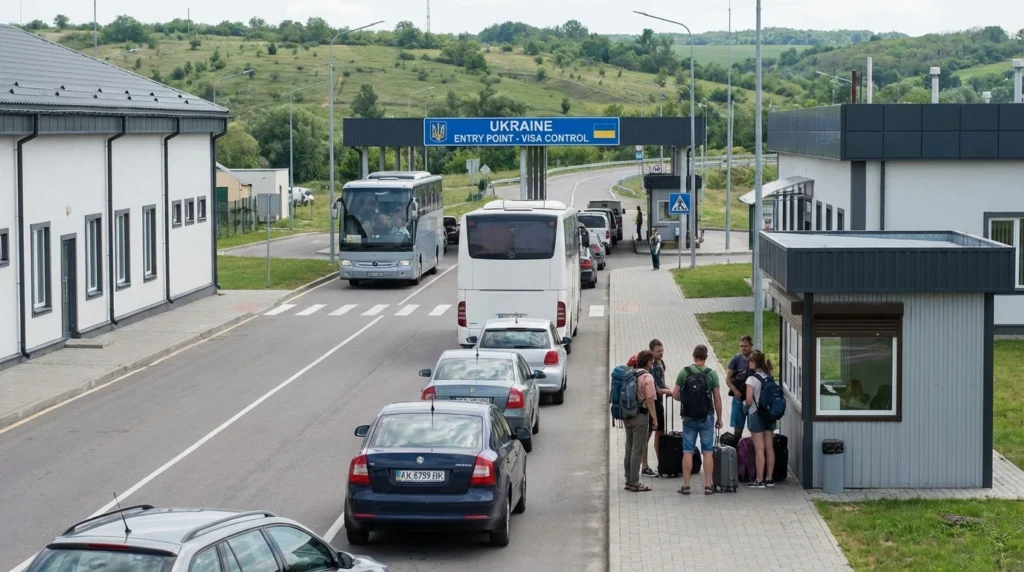
Practical advice: Print a “border folder” even if you have a visa: insurance, accommodation, return/onward plan, and a short itinerary. Border officers may ask clarifying questions, especially if your trip is long or your route is complex.
After approval: entry window, length of stay, and extension realities
A visa approval is not the same as permission to stay indefinitely. What matters after approval is the combination of validity dates, number of entries, and allowed length of stay.
Understand the dates on your visa
- “Valid from / until”: the window when you may enter Ukraine.
- Number of entries: single, double, or multiple.
- Duration of stay: total days you can spend in Ukraine during the visa validity (often up to 90 days for type C).
The 90/180 rule for visa-free travelers
If you enter visa-free, you still must respect 90 days within any rolling 180-day period. Overstays can lead to fines, entry bans, and future visa problems. Keep a simple day-count log, especially if you make short trips in and out.
Extensions: what’s realistic in 2026
Short-stay extensions are not something to rely on for convenience. Extensions are typically limited, document-heavy, and granted for specific reasons rather than “I want to travel longer.” If you know you need more than 90 days, plan a type D + residence permit route from the start.
Type D next steps: residence permit timing
Type D is usually a bridge to legal residence. After arrival, you generally must apply for the appropriate temporary residence permit within the required timeframe and maintain valid insurance coverage throughout. Many applicants also keep a second copy of their insurance policy and proof of address for local registration steps (a policy from is commonly used for this paperwork because it’s formatted for official checks).
Practical advice: Don’t book non-refundable long-term housing until you confirm the residence-permit procedure for your category (work/study/family). The document list and deadlines can be strict, and missing one paper can reset the timeline.