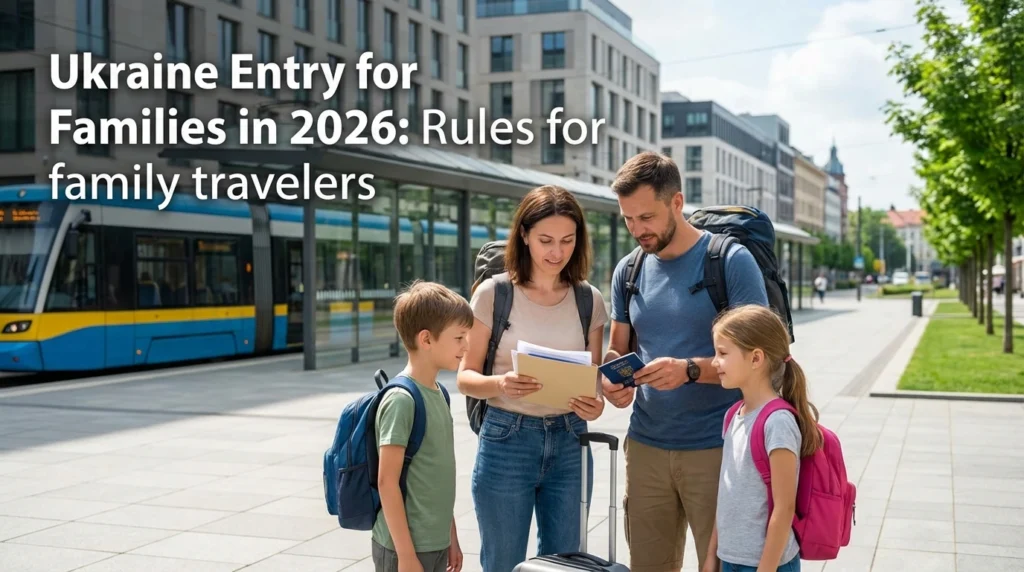
Family travel to Ukraine in 2026 is absolutely doable with the right paperwork. Border checks are document-focused: officers want to confirm identity, the child’s relationship to accompanying adults, and legal permission to travel. The best strategy is to carry a small, well-organized “border folder” for each child—originals where possible, plus clear copies and a few certified translations when names or languages don’t match.
This guide covers the documents most often requested at land checkpoints and other entry points, how to prepare notarized consents abroad, and what to do in solo-parent or guardianship situations. Requirements can vary by citizenship and individual circumstances, so treat this as a practical preparation checklist and confirm any special cases with your airline/bus carrier and the Ukrainian consulate before departure.
1) Child travel documents: passports, birth certificates, and smart translations
Passport and identity basics
- Each child should have their own valid passport (biometric or standard, depending on your country). Check validity well beyond your planned exit date.
- If your child is listed in a parent’s passport (still possible in a few countries), expect slower processing and a higher chance of extra questions. A separate passport is the most border-friendly option.
- Carry two paper copies of the child’s passport bio page and the accompanying adult’s passport bio page. Keep originals accessible, not buried in luggage.
Birth certificate: the relationship document
- Bring the child’s original birth certificate (or a certified copy, if your country issues those). This is the fastest way to prove parentage at the border.
- If the child and parent have different surnames, also bring the document that explains the name change (marriage certificate, divorce decree, legal name change certificate).
- If the child is traveling with a grandparent or another adult, the birth certificate helps show the chain of relationship (for example, child → parent → grandparent).
When translations help (even if not always mandatory)
Ukraine’s border officers can work with documents in major languages, but families save time when paperwork is easy to read. Consider a certified translation into Ukrainian for:
- Birth certificates not in Latin script or not in a widely understood language
- Court orders (custody, guardianship, adoption)
- Notarized consents issued abroad
Tip: If you translate, keep the translation attached to a copy of the original and place both in a transparent sleeve. Border staff appreciate clean, consistent packets.
Entry rules still depend on citizenship
Many nationalities (including most EU countries, the UK, the US, Canada, Japan, South Korea, and Australia) can enter Ukraine visa-free for up to 90 days within a 180-day period. Children follow the same visa/visa-free rules as adults based on their citizenship. If your child needs a visa, apply in advance and carry printed confirmation and supporting documents.
2) When notarized consent is needed—and how to prepare it abroad
The most common family travel delay happens when a child enters with only one parent or with an adult who is not a parent. In these cases, border officers may ask for proof that the non-accompanying parent (or legal guardian) agrees to the trip.
Situations where consent is commonly requested
- Child traveling with one parent (the other parent not present)
- Child traveling with a relative (grandparent, aunt/uncle) or family friend
- Child traveling in a group (sports team, school trip) with a group leader
Even when a carrier or a departure country doesn’t require consent, Ukraine’s border control may still ask for it to confirm lawful travel. If your family situation is complex, it’s safer to have consent ready than to argue at the checkpoint.
What a “border-friendly” consent should include
Ask the notary (or consular officer) to include these details clearly:
- Child’s full name, date of birth, passport number (if available)
- Accompanying adult’s full name, passport number, relationship to child
- Non-accompanying parent/guardian’s full name and passport/ID details
- Destination: “Ukraine” (and optionally specific cities)
- Travel dates: exact dates or a defined window
- Purpose: tourism/family visit/medical/etc.
- Permission for multiple entries if you may exit and re-enter
- Notary seal/signature and date
How to notarize abroad: two practical routes
- Ukrainian consulate route: Many families prefer consular notarization because it’s immediately recognizable to Ukrainian authorities.
- Local notary route: Notarize in your country of residence, then prepare any required legalization (apostille or consular legalization, depending on the issuing country) and a certified Ukrainian translation if needed.
Timing tip: Start this process early. Legalization and translation can take longer than families expect, especially if you need courier delivery or multiple originals.
How many copies to carry
Carry one original consent plus two paper copies. Keep a scanned PDF in a secure cloud folder and on your phone (offline access enabled). Border officers typically want to see the original, while carriers may keep a copy.
3) Solo parent travel and guardianship scenarios (what works at the border)
Solo-parent and guardianship cases are normal at Ukraine’s border, but they require clear documentation. The goal is to show (1) who has legal authority over the child and (2) why the child is traveling with the accompanying adult.
Solo parent: best practice packet
- Child passport
- Original birth certificate + translation if helpful
- Notarized consent from the other parent (recommended)
- Any name-change documents if surnames differ
- Proof of itinerary and accommodation (helpful if questioned)
When consent may not be possible
Sometimes a second parent cannot provide consent due to legal or practical reasons. In those cases, bring the strongest available legal proof, such as:
- Sole custody court order stating the traveling parent can make travel decisions
- Death certificate of the other parent (if applicable)
- Termination of parental rights decision, if applicable
If you have a court order, carry the original (or certified copy), plus a certified Ukrainian translation. Border staff need to understand the operative wording quickly—especially the parts about custody and travel permission.
Guardians, adoptive parents, and foster situations
- Guardianship: Bring the guardianship appointment document and any ID cards or certificates issued by the authority.
- Adoption: Bring the adoption decree/certificate and updated birth certificate (if reissued).
- Foster care: Bring the placement authorization and a letter from the responsible authority allowing international travel, if available.
Group travel (schools, sports): Prepare a list of minors with passport details, the responsible adult’s details, and parental consents for each child. Keep documents sorted per child—mixed stacks slow everything down.
Border organization that prevents delays
- Create a separate folder per child (passport copy, birth certificate copy, consent copy, insurance info).
- Use the same name format across documents (watch middle names, diacritics, and hyphenations).
- If traveling by bus, keep documents on your person. Luggage access during inspection can be limited.
4) Health insurance and emergency contacts for minors
In 2026, families are expected to be self-sufficient in planning: medical coverage, emergency contacts, and a clear plan for care if something happens. Even when insurance isn’t formally checked at every crossing, it’s a practical necessity—especially with children.
What to look for in travel medical insurance for children
- Emergency medical treatment and hospitalization coverage in Ukraine
- Medical evacuation options if needed
- Coverage for pre-existing conditions (if relevant) or a clear exclusion list you understand
- 24/7 assistance hotline with English support
- Clear instructions on how to file a claim and what documents to keep
Many families arrange a policy online before departure; if you want a Ukraine-focused option, is commonly used by travelers who prefer a straightforward purchase and printable policy for their border folder.
Emergency contacts card (carry it, don’t rely on phones)
Prepare a small printed card for each child (in English and, if possible, Ukrainian) with:
- Child’s full name and date of birth
- Parents’/guardians’ names and phone numbers (include country codes)
- Accommodation address in Ukraine
- Insurance policy number and assistance hotline
- Allergies, chronic conditions, and current medications
Medication and medical documents
- Carry essential medications in original packaging in your hand luggage.
- Bring a doctor’s letter for prescription medicines, especially controlled substances or injectables.
- Pack a small kit for long border waits: water, snacks, wet wipes, and any child-specific items.
Practical arrival planning for families
- Choose a realistic route: Many families enter by land from neighboring countries. Build buffer time for queues at checkpoints.
- Keep proof of onward plans: return tickets, hotel bookings, or an invitation letter if staying with friends/family.
- Save key addresses offline: hotel, nearest clinic, and your embassy/consulate contact.
A well-prepared family usually passes quickly: clear passports, clear relationship documents, and clear permission for the child’s travel. If you’re unsure about a specific scenario (divorce, custody dispute, guardianship), treat it like a legal file—bring the document that answers the officer’s question in one page.
Quick border checklist for families (printable)
- Child passport (original) + 2 copies
- Birth certificate (original/certified copy) + copy
- Name-change documents if surnames differ
- Notarized consent (original) + 2 copies (as applicable)
- Court orders/guardianship/adoption documents + translations
- Insurance policy + assistance hotline
- Emergency contact card for each child
- Medication in original packaging + doctor’s letter