Odesa’s seafront is the postcard: Prymorskyi Boulevard, the port views, the winter-bright city center around Deribasivska and Passage. But the city’s real flavor lives a few blocks inland—behind gates, under laundry lines, at market counters, and in small kitchens where menus read like family arguments settled over broth and bread.
This 2026 itinerary is built for travelers who want Odesa’s everyday culture without being careless. It focuses on courtyards and neighborhoods, market etiquette, a practical tasting list with ordering phrases, and seasonal planning that respects air-raid alerts and curfew rules. (Curfew schedules can change; in winter Odesa commonly runs a midnight–05:00 curfew, so plan evenings to end early.)
Neighborhoods and courtyards: how to explore respectfully and safely
Odesa’s courtyards are not “attractions” in the museum sense. They’re semi-private living spaces: kids’ bikes, cats, neighbors talking, someone repairing a chair. The best way to see them is to treat them like you’re passing through a friend’s building—quietly, briefly, and with permission when needed.
Where to wander (and what you’ll actually see)
- City center behind Deribasivska / Hretska (Grecheska) Square: arched passageways, old stairwells, inner yards with vines and balconies. Great for a daytime loop after coffee.
- Moldavanka edges: a working-class area with strong local identity. You’ll find small bakeries, casual canteens, and a more “lived” Odesa than the polished center. Go in daylight and keep your route simple.
- Near Pryvoz market: busy streets, quick snacks, and courtyard glimpses between shops. It’s ideal for combining food stops with short architectural detours.
- French Boulevard / near the university zones: calmer streets, more greenery, and a slower pace—good for a reset after markets.
Courtyard etiquette: the rules locals expect
- Don’t enter locked gates or “tailgate” residents. If a gate is closed, it’s closed for a reason.
- Ask before photographing people, balconies, or windows at close range. A simple question goes far: “Mozhna zrobyty foto?” (May I take a photo?)
- Keep voices low and don’t linger. A courtyard is not a cafe terrace.
- Respect signs and building staff. If a concierge or resident says no, say thanks and move on.
Safety basics for 2026 street exploring
- Plan for alerts. Download a reliable air-raid alert app, keep your phone charged, and note nearby shelters (your hotel can point out the closest option).
- Choose daylight for deep wandering. Even in safe-feeling areas, daylight reduces risk and makes navigation easier.
- Use main streets as “spines.” Dip into side lanes and courtyards, then return to a known artery.
- Keep your accommodation within easy reach. Curfew affects transport and late movement; pick a hotel/apartment that lets you walk back without stress.
Market culture: what to try, how to bargain, and what to avoid buying
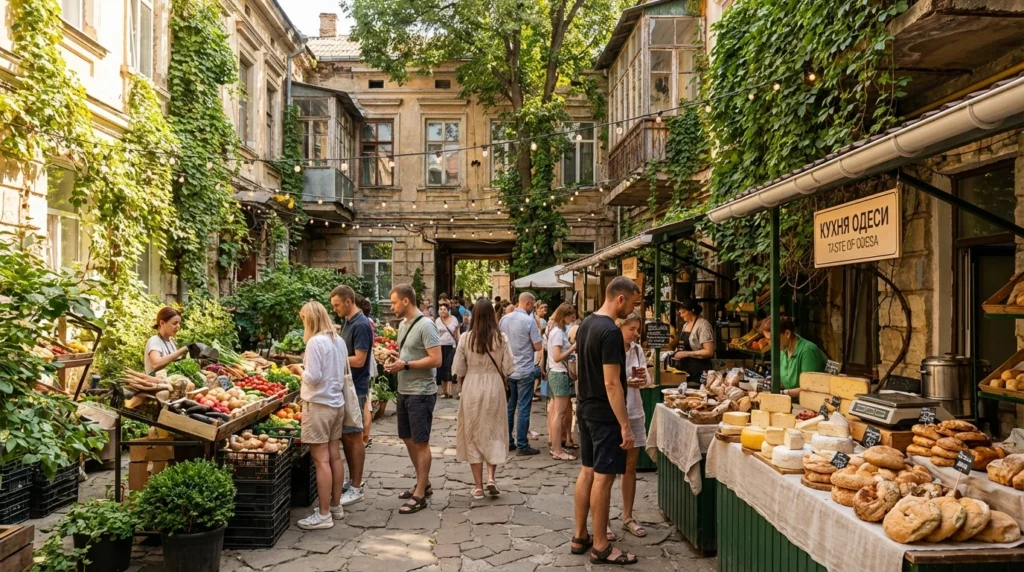
Markets are where Odesa stops performing and starts living. Pryvoz is the headline, but smaller neighborhood markets can be just as rewarding—often with less crowding and more time for a chat.
What to try (low-risk, high-reward)
- Seasonal fruit: cherries and apricots in early summer; peaches and melons later; grapes in early autumn. Ask what’s sweetest today.
- Tomatoes and cucumbers: in warm months, Odesa tomatoes are the entire point of lunch. Buy a few, add brynza, bread, and you’re set.
- Brined cheeses: brynza and similar salty cheeses are common. Ask for a small piece first.
- Pickles and fermented salads: great for a picnic, but buy from clean, high-turnover stalls.
- Smoked fish (from reputable vendors): delicious, but choose sellers with proper refrigeration and steady customer flow.
How to bargain without being rude
Bargaining exists, but it’s not a sport. It’s more like a small conversation.
- Start by buying something small. Once you’re a customer, asking for a better price feels natural.
- Use friendly, simple phrases:
- “Skilky koshtuie?” (How much is it?)
- “A yakshcho ya vізьmu dva, bude znyzhka?” (If I take two, is there a discount?)
- “Davaite troshky deshevshe.” (Let’s make it a bit cheaper.)
- Accept “no” gracefully. If the price is firm, either pay it or move on—no drama.
What to avoid buying (or buy only with caution)
- Homemade alcohol of unclear origin. It can be unsafe and can create legal trouble.
- Unlabeled canned goods or vacuum-packed meats without clear storage conditions. Stick to reputable shops for these.
- Fish and dairy sitting unrefrigerated. If it smells “strong” in a bad way, trust your instincts.
- Wild mushrooms unless you’re with a knowledgeable local. Not worth the risk.
Market logistics: cash, bags, and timing
- Bring small cash. Many stalls prefer cash; small bills speed things up.
- Carry a tote bag. You’ll end up buying more than planned.
- Go early. Best selection is in the morning; afternoons can be picked over and busier.
Signature dishes and drinks: a practical tasting list with ordering phrases
Odesa food is Black Sea, Jewish, Ukrainian, and Moldovan influences arguing on the same plate—usually with bread involved. This list is designed for travelers who want a clear plan: what to order, where it tends to appear, and how to say it.
A food-first itinerary (1–2 days)
- Breakfast: syrnyky (cottage-cheese pancakes) or a simple omelet; coffee and a pastry.
- Late morning: Pryvoz snack run—fruit, cheese, bread, something pickled.
- Lunch: borshch or solyanka; a fish dish if available.
- Afternoon: a courtyard walk + tea/coffee stop.
- Early dinner: vareniky or forshmak + salad; finish before evening curfew planning becomes tight.
What to order (and what it is)
- Forshmak (форшмак): a savory minced herring spread, often served with bread. Salty, rich, very Odesa.
- Black Sea fish (seasonal): look for local catch prepared simply—fried, grilled, or marinated.
- Varenyky (вареники): dumplings with potato, cabbage, or cherries. Ask for sour cream: “zi smetanoyu”.
- Borshch (борщ): beet soup; often served with sour cream and garlic pampushky (small buns).
- Holubtsi (голубці): cabbage rolls, comforting in colder months.
- Deruny (деруни): potato pancakes—great in winter, usually with sour cream.
- Salads with seasonal tomatoes: in summer, keep it simple: tomatoes, cucumbers, herbs, sunflower oil.
- Compote / uzvar: non-alcoholic fruit drink; easy with meals.
Ordering phrases that actually help
Ukrainian is widely understood in service settings; Russian is also common in Odesa, but starting in Ukrainian is polite.
- “Dobryi den! Mozhna menu, bud laska?” — Hello! May I have the menu, please?
- “Ya khochu osʹ tse.” — I want this.
- “Bez…” — Without… (e.g., “bez tsybuli” — without onion)
- “Ne duzhe hostre.” — Not very spicy.
- “Rakhunok, bud laska.” — The bill, please.
- “Tse mistytʹ horikhy / molochne?” — Does this contain nuts / dairy?
Food safety and comfort tips
- Start with cooked foods if your stomach is sensitive. Save raw salads and street snacks for day two.
- Ask about fish bones. Some local fish is bony; take it slow.
- Carry basic medication. For travel in Ukraine, solid medical coverage matters; many visitors arrange a policy through before arrival.
Seasonal planning: weather, crowds, and curfew-aware evening options
Odesa changes dramatically by season. Your best “beyond the seafront” trip depends on temperature, daylight, and how you structure evenings around alerts and curfew.
Winter (including Christmas season): calm streets, early plans
- Weather: milder than many Ukrainian cities, but windy near the sea. Bring layers and a windproof outer shell.
- Atmosphere: festive center decorations around Deribasivska, Passage, and nearby squares are best enjoyed in daylight and early evening.
- Strategy: do courtyards and architecture mid-day; schedule museums/exhibitions in the afternoon; book an early dinner.
- Curfew-aware evening: choose a restaurant close to your accommodation and finish the bill with buffer time for the walk back.
Spring: the sweet spot for walking and markets
- Weather: variable—sunny one day, sharp wind the next. Pack a light rain layer.
- Crowds: manageable; good for photography and long market chats.
- Food focus: early greens, fresh cheeses, and warming soups still make sense.
Summer: peak energy, plan around heat and crowds
- Weather: hot afternoons; schedule markets early and courtyards in shaded hours.
- Crowds: higher, especially near the center and beaches. Book popular restaurants ahead.
- Food focus: tomatoes, cucumbers, herbs, fruit, chilled drinks; keep meals lighter at midday.
Autumn: best produce and a slower rhythm
- Weather: comfortable walking temperatures; evenings cool quickly.
- Food focus: grapes, apples, late tomatoes, hearty dishes returning to menus.
- Trip pacing: ideal for a two-day food itinerary without rushing.
Curfew-aware evening options that still feel like a night out
- Early “golden hour” walk: plan a sunset stroll in the center, then head straight to dinner.
- Tickets with early start times: choose concerts, exhibitions, or theater programs that end well before curfew.
- Dessert-and-tea finish: instead of bar-hopping, do one main dinner and a nearby cafe for dessert—close to your hotel.
- Hotel-based plan B: keep snacks from the market (fruit, bread, cheese) in case an alert shifts your schedule.
Odesa beyond the seafront rewards travelers who move slowly: one courtyard, one market conversation, one dish at a time. Build your days around daylight, keep evenings simple, and treat the city like a place where people live—not a backdrop.