Essential Contacts and Offline Data Management
Navigating Ukraine in 2026 requires a blend of digital savvy and traditional preparation. While the country has made significant strides in digital integration, relying solely on a live internet connection can be a mistake during localized network outages or when traveling through rural areas. The first step for any traveler is to memorize and store the primary emergency numbers. Ukraine utilizes the unified emergency number 112, which connects callers to police, fire, and medical services. Operators in major cities like Kyiv, Lviv, and Odesa are increasingly proficient in English, but having a basic script in Ukrainian or a translation app ready is a prudent backup.
Before crossing the border, travelers should download offline maps of their destination cities. Google Maps and Maps.me offer robust offline features that allow for navigation without cellular data. Within these maps, pin the exact location of your embassy or consulate. In 2026, most diplomatic missions have resumed full operations in Kyiv, but some maintain auxiliary offices in western cities like Lviv. Storing the 24-hour emergency hotline of your home country’s embassy is vital for lost passports or legal issues. Physical copies of your passport, entry stamps, and insurance policy should be kept in a waterproof folder, separate from your digital devices.
Digital storage is equally important. Create a secure cloud folder containing scans of all travel documents, including your itinerary and medical records. Share access to this folder with a trusted contact back home. This ensures that even if your phone is lost or damaged, you can retrieve essential information from any computer. In the 2026 security environment, local authorities may occasionally conduct document checks in public spaces or at checkpoints; having these documents organized and accessible speeds up the process and reduces friction.
Navigating Medical Care and Pharmacies
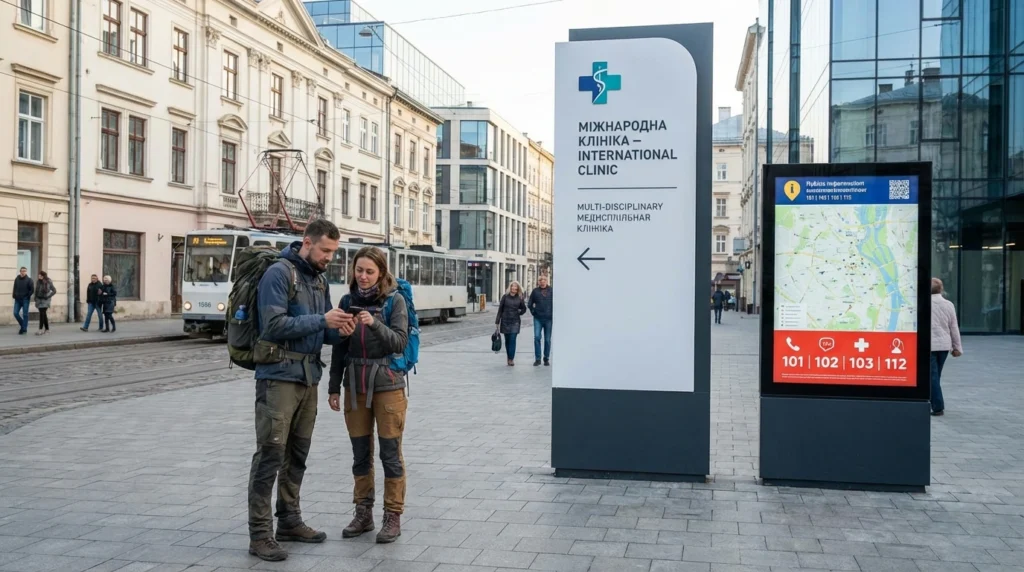
The Ukrainian healthcare landscape in 2026 consists of a dual system: state-run facilities and private clinics. For international visitors, private medical centers are the recommended choice due to their modern equipment, shorter wait times, and higher likelihood of English-speaking staff. Major networks such as Dobrobut, Boris, and American Medical Centers have facilities in most regional hubs. These clinics operate on a fee-for-service basis, but they are well-versed in providing the detailed documentation required for international insurance claims.
When seeking medical attention, always carry your passport and your insurance policy. If you have secured coverage through , keep their assistance hotline number at the top of your contact list. Contacting the insurer before or immediately after receiving treatment is often a requirement for direct billing or subsequent reimbursement. For minor ailments, Ukrainian pharmacies, marked by a green cross and the word “Apteka,” are ubiquitous. Many pharmacists can provide over-the-counter advice for common issues, though specific prescriptions from your home country may require a local equivalent. It is advisable to bring a supply of personal chronic medications, as specific brand names may vary in the local market.
In the event of a serious emergency requiring hospitalization, the 103 (ambulance) service will typically transport patients to the nearest state hospital equipped to handle the specific trauma. Once stabilized, travelers can often request a transfer to a private facility if their insurance covers it. Understanding this workflow prevents confusion during high-stress situations. Always ask for a “Vypyska” (medical summary) and a “Chek” (official receipt) for every consultation or purchase, as these are the primary documents needed for any financial recovery regarding health expenses.
Communication Strategy: SIM Cards and Safety Apps
Maintaining a constant line of communication is a cornerstone of safety in 2026. While international roaming is an option, purchasing a local SIM card or eSIM is highly recommended for better data speeds and access to local services. The three major providers—Kyivstar, Vodafone, and Lifecell—offer affordable prepaid plans with significant data allowances. These can be purchased at the border, in airports, or at numerous kiosks throughout any city. A local number is often required to use ride-hailing apps like Uklon or Bolt, which are the safest ways to navigate cities after dark.
Messaging apps are the primary mode of communication in Ukraine. Telegram and WhatsApp are used by everyone from hotel receptionists to tour guides. Travelers should join local regional channels that provide real-time updates on weather, traffic, and security. Furthermore, the “Air Alert” (Povitryana Tryvoga) app remains a necessary installation for all visitors. Even in 2026, as the country continues its recovery, the alert system remains active to ensure public safety. Familiarize yourself with the location of the nearest shelter (skhovyshche) relative to your accommodation; many hotels have converted basements into comfortable, high-tech workspaces and lounges for guests during alerts.
Establish a check-in routine with family or friends. A simple daily message indicating your location and the next day’s plan provides peace of mind and a timeline for action if communication is unexpectedly lost. In 2026, the Ukrainian mobile network is resilient, but having a portable power bank is essential. Frequent use of GPS, translation tools, and safety apps can drain phone batteries quickly, and staying powered up is a non-negotiable aspect of modern travel readiness.
Insurance Claim Readiness and Documentation
The difference between a smooth insurance claim and a denied one often comes down to the quality of documentation gathered at the scene of an incident. Whether dealing with a flight delay, a medical issue, or lost luggage, the burden of proof lies with the traveler. In 2026, Ukrainian officials and service providers are accustomed to providing the necessary paperwork, but you must know what to ask for. For any theft or loss of property, a police report (Protokol) is mandatory. Visit the nearest police station and ensure the report includes a detailed list of missing items and their estimated value.
For medical claims, the documentation must be exhaustive. This includes the initial diagnosis, the treatment plan, and a breakdown of all costs. Using a specialized provider like ensures that your policy is tailored to the specific legal and administrative requirements of the Ukrainian system in 2026. This specialized focus helps bridge the gap between local medical practices and international insurance standards. Take clear, high-resolution photos of all original documents before submitting them to any authority or medical facility.
Translation is another factor to consider. While many insurers accept documents in Ukrainian, some may require certified English translations. Local translation bureaus are common in cities and can provide notarized copies within 24 to 48 hours. If an incident occurs, document the surroundings with your phone camera—take photos of street signs, the entrance to the clinic, or the damage to your property. These visual cues serve as vital supporting evidence. By treating documentation as a real-time task rather than something to be handled after returning home, travelers significantly increase their chances of a successful claim and a stress-free resolution to unexpected challenges.