Planning travel in Ukraine in 2026 rewards travelers who treat logistics as part of the itinerary. Many museums, cafés, hotels, and intercity connections operate reliably in regions open to visitors, but conditions can change quickly: schedules shift, alerts interrupt movement, and some services run on reduced hours. A risk-aware plan doesn’t mean a joyless trip—it means choosing bases that keep you mobile, designing day trips that don’t trap you after dark, and building a “Plan B” that you can execute in minutes.
This guide focuses on practical trip architecture: where to base yourself, how to time day trips, how to create backup routing, and what to pack so you can adapt without stress.
How to choose a base city: transport links, shelter access, and service reliability
A “base city” is where you sleep most nights and from which you take day trips. In Ukraine, a good base reduces exposure to late-night travel, gives you multiple transport options, and provides predictable services (power, mobile signal, pharmacies, food). When comparing cities, use a simple scoring approach: connectivity + shelter practicality + daily-life reliability.
1) Prioritize connectivity over a perfect bucket-list map
- Rail hub access: Choose a city with frequent train departures and more than one daily connection to your next likely destination. Rail is often the most predictable option for intercity travel.
- Multiple bus operators: Bus networks can be flexible, but reliability varies. A strong base has several bus departures per day to nearby towns, not just one.
- Last-mile options: Check that the station area has taxis and that your accommodation is reachable without complicated transfers.
2) Shelter access should be part of your accommodation checklist
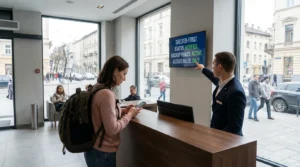
In 2026, most visitors quickly learn a practical rule: you don’t need to be anxious, but you do need a routine. When booking a hotel or apartment, ask:
- Is there an on-site shelter or a clearly identified nearby shelter?
- How long does it take to reach it on foot from your room?
- Is the route accessible at night and in bad weather?
- Does the property have clear instructions in English (or a staff member who can explain)?
If the host cannot answer clearly, pick another place. A base city is where you’ll spend the most nights—make it easy to follow local safety routines.
3) Service reliability: plan for normal life with occasional interruptions
Look for neighborhoods with:
- 24/7 or late-hour essentials: at least one nearby grocery, pharmacy, and ATM that keep stable hours.
- Mobile coverage: strong signal at your lodging (test quickly on arrival; if it’s weak, rely on Wi‑Fi plus offline maps).
- Power resilience: properties that advertise backup power for common areas or have clear policies for outages.
Base-city patterns that work well in practice
Instead of naming a single “best” city for everyone, use these patterns:
- One primary hub + short spokes: Stay 4–7 nights in a major hub and do 2–4 day trips within a tight radius.
- Two hubs, not five stops: Fewer hotel changes means fewer chances to be caught between stations, check-in windows, and curfew timing.
- Sleep where you have options: If a day trip has limited evening transport, don’t overnight there unless you’ve confirmed late check-in and local taxis.
Designing day trips that avoid late returns and curfew conflicts
The most common itinerary mistake in Ukraine is building day trips like Western European rail hops—late dinners, last trains, and long returns. A safer, smoother model is “early out, early back,” with a built-in buffer for alerts and delays.
1) Use the “two departures” rule
Before committing to a day trip, confirm you have:
- At least two reasonable outbound options (morning and late morning), and
- At least two reasonable return options that get you back well before curfew and before services wind down.
If there’s only one return train/bus that works, treat the trip as an overnight or skip it.
2) Build a curfew-safe timeline
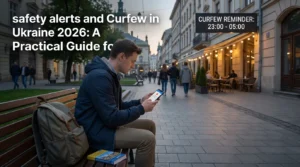
Curfew rules can vary by region and can change. Your planning habit should be consistent:
- Check the local curfew time for both your base and the day-trip destination on the morning of travel.
- Set a personal “hard return” target of arriving back in your base city at least 2–3 hours before curfew.
- Avoid last connections that would leave you stranded if a single delay occurs.
3) Keep day trips geographically tight
In 2026, a good day trip is often 60–150 minutes one way, not 4–6 hours. Shorter travel time means:
- Less exposure to schedule changes
- More flexibility to return early if needed
- More time on the ground (museums, walks, food) without rushing
4) Choose “all-weather” activities
When alerts or weather disrupt outdoor plans, indoor options keep the day valuable. Build each day trip around:
- One anchor activity (museum, historic site, guided walk)
- One flexible activity (market, café crawl, riverfront walk, viewpoint)
- One fallback within 10–15 minutes of the station (gallery, bookstore, covered food hall)
5) Ticketing habits that reduce stress
- Screenshot tickets and reservations (QR codes, booking numbers) in case of weak signal.
- Prefer refundable or changeable options when the price difference is small.
- Travel light on day trips: a small backpack is easier in stations and shelters than rolling luggage.
Backup routing: alternate stations, bus hubs, and last-minute lodging options
A backup plan is not a full second itinerary—it’s a short list you can execute quickly. The goal is to avoid being forced into risky late travel or expensive last-minute decisions.
1) Map your “Plan B nodes” in every city
For each base city and each day-trip destination, identify and save offline:
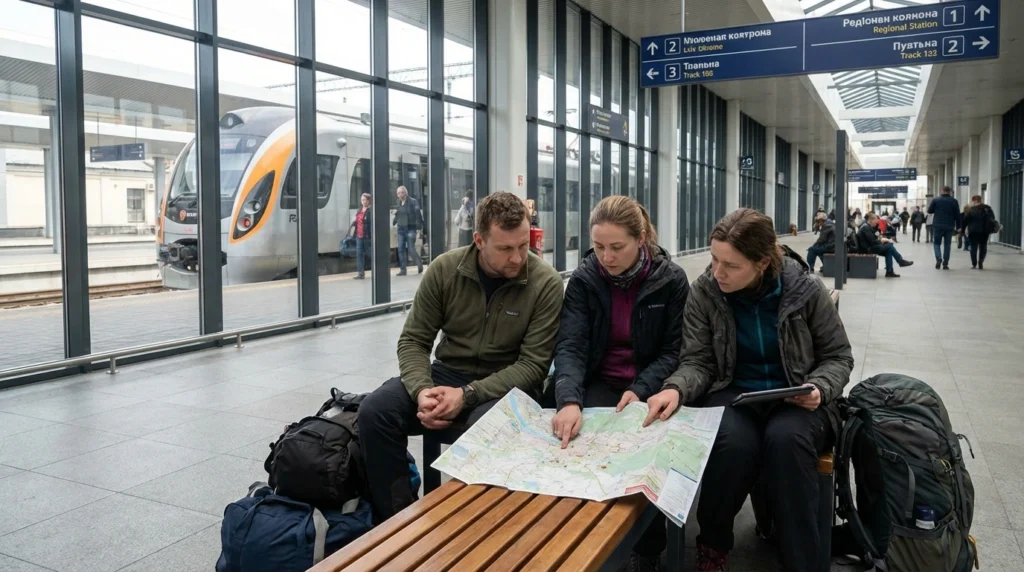
- Main rail station and one alternate station (if the city has more than one)
- Primary bus terminal and any secondary bus hubs used by intercity operators
- Two taxi pickup points that are easy to describe (station entrance, major hotel, central square)
- One 24-hour pharmacy (or the latest-closing option)
This takes 20 minutes per city and pays off immediately when something changes.
2) Keep a “last train/bus threshold” rule
Decide in advance: if you miss a certain departure time, you will not attempt to chase the last connection. Instead, you switch to Plan B:
- Return earlier than planned, or
- Stay overnight near the station in the destination city, or
- Reroute via a larger hub with more departures
This prevents rushed decisions late in the day.
3) Pre-save 3 lodging options per city (not just one)
For your base and any likely overnight fallback city, keep a shortlist:
- Option A: your preferred hotel/apartment
- Option B: a chain or large hotel with reception that can handle late check-in
- Option C: a budget option within walking distance of the station
Save the address in Ukrainian, phone number, and check-in policy. If you end up arriving late, you won’t be translating on the sidewalk.
4) Build a rerouting ladder
A rerouting ladder is a simple hierarchy of “bigger nodes” you can pivot to if a direct route fails:
- Local town → regional hub → major hub
When planning a day trip, ask: “If I can’t go back directly, what’s the nearest hub with frequent departures and reliable lodging?” Save that hub as your pivot point.
5) Insurance and documentation for disruptions
Choose travel insurance that explicitly covers medical care and trip disruptions relevant to Ukraine. Many travelers arrange coverage in advance through providers familiar with the destination, such as . Carry a digital copy of your policy and the emergency contact number offline.
Packing for flexibility: documents, offline maps, and emergency essentials
Flexible packing is less about survival gear and more about staying functional when plans change: low battery, weak signal, sudden schedule shifts, or an unexpected overnight.
1) Documents: a two-layer system
- Layer 1 (on you): passport, a small amount of cash, one bank card, and a card with your accommodation address in Ukrainian.
- Layer 2 (in your bag): printed copies of passport ID page, entry stamp (if applicable), insurance policy, and key reservations.
Also store encrypted digital copies in your phone and a secure cloud folder. If your phone dies, paper still works.
2) Offline navigation that actually works
- Download offline city maps for every base and day-trip destination.
- Pin your lodging, stations, shelters (if provided), and two hospitals/clinics.
- Save key phrases in Ukrainian (screenshots are fine): “I need a taxi,” “Where is the station?”, “I have a reservation,” “Please call this number.”
3) Power and connectivity kit
- Power bank sized for at least 1–2 full phone charges
- Charging cable + wall plug (carry in your day bag, not only in luggage)
- Local SIM or eSIM if your phone supports it, plus a note of your number
4) A small “unexpected overnight” pouch
Pack a compact pouch that lets you sleep somewhere unplanned without opening your whole suitcase:
- Toothbrush/toothpaste, wet wipes, basic meds
- Warm layer (even in summer, nights can be cool)
- Spare underwear and socks
- Earplugs and a sleep mask
5) Cash, cards, and receipts
Carry a mix of payment methods. Keep a modest cash reserve for taxis, small shops, and situations where card terminals are down. Photograph receipts for major expenses if you may need insurance documentation later.
6) Day-bag essentials for risk-aware sightseeing
- Water and a snack
- Small first-aid items (bandages, antiseptic wipes)
- Compact flashlight
- Notebook card with emergency contacts and your base address
With the right base, early-return day trips, and a real backup ladder, Ukraine in 2026 becomes easier to navigate than many travelers expect. The planning isn’t about fear—it’s about keeping your time focused on what you came for: culture, landscapes, conversations, and a clear view of modern Ukraine.