 Ukraine Entry Guide for Bosnia Herzegovina Citizens 2026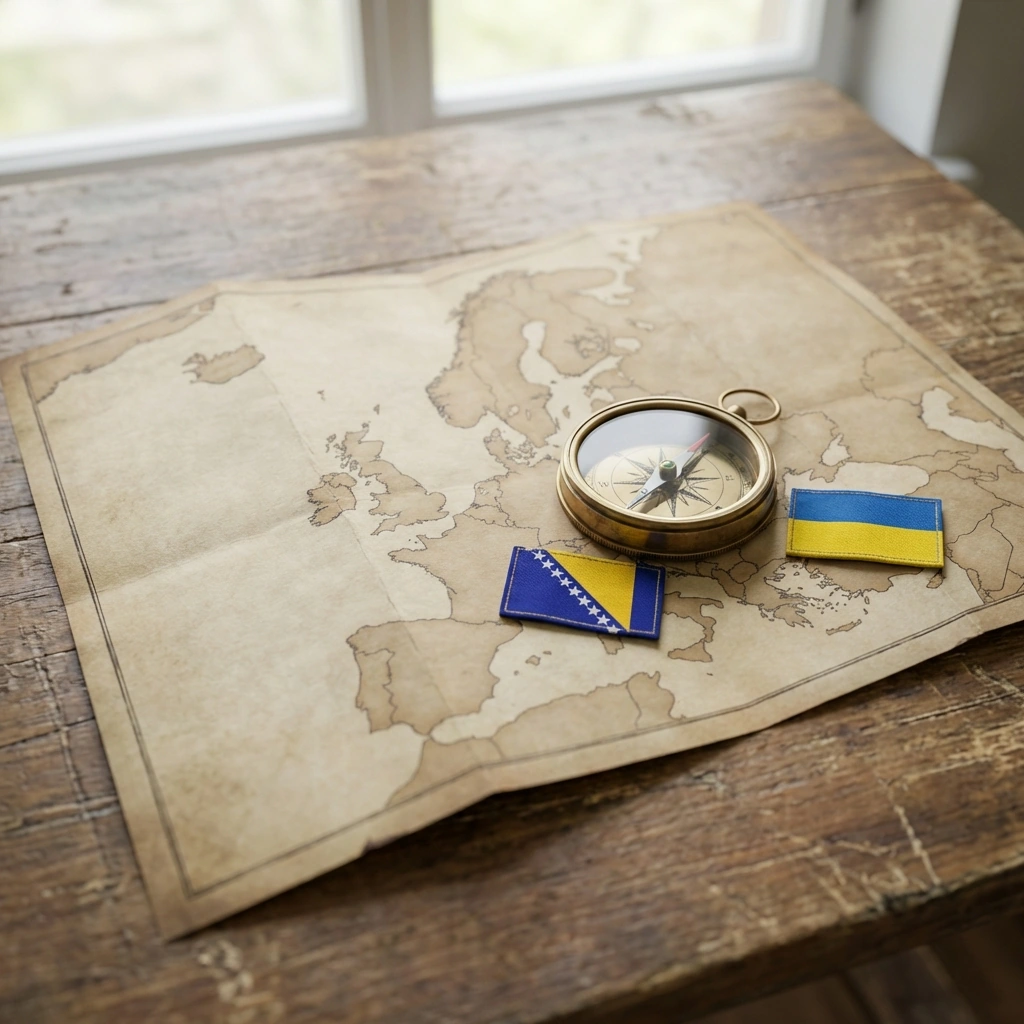
שליסל־פֿאַקטן
Entry Rules for Bosnia & Herzegovina Citizens (2026)
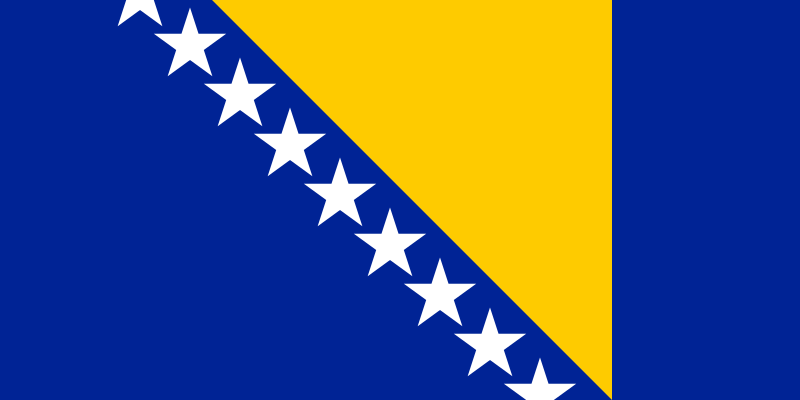
Citizens of Bosnia & Herzegovina can enter Ukraine visa-free for up to 30 days for tourism, private visits, business meetings, or transit. Entry is permitted only with a valid foreign passport; a national ID card is not accepted for crossing the Ukrainian border.
Ukraine remains under martial law in 2026. Border officers may apply enhanced checks and can request additional documents confirming your travel plans, accommodation, and funds. Plan your route and overnight stays with curfew rules in mind (curfew hours differ by region).
Required Documents
Prepare a printed and digital set of documents to speed up border control. Border officers may request any of the following:
- Valid foreign passport (ID card is not valid for entry).
- Medical travel insurance covering the entire period of stay in Ukraine.
- Proof of purpose of travel (see examples below).
- Proof of sufficient funds for your stay and return trip.
- No active entry ban to Ukraine.
Common proof of purpose of travel:
- Hotel booking or rental agreement (address and dates should match your itinerary).
- Tourist voucher or paid tour confirmation.
- Invitation letter for business, conference, or cultural events.
- Medical documents confirming planned treatment in Ukraine.
- Tickets to a third country if transiting through Ukraine.
Financial means (minimum calculation used at the border): Ukrainian rules use the formula FO = ((20 × Pm) ÷ 30) × (Kd + 5), where Pm is the 2026 subsistence minimum (3,209 UAH) and Kd is the number of days in Ukraine. Example: for 10 days, the minimum is about 8,086 UAH.
Accepted proof of funds:
- Cash (UAH or foreign currency).
- Bank card plus a recent statement (paper or app screenshot).
- Proof of prepaid accommodation/tour package.
- Guarantee letter from a host covering your expenses.
- Return/onward ticket.
Travel Insurance
Travel medical insurance is required for Bosnia & Herzegovina citizens entering Ukraine. Choose a policy that:
- Covers the entire stay (dates must match your trip).
- Includes emergency outpatient and inpatient care, hospitalization, and medicines.
- Provides medical evacuation/repatriation options.
- Explicitly covers wartime-related risks where available, since Ukraine is under martial law.
You can arrange suitable coverage online before departure; many travelers use insurance-ukraine.com for policies tailored to Ukraine travel conditions.
Safety (Martial Law, Curfew, and Emergencies)
Security conditions vary by region. Expect checkpoints on roads and at city entrances, and follow instructions from police or military personnel.
- Curfew: active nationwide under martial law, but hours differ by region. Confirm the curfew schedule for each city you plan to visit and avoid travel during restricted hours.
- Air-raid alerts: follow local instructions immediately and use shelters when required.
- Emergency number: dial 112 for all emergency services (fire, ambulance, police). Separate numbers also operate: 101 fire, 102 police, 103 ambulance, 104 gas emergency.
Stay extension during martial law: If your permitted stay expired after 24 February 2022, Ukrainian rules allow you to remain in Ukraine for the duration of martial law and for 30 additional days after it ends. Keep evidence of your entry date and monitor official updates if you plan a long stay.
Customs (Money, Goods, Medicines, Pets)
Green corridor (no written declaration) is generally used for personal items within limits. Red corridor is for items that must be declared or require permits.
You can usually bring through the green corridor:
- Personal belongings for personal use.
- Goods up to EUR 500 total value and up to 50 kg.
- Food products for personal consumption (not for sale) up to EUR 200.
- Cash up to EUR 10,000 (or equivalent) without declaration. If carrying more, be ready to show bank documents confirming withdrawal from your account.
- Medicines (non-narcotic/non-psychotropic): typically up to 5 packages of each medicine per person.
Items that require the red corridor / written declaration include goods above the limits, currency/cultural values, securities, and medicines containing narcotic/psychotropic substances or precursors (permits may be required).
Prohibited to import (examples): narcotic/psychotropic drugs, explosives, toxic substances, uncertified food products, materials promoting violence/racism/war or pornography, unidentified animals, wanted cultural property, and weapons (including gas sprays) without the required permits.
Export from Ukraine: goods under EUR 10,000 total value can generally be exported without a written declaration. Higher values must be declared. Certain categories are restricted or prohibited, including weapons/ammunition, narcotics, explosives, radioactive substances, and cultural/historical valuables without permission. Food export restrictions can apply (for example, certain meat/dairy items and quantity limits for fish/caviar).
Traveling with pets: Dogs and cats must have (1) an ISO 11784/11785 microchip, (2) a valid rabies vaccination after microchipping, and (3) a health certificate issued by a licensed veterinarian shortly before travel (commonly within 10 days). Carry original documents at the border.
Driving in Ukraine (Rules, Speed Limits, Checkpoints)
Ukraine has right-hand traffic and no general road tolls for passenger cars. Carry your driver’s license, vehicle registration, and insurance documents while driving.
Foreign-plated cars: Foreign citizens may drive a car with foreign plates in Ukraine for up to one year for personal use. If you plan to stay in Ukraine for more than two months, contact a Ministry of Internal Affairs service center for temporary registration. The vehicle must leave Ukraine after the one-year period.
Speed limits (typical):
- Residential/pedestrian zones: 20 km/h
- Within cities/towns: 50 km/h
- Outside settlements: 90 km/h
- Divided roads outside cities: 110 km/h
- Motorways: 130 km/h
Seat belts and children: Driver and front passenger must wear seat belts. Children under 12 must use appropriate child restraints; children cannot ride in the front seat without a child seat. Children over 12 must wear seat belts.
Checkpoint etiquette (practical steps):
- Slow down early, prepare documents, and follow signs and instructions.
- Turn off and remove dashcams from the windshield; keep your phone away unless asked.
- Stop at the “STOP” sign, switch off headlights, turn on hazard lights, and wait for a signal.
- Do not exit the car unless instructed; lower the window to communicate.
- Be ready for inspection of documents, luggage, and the vehicle interior/trunk.
אָפֿט געשטעלטע פֿראַגן
Do Bosnia & Herzegovina citizens need a visa for Ukraine in 2026?
No. Bosnia & Herzegovina citizens can enter Ukraine visa-free for up to 30 days, provided they have a valid foreign passport and meet entry conditions.
Can I enter Ukraine with a Bosnian ID card instead of a passport?
No. Ukraine requires a valid foreign passport for entry. A national ID card does not grant the right to cross the border.
Is travel insurance mandatory for entry to Ukraine?
Yes. Medical travel insurance covering the entire stay is required. Policies that also cover wartime-related risks are strongly recommended.
How much money do I need to show at the Ukrainian border?
The minimum is calculated using FO = ((20 × 3,209 UAH) ÷ 30) × (days of stay + 5). For a 10-day trip, that is about 8,086 UAH. Proof can be cash, a bank statement, prepaid bookings, or a host guarantee.
Is there a curfew in Ukraine in 2026?
Yes. Curfew operates under martial law and varies by region. Confirm curfew hours for each destination and avoid travel during restricted times.
What are the main customs limits when entering Ukraine?
Common green-corridor limits include goods up to EUR 500 and 50 kg, food up to EUR 200 (not for sale), and cash up to EUR 10,000 without declaration. Higher amounts or restricted items must be declared via the red corridor.
Can I drive my foreign-plated car in Ukraine?
Yes. Foreign citizens can drive a foreign-plated car in Ukraine for up to one year for personal use. If staying longer than two months, temporary registration with an MIA service center is required.
What number should I call in an emergency in Ukraine?
Call 112 for any emergency. Other numbers: 101 fire, 102 police, 103 ambulance, 104 gas emergency.