 Ukraine Entry Guide for Slovenia Citizens 2026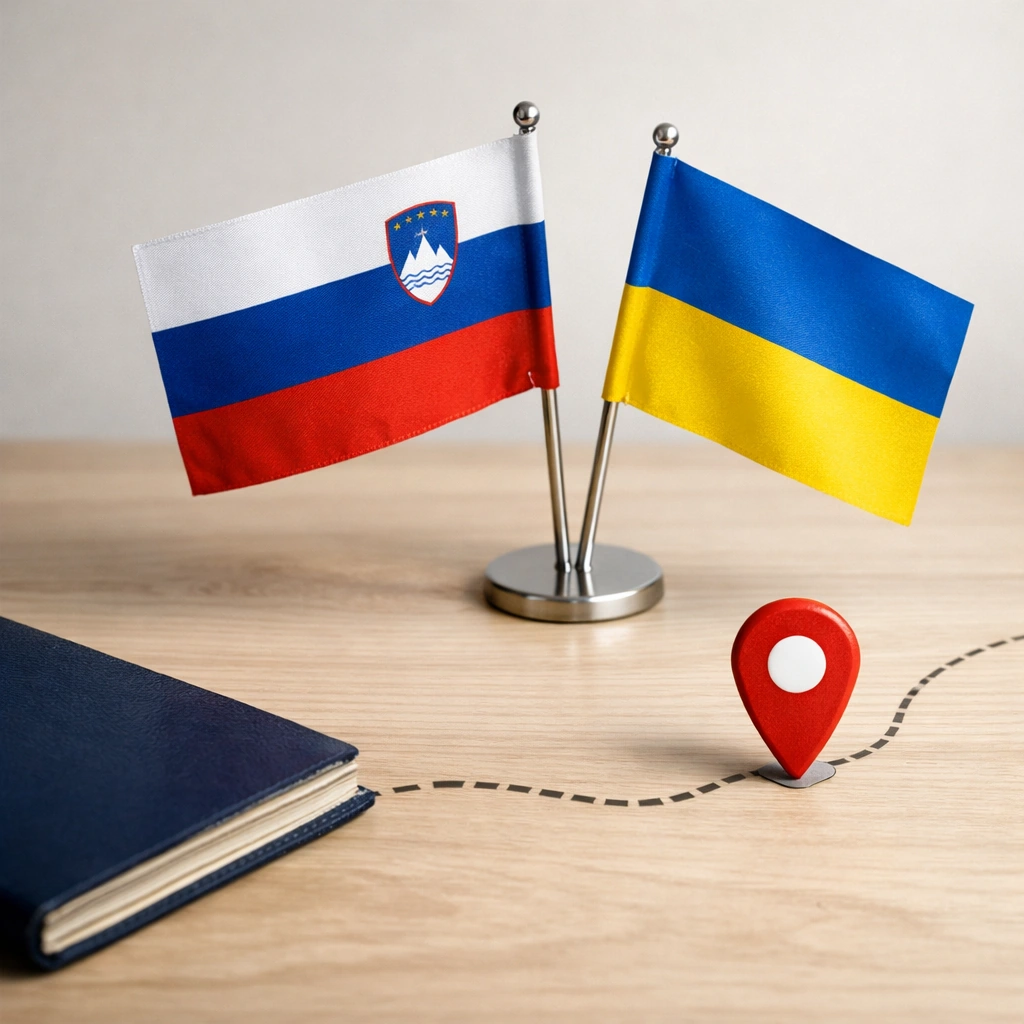
שליסל־פֿאַקטן
Entry Rules for Slovenia Citizens (2026)
Slovenian citizens can enter Ukraine visa-free for up to 90 days within any 180-day period for tourism, private visits, business meetings, and other short stays. Entry is allowed with a valid Slovenian international passport. A national ID card is not accepted for border crossing.
Ukraine remains under martial law in 2026, so border checks can be more detailed than in peacetime. Border officers may ask you to confirm your travel plan, accommodation, funds, and insurance.
There are no COVID-19 entry restrictions in 2026.
Required Documents
Prepare a complete set of documents to reduce the risk of delays at the border. You should have:
- International passport valid for at least 6 months beyond your intended entry date (recommended; many travelers also keep a buffer beyond the planned departure date).
- Travel medical insurance valid for Ukraine (mandatory for foreigners).
- Proof of purpose of travel (see examples below).
- Proof of sufficient funds for the full stay.
- Return/onward plan (tickets or a clear itinerary), especially if transiting.
Common ways to prove the purpose of travel:
- Hotel booking or apartment rental confirmation
- Invitation letter from friends/relatives (with contact details and address)
- Invitation from a Ukrainian company (for business)
- Medical documents confirming planned treatment (if applicable)
- Onward tickets if you are in transit
How much money do you need? Border officers may check financial solvency. The minimum is calculated using the official formula: FO = ((20 × Pm) ÷ 30) × (Kd + 5), where Pm is the subsistence minimum (3,209 UAH in 2026) and Kd is the number of days in Ukraine. Example: for a 30-day stay, the minimum is 24,344 UAH.
Accepted proof of funds:
- Cash (UAH, EUR, USD)
- Bank cards plus a recent balance screenshot/statement
- Paid accommodation / prepaid tour voucher
- Guarantee letter from the host covering costs
Travel Insurance
Medical insurance is required for Slovenian citizens entering Ukraine in 2026. Choose a policy that clearly states coverage in Ukraine and includes:
- Emergency outpatient and inpatient treatment
- Ambulance and emergency services
- Repatriation (medical evacuation/return home)
- Coverage for risks relevant to travel during martial law (check policy wording)
Buy insurance before departure and keep a digital copy plus a printed copy. Many travelers arrange coverage online via insurance-ukraine.com.
Safety
Security conditions vary by region. Plan routes and accommodation with safety in mind and follow local instructions.
- Check the curfew rules in the city/region you will visit and plan evening travel accordingly.
- Install the Air Alarm app for real-time alerts and learn the nearest shelter location at your hotel/apartment.
- Carry key contacts: your accommodation, local emergency numbers, and your embassy/consular details.
Emergency number: dial 112 (single number for emergency services). Separate lines: 101 fire, 102 police, 103 ambulance, 104 gas emergency.
Customs
Ukraine uses a green and red customs corridor system at many border points.
Green corridor (no written declaration, within limits):
- Personal belongings
- Goods for personal use up to EUR 500 total value and up to 50 kg
- Food products not for sale up to EUR 200
- Cash up to EUR 10,000 (or equivalent) without declaration
- Medicines (non-narcotic/non-psychotropic): generally up to 5 packages of each medicine per person
Red corridor (written declaration required):
- Goods above the duty-free limits (over EUR 500 and/or over 50 kg)
- Items requiring permits (certain medicines, weapons, cultural items)
- Currency above EUR 10,000 equivalent
Prohibited to import:
- Narcotic and psychotropic substances
- Explosive, toxic, or poisonous substances
- Food products without required certification (when applicable)
- Materials promoting violence, racism, war, or pornography
- Unidentified animals
- Wanted cultural property
- Cold/firearms/gas weapons without the required Ukrainian permits
Export rules (key points): Goods up to EUR 10,000 total value can usually be exported without a written declaration. Higher values and restricted categories require declaration and may require duties/permits.
Common export restrictions: certain foods (e.g., lard/sausages, dairy, fresh meat), limits on fish/caviar, controlled medicines, weapons/ammunition, cultural and historical valuables without permission.
Driving in Ukraine
Traffic is right-hand in Ukraine. Carry your driver’s license, vehicle registration, and insurance documents at all times. Seat belts are mandatory for the driver and front passenger.
Mandatory car insurance: If you drive in Ukraine, you need valid third-party liability coverage accepted in Ukraine. Arrange insurance before the trip or immediately after entry if required for your situation.
Foreign-plate vehicles: Foreign citizens may use a car with foreign plates in Ukraine for up to 1 year for personal use. If you plan to stay longer than 2 months, you may need temporary registration at a service center of the Ministry of Internal Affairs. After the one-year period, the vehicle must leave Ukraine.
Speed limits (general):
- Residential/pedestrian zones: 20 km/h
- Within settlements (cities): 50 km/h
- Outside settlements: 90 km/h
- Divided highways outside cities: 110 km/h
- Motorways: 130 km/h
Children in cars: Children under 12 must use appropriate child restraints; transporting a child in the front seat without a child seat is prohibited. Children over 12 must wear seat belts.
Checkpoints during martial law: Expect checkpoints between regions and within cities. Slow down, follow instructions, and have documents ready. Turn off and remove dashcams/phones from visible recording positions if requested. Do not photograph or record military personnel, equipment, or checkpoint infrastructure.
אָפֿט געשטעלטע פֿראַגן
Do Slovenian citizens need a visa for Ukraine in 2026?
No. Slovenian citizens can enter Ukraine visa-free for up to 90 days within any 180-day period, provided they meet entry conditions and have the required documents.
Can I enter Ukraine with a Slovenian ID card?
No. You must use a valid Slovenian international passport. National ID cards are not accepted for entry.
What passport validity is recommended for entry to Ukraine?
Carry a passport valid for at least 6 months to avoid border issues and to cover unexpected changes to your travel plans.
Is travel medical insurance mandatory for Slovenia citizens?
Yes. Medical insurance is required for foreigners entering Ukraine in 2026. The policy should cover emergency treatment and repatriation and be valid in Ukraine.
How can I prove the purpose of my trip at the border?
Use hotel/rental bookings, an invitation letter from a host, a business invitation, medical documents (if traveling for treatment), or onward tickets if transiting.
How much cash can I bring into Ukraine without declaring it?
Up to EUR 10,000 (or equivalent) can be brought in without a written declaration. Amounts above that must be declared and may require supporting bank documents.
Can I drive my Slovenian-registered car in Ukraine?
Yes, for personal use. Foreign-plate vehicles can generally be used for up to one year, and longer stays may require temporary registration. You must also have valid motor liability insurance accepted in Ukraine.
What emergency number should I call in Ukraine?
Dial 112 for emergencies. You can also use 101 (fire), 102 (police), 103 (ambulance), and 104 (gas emergency).