
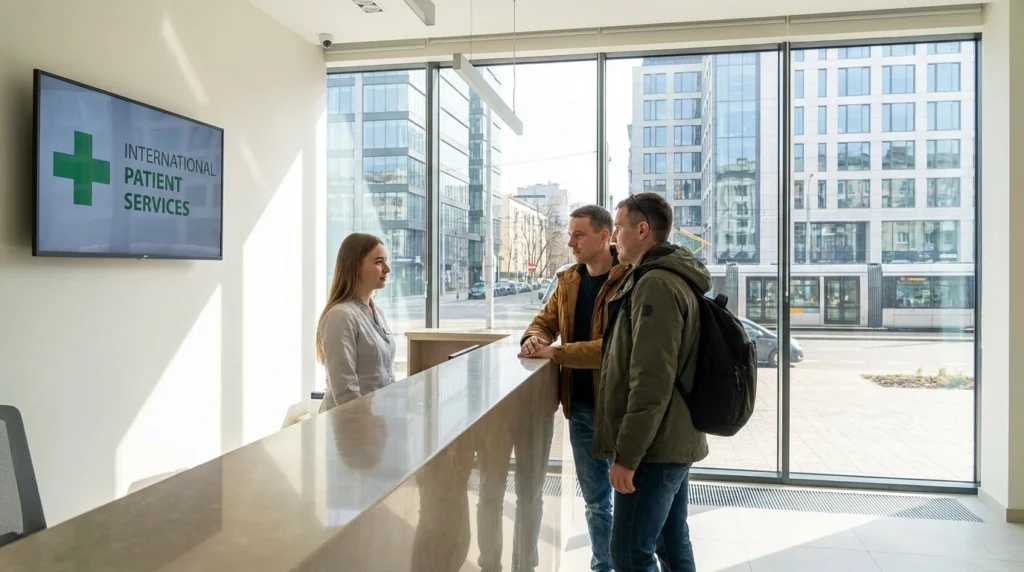
Medical care in Ukraine in 2026 is accessible for travelers, but the experience depends heavily on where you go (private clinic vs public hospital), how you pay (card, cash, bank transfer), and how well you document everything for insurance. The most common tourist problems are not “no doctors” but misunderstandings: arriving without a passport, agreeing to extra tests without a clear quote, paying cash without receipts, or calling an ambulance for a non-emergency and then being surprised by delays.
This guide focuses on practical steps: how the system works for foreigners, how to choose reputable clinics and pharmacies, what to do in emergencies, and how to coordinate with insurance so you don’t overpay.
How the system works for foreigners: private vs public, and why upfront payment is normal
Ukraine has both public (state/municipal) and private healthcare. As a tourist, you’ll most often use private clinics for routine issues because they’re faster, more predictable, and easier to navigate in English in major cities.
Private clinics: the default choice for travelers
- Speed and scheduling: same-day appointments are common in Kyiv, Lviv, Odesa, Dnipro, Kharkiv (where services operate), and many regional centers.
- Transparent pricing (when you ask): private providers typically have price lists and can give an estimate before procedures.
- Upfront payment: paying before consultation, imaging, or lab work is standard. It’s not a red flag by itself.
- Language: English-speaking reception and doctors are more likely in private networks and central locations.
Public hospitals: essential for emergencies, less predictable for routine care
- Emergency care: public hospitals are key for trauma, severe conditions, and ambulance drop-offs.
- Administrative friction: you may face longer waits, more paperwork, and limited English support.
- Costs: foreigners should not assume public care is “free.” Charges can apply, and you may be asked to purchase medicines or supplies.
What you’ll be asked for at check-in
- Passport (or a clear photo of it) and date of birth.
- Ukrainian phone number helps, but isn’t always required. If you don’t have one, ask to use email/WhatsApp/Signal for confirmations.
- Address in Ukraine (hotel/apartment) for documentation.
- Insurance policy details if you want the clinic to coordinate directly.
Payments in 2026: card is common, but plan for backups
In large cities, clinics and pharmacies usually accept cards. Still, keep a backup plan:
- Carry some cash in hryvnia for smaller pharmacies, after-hours purchases, or unexpected situations.
- Ask about payment method before services begin (card terminal availability can change during outages).
- Always request an itemized receipt with the clinic’s legal name, address, date, and services listed. For insurance, a simple card slip is rarely enough.
How to avoid overpaying in the first 15 minutes
- Ask for an estimate in writing (even a message at reception) before labs, imaging, IV therapy, or procedures.
- Confirm what is medically necessary today vs “nice to have.” It’s reasonable to say: “Please prioritize urgent tests only.”
- Clarify the currency and totals (UAH) and whether follow-up visits are included.
- Don’t pay cash without a stamped receipt (or an official fiscal receipt). If they can’t provide one, choose another provider.
Finding reputable clinics and pharmacies in major cities and regional centers
Ukraine’s private medical market is broad: from high-quality networks to small offices that vary in standards. Your goal is not “the cheapest,” but “predictable and document-friendly.”
Where to start your search
- Ask your hotel/apartment host for two options (a private clinic and a 24/7 option). Cross-check the name yourself.
- Use map reviews strategically: focus on recent reviews mentioning billing clarity, English support, and receipts.
- Prefer clinics with multiple specialties (family doctor + lab + ultrasound/X-ray). It reduces the chance you’ll be sent across town for add-ons.
Signs a clinic is reputable for foreigners
- Clear pricing on-site or at reception, and willingness to provide an estimate.
- Formal documentation: they issue a medical report/visit summary, test results with stamps, and itemized receipts.
- Payment options: card acceptance and a proper fiscal receipt.
- Communication: they can email your documents in PDF (useful for insurers).
Pharmacies: how to buy safely and avoid paying extra
Pharmacies are widespread, including 24/7 locations in big cities. To keep purchases safe and cost-effective:
- Bring the generic name (international nonproprietary name) if possible. Brand names differ by country.
- Ask for two price options: “original” and “generic.” Generics can be significantly cheaper.
- Check dosage and quantity carefully—many overpayments happen because the box size is larger than needed.
- Request a receipt and keep the packaging until you finish the course.
Regional centers: what changes outside major tourist hubs
- Fewer English-speaking staff: prepare a short note on your phone with symptoms, allergies, and medications.
- More limited diagnostics after hours: if you need imaging at night, you may be referred to a larger city hospital.
- Cash may be more common: insist on official receipts.
What to do in emergencies: ambulance expectations, triage, and documentation
For urgent, life-threatening situations, emergency services are the right choice. For mild-to-moderate issues (fever, minor infections, mild injuries), a private clinic or urgent-care style facility is often faster.
When to call an ambulance
- Chest pain, severe shortness of breath, signs of stroke (face droop, arm weakness, speech difficulty)
- Major trauma, heavy bleeding, suspected fracture with deformity
- Severe allergic reaction, swelling of lips/tongue, breathing difficulty
- Loss of consciousness, seizures, severe confusion
- Severe abdominal pain with fever or persistent vomiting
What to expect from ambulance response and triage
- Prioritization: dispatch and on-scene care are triage-based. Non-critical calls can wait longer, especially during high-demand periods.
- Stabilize first: the team’s priority is stabilization and transport if needed, not full diagnostics on site.
- Hospital choice: you may be taken to the appropriate public facility for the condition (trauma, cardiology, etc.). If you prefer a private hospital, discuss it early—availability varies.
Documents and details that help in emergencies
Keep these accessible on your phone (offline if possible):
- Passport photo and entry stamp/record if available.
- Insurance policy number and assistance hotline.
- Allergies, chronic conditions, current medications (with doses).
- Emergency contact (name + number + country code).
How to protect yourself financially during emergency care
- Ask for a brief written summary of what was done (medications administered, diagnosis, recommendations).
- Collect every receipt (hospital cashier, pharmacy, supplies). Photograph them immediately.
- Before paying for non-urgent add-ons (extra imaging, extended observation), call your insurer’s assistance line if possible.
Insurance coordination in 2026: pre-approval, hotlines, and cash reimbursement scenarios
Insurance can save you a lot, but only if you follow the process your policy requires. The biggest reimbursement failures come from missing pre-approval, using an excluded provider, or lacking proper documents.
Pre-approval: when you must call first
Many policies require contacting the assistance hotline before:
- Hospital admission
- Expensive diagnostics (CT/MRI)
- Planned procedures
- Non-emergency specialist visits above a set amount
If you can’t call before (true emergency), call as soon as you’re stable and ask the clinic to note the time of arrival and condition severity in your documents.
Direct billing vs paying yourself
- Direct billing: the insurer/assistance company confirms coverage and the clinic bills them. You may still pay a deductible or non-covered items.
- Pay-and-claim: you pay upfront and submit documents for reimbursement. This is common for outpatient visits and pharmacy purchases.
What to request from the clinic for a successful claim
- Itemized invoice/receipt with the provider’s legal details.
- Medical report describing symptoms, diagnosis, treatment, and dates.
- Test results (labs/imaging reports).
- Proof of payment (card slip plus fiscal receipt, or official cash receipt).
How to avoid overpaying when insurance is involved
- Use the insurer’s recommended clinics when possible—this reduces disputes about “reasonable costs.”
- Confirm coverage for medications (some policies reimburse only prescription drugs, not OTC items).
- Don’t bundle unrelated services into one visit if you can avoid it. Insurers may reject parts of a bill that look preventive or elective.
- Ask for documents in English or bilingual format if available. If not, keep originals; your insurer may request translation later.
Quick checklist: a tourist-friendly medical plan for Ukraine
- Save your insurer’s assistance number and policy number offline.
- Keep a photo of your passport and a note with allergies/medications.
- Choose one reputable private clinic in your city on day 1 (before you need it).
- For any paid service: get an estimate, then get an itemized receipt and medical report.
- For emergencies: prioritize care first, documentation second, insurance calls as soon as feasible.