
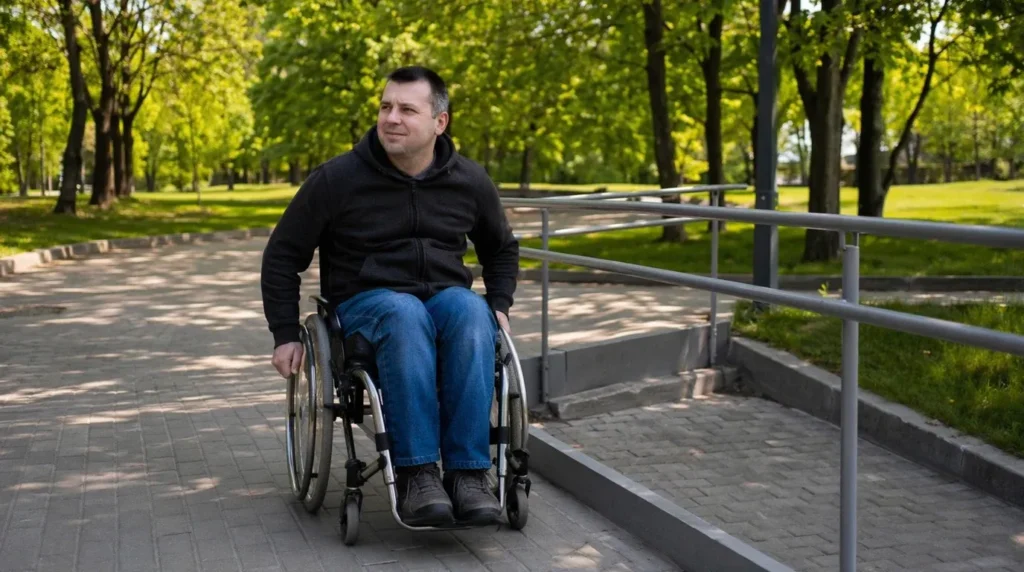
Plan before you travel
You need to plan early if you are travelling with a disability in Ukraine. Accessibility is improving, but it is not consistent. A hotel, station, or museum may be accessible on paper and still have steps, narrow doors, or a lift that is out of service.
Start by checking the exact places you will use. Ask about entrances, lifts, ramps, accessible toilets, and door widths. If you use a wheelchair, ask whether there is step-free access from the street to the room or platform. If you use a mobility aid, ask about pavement conditions and any steep slopes near the building.
It helps to keep your own notes in writing. Save emails, screenshots, and booking confirmations. If you arrive and the situation is different, you can show what was promised.
Carry documentation for any medical devices or medications. Keep medicines in original packaging if possible. If you need to explain a device at airport security or a checkpoint, a short letter from your doctor can help.
Getting around cities and stations
Public transport access varies by city. Kyiv has made progress, and some metro stations now have elevators or other step-free options, but not all stations do. Some stations may still require stairs or a long transfer route. Before you travel, check the exact station you need, not just the line name.
Newer trains are more likely to be wheelchair-accessible than older rolling stock. That does not mean every service is suitable. Ask the operator about boarding height, available ramps, and whether staff can assist you. If you need help getting on or off a train, request it in advance whenever possible.
City pavements can be uneven. You may face broken paving, high kerbs, narrow crossings, or parked cars blocking the path. In practical terms, this means you should allow extra time for short distances. A route that looks simple on a map may be difficult in person.
Taxis and ride-hailing services can be useful, but vehicle accessibility is not guaranteed. If you use a wheelchair, confirm the size of the boot, whether the vehicle can take folded equipment, and whether the driver is willing to help. For longer journeys, ask the company if it can provide an adapted vehicle.
Where to stay and what to ask for
Some hotels have adapted rooms, but they are limited. Do not rely on a general statement such as accessible hotel. Ask for specific details before you book. You need to know whether the room is step-free, whether the bathroom has a roll-in shower or grab rails, and whether there is enough space to turn a wheelchair.
Ask about the route from the street to the room. A hotel may have one accessible room but still require you to use steps at the main entrance. If the lift is small, ask for the internal dimensions and whether it reaches all floors.
If you need a fridge for medication, a lower bed, a shower chair, or a quiet room, request it in writing. Do not assume it will be available on arrival. If your needs are essential, ask the property to confirm them before you pay.
Lviv generally has better accessibility than many other cities outside Kyiv. You may still find uneven streets and older buildings, but some newer hotels and public spaces are easier to use. Even so, you should check each location on its own merits.
Medical needs, documents, and support
Keep your medication in your hand luggage if you are flying. Bring enough for your full trip, plus extra in case of delay. If your medicine is controlled, injectable, refrigerated, or in a large quantity, carry a prescription or doctor’s letter that explains what it is for.
If you use a medical device such as a CPAP machine, insulin pump, mobility aid, or hearing equipment, bring the manufacturer details and any instructions that may help staff understand it. A power adapter may also be useful if the device needs charging.
If you need local advice, international organisations working in Ukraine, including UN agencies and other humanitarian groups, may be able to point you to services or contacts for your specific needs. They may not arrange personal travel, but they can sometimes help you find reliable information.
If you need emergency help, call local emergency services. If you are staying in a hotel, tell reception about your condition and how staff can reach you quickly. If you have a severe allergy, epilepsy, diabetes, or another condition that may need urgent action, carry a short medical note in English and, if possible, Ukrainian.
Practical steps that reduce problems
Use this checklist before you go out:
- Confirm the exact address and entrance you need.
- Ask whether there are steps, lifts, or ramps.
- Check whether the lift is working on the day you travel.
- Allow extra time for uneven pavements and longer routes.
- Keep medication, prescriptions, and device documents with you.
- Save the phone numbers for your hotel and transport provider.
If you are travelling between cities, build in flexibility. Delays, route changes, and last-minute platform changes can happen. A slower schedule is often safer than trying to make tight connections.
Accessible travel in Ukraine is possible, but it takes more checking than in some Western European countries. If you plan carefully and confirm details directly, you can reduce most of the common problems.
FAQs
Is Kyiv Metro accessible for wheelchair users
Some Kyiv Metro stations have elevators or other step-free access, but not all do. You need to check the station you plan to use. Older stations and older parts of the network may still involve stairs or long walking routes.
Are trains in Ukraine suitable for passengers with reduced mobility
Newer trains are more likely to be wheelchair-accessible, but older trains are often not. You should ask the rail operator about the exact service, boarding height, and whether staff can help you board.
Which city is easiest for accessible travel
Lviv usually offers better accessibility than many other cities outside Kyiv, especially in newer hotels and some public spaces. Even there, pavements and older buildings can still be difficult, so you should check each place before you go.
What documents do I need for medication or medical devices
Carry a prescription or doctor’s letter for medication, especially if it is controlled or unusual. Keep medicines in their original packaging if you can. For medical devices, carry any documents that explain what the device is and why you need it.
Can hotels guarantee accessible rooms in Ukraine
Some hotels have adapted rooms, but availability is limited and standards vary. You should ask for written confirmation of the features you need, such as step-free access, an accessible bathroom, or a lift to your floor.
Who can help if I need local advice on disability support
International organisations working in Ukraine, including UN agencies and other humanitarian groups, may be able to point you towards relevant services or contacts. They are a useful place to start if you need advice for a specific medical or accessibility need.