Dnipro is one of Ukraine’s main regional cities and a useful base if you need transport links, accommodation, and a straightforward layout. In 2026, it also remains closer to the front line than Kyiv, so you need to check the security situation before you travel and stay flexible if conditions change.
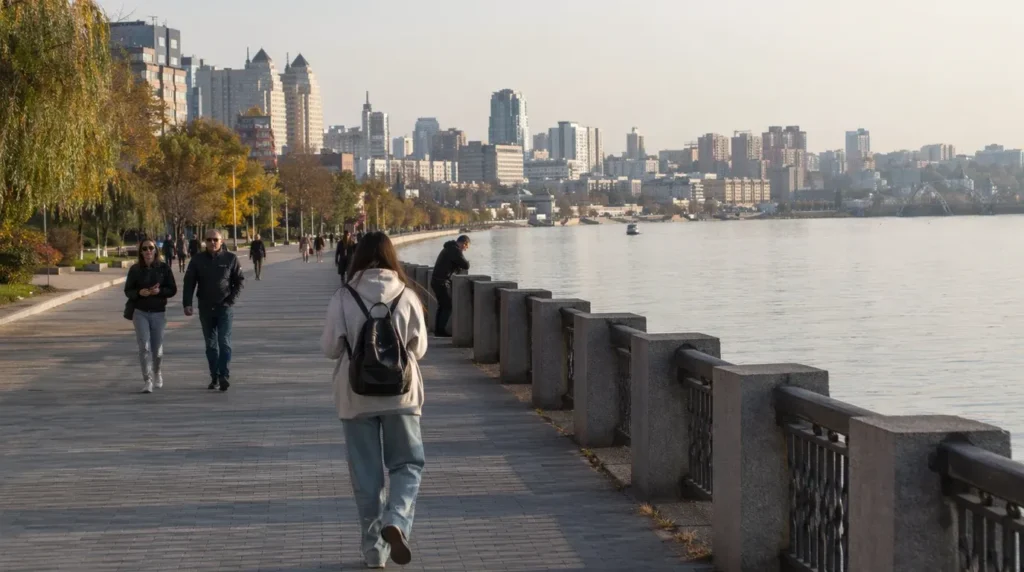
The city sits on the Dnipro River. That gives it long waterfront walks, open views, and some of the easiest places in the city to orient yourself. If you only have one day, you can see the river embankment, cross to Monastyrsky Island, and spend the rest of your time on practical city sights and a good meal.
How to plan your visit safely
You should treat Dnipro as a city where normal travel planning matters more than usual. Check official advice before departure, follow local instructions, and keep your phone charged. If there is an air raid alert, go to shelter immediately. Do not assume a busy public area is safe just because other people are outside.
Book accommodation with flexible policies if you can. Choose a hotel with clear shelter information and a reception that can explain local procedures. Keep your passport or ID with you, but store digital copies separately. If you arrive by train, allow extra time for delays and schedule your first evening lightly.
For transport inside the city, taxis and ride-hailing apps are usually the simplest option for visitors. Public transport exists, but it is easier to use if you already know where you are going. If you plan to walk, stay on main streets after dark and avoid unnecessary detours.
Where to spend your time: the embankment and Monastyrsky Island
The river embankment is the most useful place to start. It is long, easy to follow, and good for a first look at the city. You can walk, sit, and get a sense of the river without needing a fixed plan. This is also where many visitors choose to begin and end the day.
Monastyrsky Island is one of the best-known green spaces in Dnipro. You can reach it by footbridge, which makes it a simple half-day stop if the weather is good. The island is useful if you want a quieter break from the main streets. Bring water, wear comfortable shoes, and do not rely on park kiosks being open at every hour.
If you want a short, practical route, use this order:
- Start on the embankment in the morning
- Walk to the footbridge and cross to Monastyrsky Island
- Return to the centre for lunch
- Finish with a museum, memorial, or another riverside walk
Wartime history and what to expect in the city centre
Dnipro has a strong wartime role in modern Ukraine. It is a logistics and humanitarian hub, and that affects the atmosphere in the city. You may see memorials, public reminders of the war, and a more serious tone than in a typical leisure destination. That is normal.
If you want to understand the city better, focus on places that explain its recent history rather than trying to cover too much. Museums and memorial spaces can help you understand how the city functions during wartime. Keep in mind that opening hours may change, and some venues may close without much notice.
You do not need a packed sightseeing list to make sense of Dnipro. One or two focused stops are enough. Leave time to sit by the river, because that is the part of the city most visitors remember and the easiest to fit into a short stay.
Getting there from Kyiv and moving around
The train from Kyiv is the easiest way for many visitors to reach Dnipro. The journey is roughly 4 to 5 hours, depending on the service. Trains are usually the most predictable option if you want to avoid road delays. Book early if you are travelling on a busy day.
Once you arrive, the centre is manageable, but Dnipro is still a large city. Do not assume you can walk everywhere in one afternoon. Use taxis for longer cross-city trips and keep your route simple. If you are meeting someone, agree on a clear landmark rather than a vague street corner.
For a one-day visit, a practical plan is:
- Arrive in the morning by train
- Check in or leave luggage at your hotel
- Walk the embankment and Monastyrsky Island
- Have lunch in the centre
- Visit one history-focused stop
- Return to your hotel before evening if you prefer a low-risk schedule
Where to eat and where to stay
Dnipro has a solid choice of hotels and restaurants for a city of its size. You can find business hotels, smaller central properties, and restaurants serving Ukrainian and international food. In practical terms, that means you can plan a normal city stay without needing to bring special supplies.
Choose a hotel near the centre or the embankment if you want to keep your day simple. That reduces taxi time and makes it easier to return quickly if plans change. For meals, pick places with clear menus and regular opening hours. If you have a train to catch, eat earlier than you think you need to.
Cashless payment is common, but keep some cash in case a terminal is unavailable. Internet access is usually fine in central areas, but you should not rely on one app or one card only. Carry backups for payment, navigation, and communication.
FAQ
Is Dnipro safe for visitors in 2026?
It can be manageable for visitors who prepare properly, but you need to check current conditions before you go. Dnipro is closer to the front than Kyiv, so you should stay alert, follow local guidance, and have a flexible plan.
How long do you need for Dnipro?
One full day is enough for the embankment, Monastyrsky Island, and one or two additional stops. If you want museums, slower meals, and more time near the river, stay overnight.
Can you visit Monastyrsky Island without a car?
Yes. You can reach it on foot via the footbridge. It is one of the easiest places in the city to visit without using transport.
What is the best way to get to Dnipro from Kyiv?
The train is usually the simplest option. The journey is roughly 4 to 5 hours, and it is often more predictable than road travel.
Is the embankment worth your time?
Yes, especially if you only have one day. It is one of the most practical places to walk, rest, and orient yourself in the city.
Do you need to know Ukrainian to visit?
No, but basic Ukrainian phrases help. In hotels and larger restaurants, you may also find staff who can communicate in English or Russian. Keep addresses written down in case you need to show them to a driver.