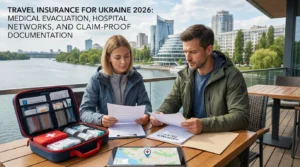

Pre-Trip Preparation: Securing Your Digital Paper Trail
Traveling to Ukraine in 2026 offers a unique blend of historical witness and modern resilience. While cities like Lviv, Kyiv, and Chernivtsi are bustling with tourists, the administrative requirements for insurance remain stringent. Before crossing the border, the most critical step is not just buying a policy, but understanding the specific ‘War Risk’ or ‘Passive War Risk’ clauses. In 2026, standard international travel insurance often excludes Ukraine unless a specific rider is added. You must verify that your policy covers shrapnel injuries, debris damage, or emergency evacuations related to regional instability.
Digital accessibility is your first line of defense. Do not rely on cloud storage or active internet connections at the moment of a crisis. Screenshot your policy number, the international assistance hotline, and the specific ‘Exclusions’ page. Store these in an offline folder on your phone and print a physical copy. If you are involved in an incident, the first question the insurer will ask is whether you were in a ‘Red Zone’—areas designated by the Ukrainian government as active combat sectors. Having a pre-downloaded map of these zones as of your entry date provides proof that you were following safety protocols.
Medical Emergencies: The “Stamp and Signature” Rule
Ukraine’s medical system in 2026 is a mix of highly efficient private clinics and traditional state hospitals. If you require medical attention, the documentation you collect on-site determines the success of your claim. Insurers are notorious for rejecting claims based on ‘insufficient evidence.’ In Ukraine, the ‘wet stamp’ (pechatka) is still the king of bureaucracy. Every document you receive must have a blue or red ink stamp from the facility.
Ensure your medical file includes a formal diagnosis written in Latin or English if possible, though Ukrainian is standard. The document must state the exact time of admission and discharge. For pharmacy purchases, a simple cash register receipt is rarely enough. You must ask for a ‘Form 1’ or a detailed prescription receipt that links the medication to your specific diagnosis. If you are treated for an injury resulting from an accident, ensure the doctor notes the absence of alcohol or narcotics in your system, as ‘intoxication exclusions’ are the most common reason for claim denials in 2026.
Reporting Incidents: Police Documentation and Europrotocols
For non-medical claims—such as theft, property damage, or traffic accidents—involvement of the National Police of Ukraine is mandatory. In 2026, Ukraine utilizes a streamlined ‘Europrotocol’ system for minor traffic accidents where no injuries occurred and both drivers agree on the circumstances. This allows you to document the accident without waiting hours for a police cruiser, provided both parties have valid insurance. However, if you are driving a rental or if there is significant damage, you must call 102 and wait for an official report.
When the police arrive, ensure they provide you with a copy of the ‘Protocol.’ If the incident involves damage from drone debris or missile strikes—risks that remain a reality in certain regions—the police must categorize the event correctly for ‘War Risk’ coverage to kick in. Do not leave the scene until you have the officer’s name, badge number, and a reference number for the electronic file. For theft, specifically in high-traffic areas like the Kyiv Central Railway Station or Lviv’s Rynok Square, a police report must be filed within 24 hours. Most insurers will not honor a claim for ‘lost’ items; they require proof of ‘theft’ via a formal investigation record.
Claim Submission: Timelines, Translations, and Bank Details
The window for filing a claim is narrower than many travelers realize. Most policies active in 2026 require ‘notification of intent’ within 24 to 48 hours of the incident and full documentation submission within 30 days. Delaying the process because you are still enjoying your trip is a recipe for a denial. Use your smartphone to scan all documents immediately using a high-resolution scanning app; blurry photos are often rejected by automated claim processing systems.
Language remains a hurdle. While many private clinics in Kyiv provide English summaries, state-run facilities and local police departments will issue documents in Ukrainian. You will likely need to provide certified translations. Check if your insurance provider offers translation services as part of the policy; if not, use a certified translation bureau in Ukraine before you leave, as it is significantly cheaper than finding a Ukrainian-certified translator in the US or EU. Finally, ensure you have your IBAN and SWIFT details ready. In 2026, international transfers to and from Ukraine are stable, but insurers require precise banking coordinates to bypass enhanced anti-money laundering checks currently in place for the region.
Common Denial Pitfalls to Avoid
A frequent mistake in 2026 is ignoring the ‘Reasonable Care’ clause. If an air raid siren sounds and you remain in a glass-fronted cafe rather than moving to a designated shelter, an insurer may argue you showed ‘gross negligence,’ potentially voiding a claim for injuries. Always follow local safety instructions and the ‘Air Alert’ app notifications. Additionally, ensure your policy covers the specific activity you are doing. If you are volunteering near the frontline or delivering humanitarian aid, a standard tourist policy is insufficient. You need a professional or high-risk activity rider to ensure your documentation is even considered.