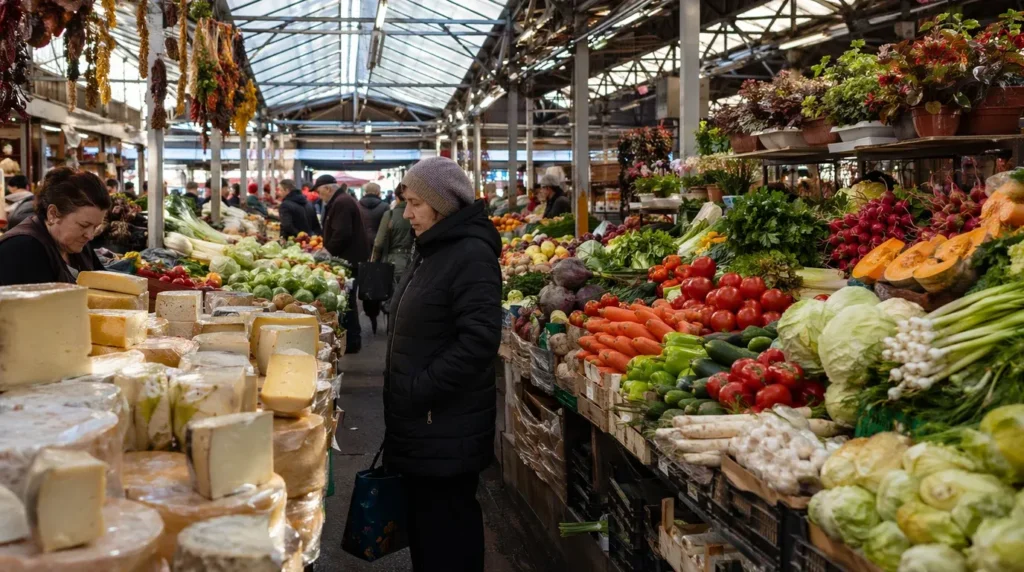
Food markets are useful places to buy everyday Ukrainian products and to see how people shop locally. In Kyiv, Lviv, and Odesa, you can find fresh produce, meat, dairy, pickles, honey, dried fruit, and local spirits. You do not need to bargain. Prices are usually fixed, and sellers expect quick, direct purchases.
Where to go in Kyiv, Lviv, and Odesa
In Kyiv, Bessarabsky Market is the main indoor food market in the city centre. It is a good choice if you want a cleaner, more organised setting and a wide range of products under one roof. It is also easier to visit in bad weather.
In Lviv, Halytsky Market is the main covered market. It is smaller than some large open markets, but it is practical for buying fruit, vegetables, dairy, and everyday foods. If you are staying near the centre, it is one of the easiest places to shop.
In Odesa, Pryvoz is one of the largest open-air markets in Eastern Europe. It is busy and often noisy. It can feel chaotic if you are not used to large markets, but it is a normal part of local life and a strong place to look for regional produce and seafood.
What you can buy
Markets in these cities sell the same basic categories of food, but the quality and range can vary by season. You can usually buy:
- Seasonal fruit and vegetables
- Meat and poultry
- Milk, cheese, sour cream, and other dairy products
- Pickles and preserved vegetables
- Honey and bee products
- Dried fruit, nuts, and seeds
- Bread and baked goods
- Local spirits and homemade-style drinks in some stalls
If you want gifts to take home, honey, dried fruit, and pickles are common choices. Look for sealed or well-packed items if you plan to travel onward the same day. For fresh dairy and meat, buy only what you can keep cold and use quickly.
Season matters. In summer and early autumn, you will usually find more fruit and vegetables. In colder months, markets still operate normally, but the selection shifts toward storage crops, preserves, dairy, and meat.
How to shop without problems
Arrive in the morning if you can. Stock is better then, and the market is usually less crowded. Later in the day, some sellers may have less choice left, especially for fresh produce.
Do not expect haggling. In most normal food markets, prices are set. You can ask the price before you buy, but long bargaining is not part of the usual routine. If a price seems unclear, ask directly and keep the transaction simple.
Bring cash in small denominations. Some stalls may accept cards, but cash is still the safest option. It helps to have smaller banknotes so you do not slow down the line or create problems with change.
Check what you are buying before you pay. For fruit and vegetables, look at the quality yourself. For packaged goods, check the seal and expiry date. For dairy and meat, only buy from stalls that look clean and busy, and keep the products cold after purchase.
Safety, hygiene, and what to watch for
Markets are usually safe, but crowded places always bring some risk. Keep your phone, wallet, and passport secure. Use a zipped bag or a front pocket. Do not leave your bag open while you are choosing goods.
Be careful with samples if you have a sensitive stomach. Fresh food is often sold in open conditions, and hygiene standards can vary between stalls. If a product looks warm, damaged, or poorly stored, do not buy it.
If you are carrying a lot of shopping, plan how you will get back to your accommodation. Fresh dairy, fish, and meat are best bought near the end of your visit so they spend less time unrefrigerated.
For alcohol, remember that local spirits sold in markets may be informal or home-produced. If you want to bring alcohol back with you, check the rules of your airline and destination country first. If the label, seal, or origin is unclear, it is better to skip it.
What to expect on the day
Expect a working market, not a tourist attraction. Sellers are usually focused on trade, not conversation. If you are polite, direct, and patient, the process is straightforward. You can ask simple questions such as the price, the weight, or whether the item is local.
Some markets have small cafés, bakeries, or snack counters nearby. This can be useful if you want to sit down after shopping. Still, the main purpose of the visit is buying food, so keep your plans practical and do not assume there will be tourist services everywhere.
If you are in Kyiv, Lviv, or Odesa for only a short time, one market visit is enough. Choose the market closest to your route, go early, buy a few items, and leave with time to spare. That gives you the best balance of convenience, price, and fresh stock.
Useful buying tips
- Go early in the day for the best selection
- Bring cash in small notes
- Keep valuables secure in crowded aisles
- Do not bargain unless the seller invites it
- Buy fresh dairy and meat only if you can store them safely
- Choose sealed items if you plan to travel with them