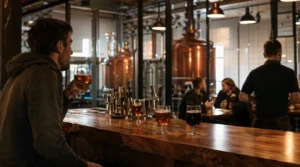
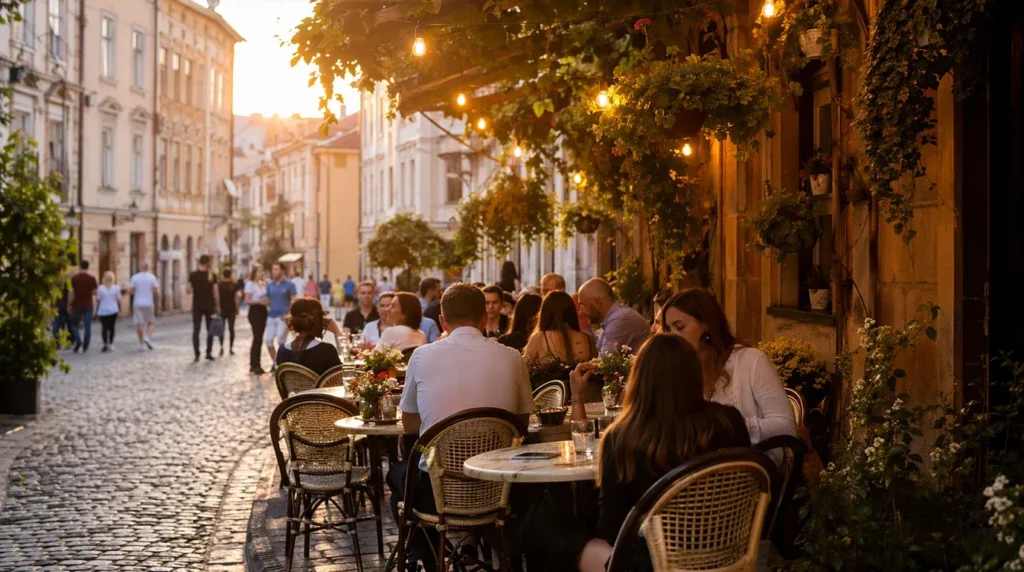
Outdoor dining is one of the easiest ways to spend a summer afternoon in Ukraine. You can find terraces in city centres, park areas, and near rivers or the sea. The experience is relaxed, but it is not casual in the sense of being unplanned. You need to know when terraces open, when they close, and what happens during an air-raid alert.
Where you are most likely to find good terraces
In Kyiv, many outdoor cafes cluster around Podil, the Dnipro riverfront, Andriyivsky Uzviz, and park areas such as Hydropark. These places work well because people already come there for walks, short meetings, and evening food. In the centre, some streets have a high concentration of small cafes with pavement seating, while river-facing venues usually give you more space.
In Lviv, outdoor seating is part of the city’s normal rhythm in warm weather. You will find terraces around Rynok Square, nearby side streets, and in green areas such as Stryisky Park. The old town has many narrow streets, so tables may be close together. That is normal. If you want a quieter lunch, park-adjacent cafes are often easier than the busiest square-side venues.
In Odesa, summer terraces are common around Deribasivska street and in the Lanzheron beach area. Here you are more likely to find larger outdoor spaces and later-day dining. Sea air does not change the rules. Curfew still applies, and venues usually stop serving well before midnight.
What changes during air-raid alerts
You need to treat an air-raid alert as part of normal planning, not as a rare event. Many cafes in Ukraine will close or move guests indoors when an alert starts. Some terraces shut immediately. Others ask you to go to a basement shelter or another protected area in the building. If a venue has a basement shelter, staff usually know the procedure and will direct you there.
Do not assume a terrace will stay open because the weather is good. The decision depends on the alert, the building layout, and the venue’s own rules. If you are sitting outside, keep your phone on and volume on. If staff tell you to move inside, do it at once. If you are in a venue with no shelter, leave calmly and follow local instructions.
If you are choosing between two cafes, ask one simple question before you sit down: where do guests go during an alert. That tells you a lot about how prepared the place is. It is also worth checking whether the venue posts updates in a Telegram channel or on social media, since some cafes announce temporary closures there.
How late you can stay out
Curfew rules still apply in 2026. In many cities, venues aim to finish service by about 10pm or 11pm, but the exact time depends on the city and current local rules. You should not plan a long late-night dinner on a terrace unless you have checked the current curfew and transport situation.
Public transport also slows down earlier than many visitors expect. That matters if you are staying outside the centre. In practice, the safest plan is to arrive earlier than you would in many European cities and leave with time in hand. If you are unsure, ask the staff when the kitchen closes and when the venue expects to clear tables.
During summer, many places are busiest from late afternoon through early evening. If you want a quieter table, go before 5pm. If you want the social atmosphere, aim for 6pm to 8pm. After that, service may become slower as staff prepare for closing and the curfew window.
What to look for before you sit down
Not every outdoor table is the same. Some terraces are fully open to the street. Others are in courtyards or garden spaces. Before you order, look for the following:
- A clear indoor area or shelter plan
- Staff who can explain what happens during an alert
- Menu prices shown clearly
- Payment by card and cash, in case one method fails
- Enough time before curfew to finish your meal
If you are visiting with children, choose a venue with easy access to an indoor space. If you are working remotely, do not assume outdoor seating means good Wi-Fi or power sockets. Ask first. In some places, summer terraces are designed for short meals, not long stays.
Weather matters too. Kyiv and Lviv can have hot afternoons but cooler evenings. Odesa can be windy near the water. Bring a light layer if you plan to stay outside after sunset. If rain starts, staff may move guests quickly, especially in smaller venues where the terrace is temporary.
Simple etiquette for outdoor dining
Outdoor cafes in Ukraine are informal, but service still follows clear habits. Wait to be seated if the terrace is busy. Do not move chairs from one table to another unless staff say it is fine. If you want to pay separately, say so early. This saves time at the end.
Tipping is usually modest and optional, but rounding up the bill is common if service was good. If you are using a terrace in a busy area, keep bags close and avoid leaving phones on the table unattended. That is sensible anywhere, but especially in crowded summer spots.
If you are unsure what to order, ask for the day’s cold dishes, salads, grilled items, or seasonal drinks. Outdoor cafes often work best for lighter meals. If you want a full dinner, check that the kitchen stays open long enough for you to finish before closing time.
FAQ
Do outdoor cafes in Ukraine stay open if there is an air-raid alert?
Not always. Many close the terrace or move guests indoors. Some venues have a basement shelter and will direct you there. You need to follow staff instructions immediately.
Can you sit outside late at night in summer?
Usually not for long. Curfew applies, and many venues close by about 10pm or 11pm depending on the city. Check the local rules and do not plan a late terrace dinner without confirming closing time.
Are terraces common in Kyiv, Lviv, and Odesa?
Yes. You will find them in central streets, park areas, and waterfront locations. Kyiv has many options in Podil and near the river. Lviv has terraces around the old town and parks. Odesa has strong terrace culture near Deribasivska and the beach area.
Should you book a table in advance?
For popular spots on Friday or Saturday evening, yes. In busy areas, booking helps if you want a specific terrace or a larger table. For quieter weekday lunches, booking is often not necessary.
What should you ask before ordering outside?
Ask where guests go during an alert, when the kitchen closes, and whether card payment works. These are practical questions. They help you avoid problems later.
Are basement shelters inside cafes common?
Some cafes have them, especially in larger or newer buildings, but not all do. You should not assume a terrace has shelter access. Ask staff before you settle in if that matters to you.