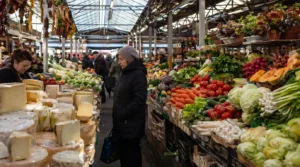
You will find Ukrainian food practical, seasonal, and built around familiar ingredients. In cities, you can eat in everything from simple canteens to polished restaurants. In smaller places, menus are often shorter and more local. If you know a few key dishes, ordering becomes much easier.
Ukrainian cuisine changes by region. Western dishes often lean toward dairy, mushrooms, potatoes, and dumplings. Central and eastern menus may include more meat, grains, and richer soups. In summer, you will see more fresh vegetables and lighter dishes. In winter, the food is usually heavier and more filling.
Core dishes you will see on most menus
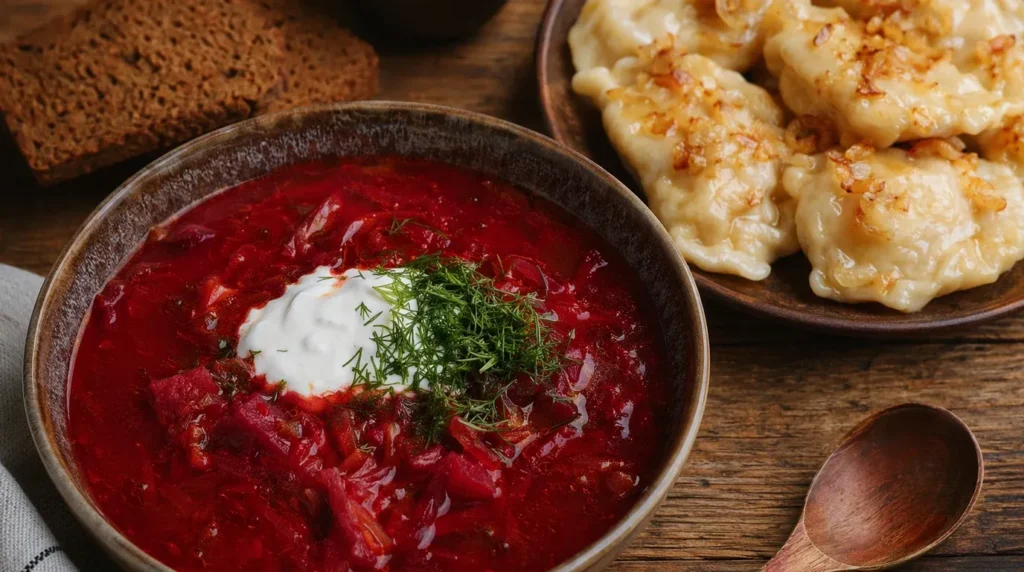
Borsch is the dish most visitors ask about first. It is a beet-based soup, usually served hot with smetana, which is sour cream. Many places also serve it with pampushky, small garlic bread rolls. Recipes vary by region and by household, so do not expect every bowl to taste the same.
Varenyky are dumplings. They can be filled with potato, cheese, cabbage, cherries, or meat. Savoury versions are often served with fried onions, butter, or sour cream. Sweet versions are common too, especially with cherries in season.
Holubtsi are stuffed cabbage rolls. They are usually filled with rice and minced meat, though vegetarian versions exist. They are often served with sour cream or a tomato-based sauce.
Salo is cured pork fat. It is usually eaten thinly sliced on bread, sometimes with garlic, onion, or pickles. It is a traditional food and not a snack for everyone, but you will see it on many menus and in markets.
Uzvar is a dried fruit compote. It is usually made from apples, pears, plums, or apricots. You may see it with festive meals, but some cafés and home-style restaurants serve it year-round.
How to order in a restaurant or canteen
In many Ukrainian cities, you will see two main styles of dining. One is canteen-style food, where you choose dishes from a counter and pay at the end. The other is table service, which ranges from casual cafés to more formal restaurants. Both can be useful, depending on your budget and time.
If you want a fast meal, look for words such as kafeteriy, stolova, or a menu with photos and a counter line. If you want a slower meal, sit-down restaurants usually have more detailed menus and more room for special requests. In larger cities, many places now have English menus or at least English dish names.
You can ask for small adjustments, but not everywhere. Vegetarian meals are easier to find in Kyiv, Lviv, Odesa, and other larger cities. In smaller towns, you may need to explain clearly that you do not eat meat or fish. Saying ya ne yim m’yaso can help, though staff may still use dairy or broth unless you ask.
Prices vary by city and by venue. A simple lunch in a canteen is usually cheaper than a meal in a restaurant. Service charges are not always added automatically, so check the bill before paying.
What to expect from seasonal and regional food
Ukrainian food is tied closely to the season. In spring and summer, you will see more salads, herbs, berries, and fresh vegetables. In autumn, mushrooms, cabbage, potatoes, and root vegetables become more common. In winter, soups, stews, dumplings, and preserved foods dominate the table.
Regional differences matter. In western Ukraine, you may find more mushroom dishes, buckwheat, cheese, and Polish or Central European influences. In the east and south, dishes can be simpler and more meat-focused, with stronger links to steppe and Black Sea food traditions. Along the coast, you may also see more fish and seafood.
If you are travelling outside the main cities, do not expect every restaurant to offer the same dishes. A local menu may be short, but that often means the food is made from nearby ingredients and cooked in a familiar style. That is useful if you want something authentic, but it can also mean fewer vegetarian choices.
Practical tips for eating well in Ukraine
- Start with borsch, varenyky, or holubtsi if you want a safe first order.
- Check whether a dish comes with sour cream, butter, or broth if you avoid dairy or meat.
- In cities, look for lunch sets. They are often good value.
- In markets, ask before tasting salo or other preserved foods.
- Do not assume a dish is the same everywhere. Regional recipes differ.
- If you want vegetarian food, use clear language and repeat it if needed.
If you are unsure what to order, ask the staff what they recommend that day. In many places, the house special is the best way to try local food without guessing. Keep in mind that portion sizes are often generous, especially for soups and dumplings.
Eating habits and meal timing
Lunch is often the main meal when eating out on a travel day. Breakfast can be light, with porridge, eggs, cheese, or pastries. Dinner may be later than you expect, especially in larger cities. In some restaurants, the kitchen stays open late, but in smaller towns hours can be shorter.
During holidays and family gatherings, food can be more formal and more abundant. You may see several courses, homemade pastries, compotes, and preserved vegetables. If you are invited to a private meal, it is polite to try a little of what is offered.
FAQ
Is Ukrainian food heavy?
Often, yes. Many traditional dishes are filling and built around potatoes, dough, cabbage, meat, and sour cream. You can still find lighter meals in cities, especially salads, grilled food, and seasonal vegetable dishes.
Can you eat vegetarian in Ukraine?
Yes, especially in larger cities. Varenyky with potato, cheese, or cabbage are common, and many restaurants can make simple vegetable dishes. In smaller towns, choices may be limited, so you need to ask carefully about broth, meat, and lard.
What is the difference between borsch and beet soup?
Borsch is usually more complex than a basic beet soup. It often includes cabbage, potatoes, carrots, onions, and sometimes meat or beans. Recipes differ by region, but borsch is normally a full meal rather than a light starter.
Are pampushky always served with borsch?
No, but they often are. Pampushky are garlic bread rolls that are commonly served alongside borsch. You may also see them with other soups or as a side dish.
Is salo worth trying if you are a visitor?
Only if you are comfortable with cured pork fat. It is an important traditional food, but it is not for everyone. If you want to try it, start with a small piece on bread and do not feel obliged to finish it.
Do restaurants in Ukraine accept card payments?
Many do, especially in cities. Smaller cafés, markets, and some canteens may still prefer cash. You should carry some hryvnia with you in case card payment is not available.