Travel in Ukraine in 2026 can be deeply rewarding: cities are open, museums and restaurants operate, and Ukrainians are famously helpful to visitors. At the same time, air-raid alerts remain a reality in many regions. For travelers, the goal isn’t to “act fearless” or treat alerts as a spectacle—it’s to move through the day with the same calm, practical habits locals use.
This guide covers four things visitors most often get wrong: understanding how alerts work, behaving appropriately in shelters, planning days to reduce disruption, and managing the mental load so your trip stays grounded and respectful.
Understanding alerts: apps, sirens, and why timing varies by region
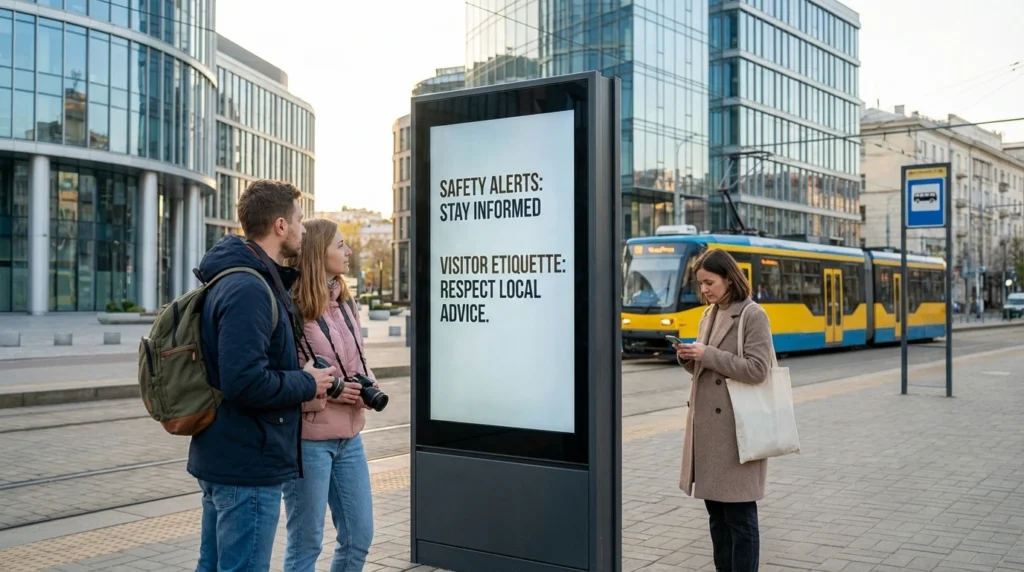
Sirens are only one layer of the system. In many cities you’ll hear outdoor sirens, but you may also be indoors with thick walls, in a basement restaurant, on a tram, or in a hotel corridor where sound is muffled. Locals don’t rely on sirens alone; they use phone alerts and venue staff instructions.
Do this on day one:
- Install at least one reliable alert app and allow notifications. Keep your phone on sound/vibrate when you’re out.
- Ask your hotel or host what they do during alerts: where guests go, which stairwell is used, and whether the building has a designated shelter area.
- Learn the local rhythm: in some regions alerts may be frequent and short; in others less frequent but longer. Timing can vary by region because threats, detection, and local procedures differ.
What the alert actually means: it’s a warning window, not a prediction of impact at your exact location. Locals treat it like a fire alarm: you don’t debate it in the hallway—you move to the safest practical place available.
Common visitor mistake: waiting to “confirm” on social media. This creates delay and confusion, especially in groups. If you’re unsure, follow the venue’s protocol or move to the nearest suitable shelter space.
Regional differences you’ll notice:
- City infrastructure: some cities have well-marked shelter networks; others rely more on building basements and underground passages.
- Public transport rules: in certain cities, metro stations may serve as shelters; in others, transport may pause or reroute depending on local guidance.
- Venue policies: museums, theaters, and shopping centers may have specific shelter rooms and staff-led procedures.
Practical habit: each morning, check the day’s plan and identify two “safe pauses” near your main stops (a metro station, a known shelter, your hotel, a large venue with a basement). This small step makes alerts less disruptive.
Shelter behavior: photography, noise, space-sharing, and helping without interfering
Shelters in Ukraine are not tourist attractions. They’re shared spaces where people manage stress, protect children, and wait out uncertainty. The best etiquette is simple: be quiet, be useful only when asked, and don’t turn the moment into content.
What locals typically do:
- Move quickly and calmly, without running unless there’s immediate danger.
- Keep conversations low, switch phones to silent, and settle into a spot without blocking paths.
- Check on family, message friends, then wait. Many people read, work, or simply sit quietly.
What tourists shouldn’t do:
- Don’t film or photograph people in shelters. Even “wide shots” can capture faces, children, uniforms, or private moments. If you must document your trip, do it outside the shelter context and never during an active alert.
- Don’t narrate loudly (“This is crazy!” “I can’t believe this!”). For locals, it’s not a novelty.
- Don’t take the best spots (benches, corners, outlets) if elderly people, parents with kids, or people with mobility issues arrive.
- Don’t block entrances, stairwells, or aisles with backpacks or tripods.
- Don’t pressure staff to “let you continue the tour” or reopen early. Staff are following rules and protecting everyone.
Noise and phone etiquette: use headphones, keep volume low, avoid speakerphone. If you need to make a call, step aside if possible. If the space is crowded, keep it short.
Space-sharing basics:
- Stand or sit where you’re directed; if there’s no direction, choose the least obstructive place.
- Keep your bag on your lap or between your feet.
- If you’re traveling as a group, don’t spread out to “hold” space.
Helping without interfering: Visitors often want to “do something.” That impulse is kind, but shelters aren’t the place to improvise assistance.
- Offer a seat to someone who needs it more.
- Share only if invited (water, tissues). Some people will decline for hygiene or personal reasons—accept it gracefully.
- Follow staff instructions immediately. If you don’t understand, ask quietly: “Where should I stand/sit?”
- Avoid giving advice about safety or politics. This is not the moment.
What to carry for shelter waits (small, respectful kit): a power bank, water, a light snack, a warm layer, earplugs, and a small flashlight. Keep it compact—crowded spaces punish bulky bags.
Tour planning: museums, restaurants, and transport choices that reduce disruption
The easiest way to travel well in Ukraine in 2026 is to plan for interruptions so they don’t derail your day. Locals build flexibility into schedules; visitors should too.
Choose venues that handle alerts professionally. Many museums, galleries, and cultural centers have clear procedures and designated shelter areas. When booking tours, ask one question upfront: “What happens during an air-raid alert?” A good operator will have a calm, specific answer.
Build a “two-layer” itinerary.
- Layer 1 (must-do): one or two key activities with time buffers.
- Layer 2 (nice-to-do nearby): flexible stops within walking distance—cafés, small exhibitions, viewpoints—so you can swap them if an alert interrupts.
Time buffers are not optional. If you schedule a museum at 12:00, lunch at 13:30, and a train at 15:00 with no margin, an alert can turn the day into stress. Locals plan with slack; copy that.
Restaurant strategy:
- Pick places with basement seating or nearby shelter access when possible.
- Keep one quick meal option in mind (a bakery, a cafeteria-style spot) in case your planned restaurant pauses service.
- If an alert begins mid-meal, follow staff direction. Don’t argue about paying immediately; many places will guide you on what to do.
Transport choices that reduce disruption:
- Stay central so you can return to your accommodation quickly if needed.
- Prefer rail for intercity travel when it fits your route; it’s structured and predictable compared to long road transfers.
- Avoid tight connections. If you must connect, choose longer layovers.
- Keep offline essentials: screenshots of tickets, hotel address in Ukrainian, and a map pin saved offline.
Tour group etiquette during alerts: if you’re with a guide, let them lead. Don’t peel off to “find a better shelter” unless you clearly communicate and it’s safe to do so. The guide is responsible for the group and often must account for everyone.
Insurance and planning: choose travel insurance that explicitly covers travel in Ukraine in 2026 and understand what assistance services you can call. Many travelers use specialized providers such as to avoid misunderstandings about coverage and support.
Mental load: staying calm, avoiding doomscrolling, and setting boundaries
Alerts aren’t only a logistical challenge; they can drain you emotionally, especially if you’re far from home and absorbing intense news in a second language. The goal is to stay informed without letting anxiety run your trip.
Adopt the local mindset: practical, not performative. Many Ukrainians acknowledge risk, follow procedures, and continue daily life. Visitors sometimes swing between panic and denial. A steadier approach is: prepare, respond, recover, continue.
Set rules for information intake.
- Choose two check-in times per day for news (for example, morning and early evening).
- Mute graphic channels and avoid unverified Telegram reposts that spike fear without adding actionable information.
- Use alerts for action, not spiraling. When an alert starts: move to shelter, message your contact, then stop refreshing.
Have a simple “calm protocol” for alerts. This sounds basic, but it works:
- Drink water.
- Put on a warm layer if needed.
- Send one message: “In shelter, OK.”
- Do one grounding activity: music at low volume, reading, notes for tomorrow, language flashcards.
Respect your travel companions’ stress levels. One person may want to talk; another may go quiet. Don’t force processing in the shelter. Save heavier conversations for later, in a calmer setting.
Know when to scale back. If you feel constantly on edge, shorten days, choose fewer stops, and prioritize restful routines: a consistent breakfast place, early nights, and walks in calmer areas. A “smaller” itinerary often becomes a better trip.
Be careful with storytelling. Sharing your experience is natural, but avoid posting real-time shelter locations, identifiable faces, or details that could compromise privacy or security. If you write about alerts later, focus on practical learning rather than shock value.
Ukraine in 2026 rewards travelers who come prepared, stay flexible, and treat local routines with respect. Air-raid alerts may interrupt plans, but they don’t have to dominate your trip—if you follow local etiquette, build buffer time, and protect your attention.
Quick checklist: alert-ready day plan
- Phone charged + power bank packed
- Alert app notifications on
- Two nearby shelter options identified
- Water + small snack
- Tickets/maps saved offline
- Itinerary with buffers and a flexible backup stop