Crossing into Ukraine in 2026 is usually straightforward if your luggage looks like normal travel gear and you’re ready to answer a few questions calmly. Most problems at the border come from the same patterns: carrying too much cash without declaring it, bringing medicines without paperwork, packing “sensitive” tech (especially drones and radio equipment), or trying to leave with antiques and cultural objects without the right documents.
This guide focuses on practical customs habits for tourists: what typically passes as personal belongings, what triggers declaration, and what items are better left at home.
1) Declaration basics: cash thresholds, valuables, and what to keep receipts for
Personal belongings vs. goods is the first concept to understand. Personal belongings are items that clearly look like they’re for your own use during the trip, not for resale. Customs officers look at quantity, packaging, and how the items are transported. New items in boxes, multiple identical pieces, or “bulk” packing can be treated as commercial goods even if you say they’re gifts.
Typical personal-use items that rarely cause questions when carried in normal quantities:
- Clothing and personal items for one traveler
- One mobile phone, one laptop, one camera (and reasonable accessories)
- Cosmetics in personal quantities (often interpreted as 1–2 units per type)
- Jewelry that shows signs of use
Gifts and new purchases: If you’re entering with brand-new electronics, multiple perfumes, several identical watches, or stacks of packaged items, be ready to explain. Keep receipts and, when possible, remove packaging for items you will actually use on the trip.
Duty-free value limits (most relevant for travelers bringing gifts/souvenirs):
- By land (car/bus/train): goods (not personal belongings) up to €500 total value and up to 50 kg total weight can typically be brought in duty-free within the standard frequency rules.
- By air: goods up to €1,000 total value are typically allowed duty-free; weight limits depend on the airline.
These thresholds are about goods. Your personal belongings are generally not taxed unless they look commercial.
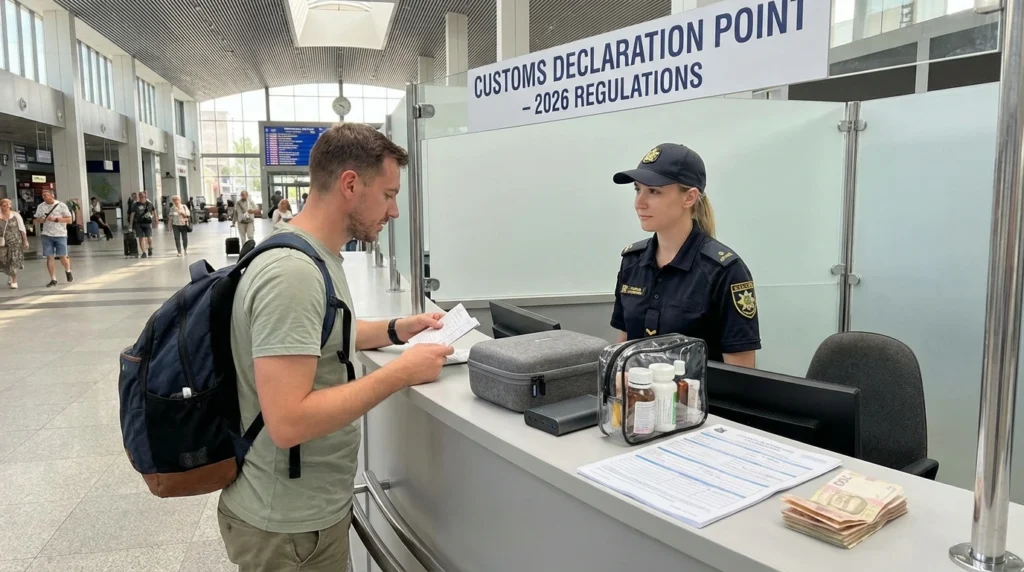
Cash and valuables: Tourists often carry a mix of cash and cards. If you carry a large amount of cash, declare it properly. As a rule of thumb, if your cash (and cash-like instruments) is near or above common European declaration thresholds, treat it as “declare to be safe.” If you’re traveling as a family, don’t assume you can split a large sum across bags without declaring—border officers can still consider the total you control.
What to keep receipts for:
- High-value electronics (camera bodies, lenses, laptops) if they’re new or in boxes
- Jewelry without obvious signs of use
- Luxury gifts (watches, designer items)
- Any item you may want to take back out and prove you didn’t buy in Ukraine
Practical border routine:
- Pack expensive items in carry-on, not scattered across multiple bags.
- Keep invoices/screenshots in one folder on your phone (offline) plus one printed copy for very expensive items.
- If you’re unsure, choose the declaration channel and declare. Declaring is usually faster than arguing later.
2) Medicines and medical devices: prescriptions, quantities, and translation tips
Traveling with medicines into Ukraine in 2026 is manageable if you treat your medication like a controlled item: clear documentation, reasonable quantities, and original packaging.
Bring medicines in original packaging with the pharmacy label whenever possible. Loose pills in unmarked organizers are common for daily life, but they create questions at the border—especially for strong painkillers, sedatives, ADHD medications, and any drug that could be considered controlled.
Carry a prescription or doctor’s letter for:
- Controlled or psychoactive medicines (sleep aids, anti-anxiety meds, stimulants)
- Strong pain medications
- Injectables (including some hormone therapies)
- Large quantities (more than a typical tourist supply)
Quantity rule of thumb: Bring a realistic personal supply for your stay (often 30–90 days depending on your itinerary and entry status), not a “stockpile.” If you need longer, carry documentation explaining the duration of treatment and your travel dates.
Translation tips that actually help at the border:
- Have the medicine name written as international nonproprietary name (INN) (generic name), not only the brand name.
- A short doctor’s note in English is usually helpful; adding a Ukrainian translation can reduce back-and-forth. Keep it simple: diagnosis (optional), medication INN, dosage, and that it’s for personal use.
- For devices (CPAP, insulin pump, nebulizer), carry a brief note stating the device is medically necessary.
Medical devices and supplies: Power supplies, spare batteries, and consumables (test strips, syringes) are generally fine in personal quantities. If you carry needles, keep them with the prescription and, ideally, in a medical kit pouch.
Insurance and medication access: If you rely on a specific medication, plan for delays and availability differences. A travel medical policy that covers treatment and prescription support can be useful; many travelers compare options via before arrival.
3) Tech and sensitive items: drones, radios, optics, satellite devices—what to avoid
Ukraine takes security seriously, and some tech items can attract attention at checkpoints and border crossings. Even if an item is legal, it may be questioned if it looks like professional surveillance or military-adjacent equipment.
Drones: Drones are the number-one “tourist tech” item that causes trouble. Rules and enforcement can change depending on security conditions and region. If you bring a drone:
- Expect questions about purpose, model, and where you plan to fly.
- Keep proof of ownership and specs (manual or screenshot).
- Do not plan flights near critical infrastructure, checkpoints, military sites, or in restricted zones.
If your trip is city tourism and you don’t have a clear legal use case, leaving the drone at home is often the simplest choice.
Two-way radios and high-power transmitters: Walkie-talkies, tactical radios, and any equipment that looks like it’s meant for coordinated field communications can trigger extra screening. If you need radios for a legitimate purpose (film crew, expedition logistics), carry documentation and be prepared for inspection.
Optics and “tactical-looking” gear: Binoculars and standard camera lenses are normal. Problems arise when optics look like military equipment or are paired with camouflage/tactical accessories. Keep your kit clearly tourist-oriented: camera bag, normal straps, no unnecessary tactical add-ons.
Satellite devices: Satellite messengers and satellite internet terminals can be sensitive. If you carry a satellite communicator for safety, keep it packed, documented, and used responsibly. Avoid discussing security-related uses at the border; frame it as emergency communication for travel safety.
Power banks and batteries: These are common, but follow transport rules:
- Flights: power banks and spare lithium batteries should be in carry-on, not checked baggage.
- Bring reputable brands with clear capacity markings (Wh/mAh). Unmarked batteries look suspicious and may be confiscated by airlines.
- Carry only what you need; multiple large-capacity power stations can look commercial.
Data hygiene: Border checks can include questions about your itinerary and purpose. Keep your travel plan, hotel bookings, and return/onward ticket accessible. If you work remotely, separate work devices/accounts from personal travel where possible.
4) Export rules for souvenirs, antiques, and cultural objects
Leaving Ukraine with souvenirs is usually easy—until an item looks old, rare, or culturally significant. The key risk is buying something at a market that turns out to be an antique or a protected cultural object.
Safe souvenir categories (usually low-risk):
- Modern crafts with clear “new” appearance (ceramics, embroidery, prints)
- Factory-made products with receipts
- Contemporary art purchased from galleries with paperwork
Higher-risk items that may require documentation or expert review:
- Icons, religious artifacts, old books and manuscripts
- Vintage military items, medals, uniforms (especially if they appear historically significant)
- Archaeological-looking objects, fossils, old coins
- Paintings or sculptures that appear older or valuable
Practical buying rules:
- Buy from reputable sellers who can provide a receipt and a description of what you’re buying.
- Ask for provenance (when and where it was made/acquired). If the seller gets vague, skip it.
- Keep receipts with photos of the item taken at purchase time.
- If an item could be interpreted as an antique or cultural property, ask in advance what export paperwork is needed. Do this before you pay.
Antiques and cultural property: Ukraine protects cultural heritage. If customs believes an item may be a cultural object, they can detain it for examination. That can mean missed flights, storage issues, and potential fines. The safest approach is to avoid “looks antique” purchases unless you’re prepared to obtain the proper expert conclusions and permits.
What about gifts bought in Ukraine? If you’re leaving with new goods in boxes (electronics, jewelry), keep invoices. This helps prove legal purchase and value if questioned on export or on arrival back home.
Quick checklist for a smooth border crossing
- Cash: if carrying a large amount, declare it and keep proof of origin (bank withdrawal slip).
- Receipts: store digitally + one printed set for expensive items.
- Medicines: original packaging + prescription/doctor’s letter (INN names).
- Tech: avoid drones and radio gear unless you truly need them and can explain use.
- Souvenirs: avoid antiques/icons/old coins unless you have export paperwork.
Customs rules are applied case-by-case, and the officer’s assessment of “personal use” vs. “goods” matters. If you prepare documents and pack like a normal traveler, Ukraine’s border process in 2026 is usually efficient.