
The Essential Health Documentation Checklist for 2026
Traveling to Ukraine with a four-legged companion requires meticulous preparation. In 2026, the veterinary requirements for entering the country remain aligned with international standards to ensure the safety of both domestic and local animal populations. The primary focus for customs officials is the prevention of rabies, which dictates the timeline for your preparations.
The first step in the process is the implantation of an ISO-compliant microchip (standard 11784 or 11785). This must occur before any vaccinations are administered. If your pet was vaccinated before being microchipped, the vaccination is considered invalid for international travel and must be repeated. Following the microchip, a rabies vaccination is mandatory. For animals entering Ukraine, this vaccine must be administered at least 30 days before arrival but no more than one year prior. Owners should ensure the vaccine is recorded in an International Veterinary Passport, clearly stating the manufacturer, batch number, and expiration date.
Beyond the passport, a Veterinary Certificate (Form No. 1 or the equivalent international health certificate) is necessary. This document is typically issued by a state-authorized veterinarian in your home country within 48 to 72 hours of your departure. It confirms the animal has undergone a clinical examination and is fit for travel. When planning your trip, securing comprehensive coverage through ensures that both you and your travel arrangements are protected against unforeseen delays at the border, providing peace of mind as you navigate these bureaucratic steps.
The Rabies Antibody Titer Test: The 3-Month Rule
One of the most critical components of pet travel in 2026 is the rabies antibody titer test. While Ukraine may occasionally offer streamlined entry for pets from certain jurisdictions, the titer test remains a non-negotiable requirement for those planning to return to the European Union or the United Kingdom after their visit. This test measures the level of neutralizing antibodies in the pet’s blood to ensure the vaccination was effective.
The blood sample for the titer test must be taken at least 30 days after the rabies vaccination and at least three months before the date of travel. The analysis must be performed by a laboratory approved by the European Union. The results are valid for the lifetime of the pet, provided the rabies vaccinations are kept up to date without any gaps in coverage. If you are entering Ukraine from a country with a high rabies risk, this document will be scrutinized heavily at the border. Failure to produce a valid titer test result can lead to the pet being denied entry or placed in mandatory quarantine at the owner’s expense.
Logistics of Border Crossings: Trains, Buses, and Cars
With the 2026 transport landscape favoring land-based entry, travelers must choose their route carefully. Most pet owners enter Ukraine via Poland, Romania, or Moldova. Each mode of transport has specific regulations regarding animals. For those using the rail network, such as the Intercity+ trains from Przemyśl or Chełm, pets are generally permitted but require their own ticket. Small dogs and cats must be kept in a carrier that fits under the seat or in designated luggage areas. Larger dogs usually require the owner to purchase all seats in a compartment to ensure the comfort and safety of other passengers, and the dog must be muzzled and leashed at all times.
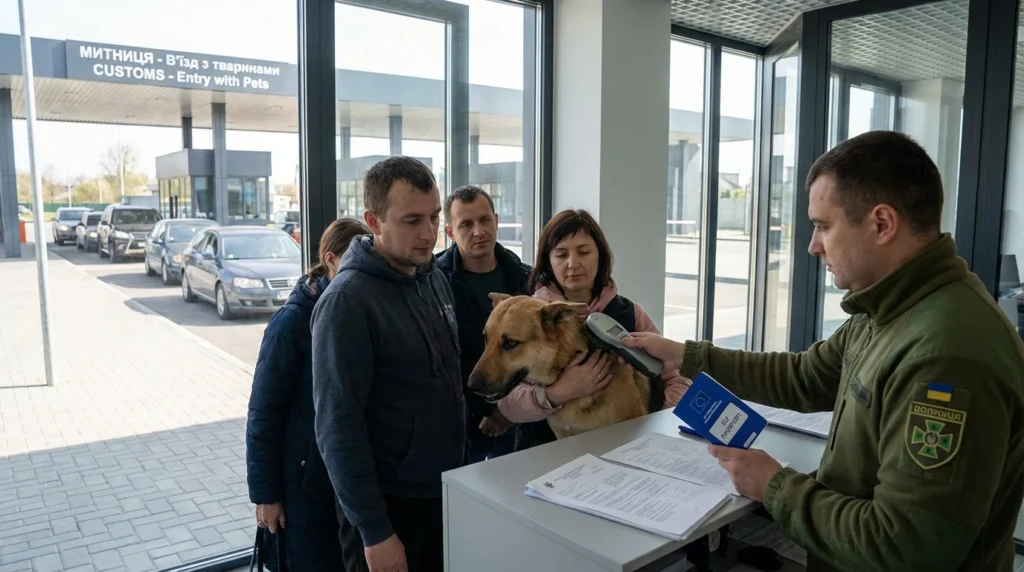
Entering by car offers the most flexibility but involves the longest wait times. High-traffic checkpoints like Medyka-Shehyni or Siret-Porubne have dedicated veterinary inspectors. When you arrive at the border, you must declare your pet. The inspector will scan the microchip to verify it matches the documentation and check the validity of the health certificates. It is advisable to carry physical copies of all documents, as digital versions may not always be accepted due to local system limitations.
Bus travel remains the most challenging option for pet owners. Many commercial carriers have strict “no-pet” policies or limit animals to very small breeds in carriers. If you choose this route, verify the carrier’s policy months in advance and ensure the bus stops at a checkpoint equipped with a veterinary station. Not all minor border crossings have the authority to process animal entries, which could result in a lengthy detour.
Quarantine Realities and Inspection Procedures
Upon arrival at the Ukrainian border, the veterinary inspection is usually straightforward if your paperwork is in order. The inspector will perform a visual check of the animal to ensure it shows no signs of infectious diseases. In 2026, there is no mandatory quarantine for pets arriving from the EU, North America, or other low-risk regions, provided all health requirements are met. However, if the documentation is incomplete—for instance, if the rabies vaccine was given less than 30 days prior—the animal may be refused entry.
For those entering from regions with higher disease prevalence, a 10-day observation period might be requested, though this is often handled as “home quarantine” where the owner agrees to keep the pet isolated at their destination. Always ensure your pet has enough familiar food and any necessary medications for the first few days, as specific brands may be harder to find in certain Ukrainian regions during the initial transition.
Returning to the EU and UK: Avoiding Exit Pitfalls
The most common mistake travelers make is focusing solely on the entry requirements for Ukraine and forgetting the rules for the return journey. To re-enter the EU or UK from Ukraine in 2026, your pet must have the original rabies titer test result that was obtained before leaving the EU. If you obtained the titer test while inside Ukraine, a three-month waiting period applies from the date of the blood draw before the pet can enter the EU.
Additionally, within 24 to 48 hours of leaving Ukraine, you must visit a local Ukrainian state veterinary clinic to obtain an export certificate. This document confirms the pet is healthy and ready for the return trip. In cities like Kyiv, Lviv, and Odesa, there are designated state clinics familiar with international export procedures. Without this certificate, EU border guards may prevent the animal from crossing back into Poland, Slovakia, or Romania, leading to significant legal and logistical complications.