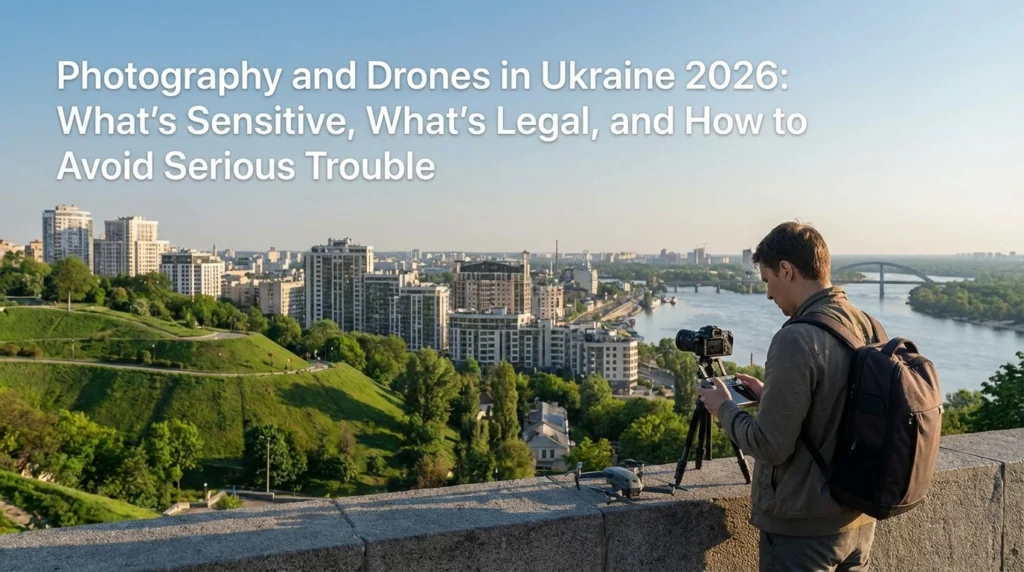
Ukraine in 2026 rewards careful photographers: golden-hour streets in Lviv, modern Kyiv architecture, Odesa’s seafront, the Carpathians in winter, and small towns full of everyday life. At the same time, the country remains security-focused. A photo that would be harmless elsewhere can trigger a serious response here—especially near military, critical infrastructure, or anything connected to air defense.
This article is written for travelers, creators, journalists-in-training, and drone hobbyists who want great images without putting themselves (or others) at risk. It’s not legal advice, but it reflects the practical reality on the ground: what tends to be tolerated, what tends to be stopped, and how to behave if someone challenges you.
Sensitive subjects: what not to film (and why it matters)
In Ukraine, “sensitive” often means “could help an enemy understand locations, routines, damage, or defenses.” Even if your intent is artistic, authorities and locals may read it as intelligence-gathering. The safest approach is simple: if it looks connected to defense, logistics, or emergency response—don’t film it.
Checkpoints, patrols, and document checks
- Do not photograph or record checkpoints (roadblocks, inspection points, temporary barriers, sandbags, anti-tank obstacles, guarded entrances).
- Do not film soldiers, police, territorial defense, or their vehicles unless you have explicit permission.
- Even “background” footage can be a problem if it shows faces, insignia, vehicle plates, routes, or procedures.
Practical rule: if you are being checked, keep your phone in your pocket. Don’t narrate, don’t livestream, don’t “document the experience.”
Military sites, training areas, and anything that looks guarded
- Assume barracks, depots, fenced compounds with guards, camouflaged equipment, and field positions are off-limits.
- “I didn’t know what it was” is rarely persuasive if the site is clearly secured.
- Filming from a distance with a telephoto lens can look worse than casual snapshots.
Air defense, radar, and “sounds in the sky”
Air defense is among the most sensitive topics. Avoid filming:
- Air defense systems, radar installations, launch sites, or anything that appears to be tracking aircraft.
- Interceptions (contrails, flashes, launches) and especially the location you’re filming from.
- Any content that could reveal timing, direction, or placement of defenses.
Even if you see others filming, don’t assume it’s acceptable. Locals may be recording for private reasons, but posting or sharing can create real harm.
Critical infrastructure: bridges, rail, ports, energy, communications
Infrastructure is a common “accidental” violation because it’s visually interesting. Be cautious around:
- Railway stations, rail yards, freight terminals (especially with military or humanitarian logistics nearby).
- Bridges, tunnels, dams, and river crossings.
- Power plants, substations, transformer yards, and high-voltage facilities.
- Ports, shipyards, and industrial waterfront areas.
- Telecom towers and major communication hubs.
Street photography is generally fine in normal public areas, but “studying” infrastructure with repeated shots, close-ups of access points, or drone passes can attract attention quickly.
Aftermath scenes: damage, debris, emergency response
Many travelers want to document resilience and rebuilding. That’s understandable, but aftermath scenes are sensitive for three reasons: privacy, dignity, and security.
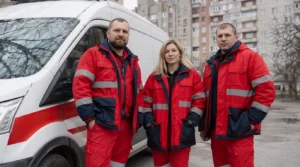
- Do not film rescue operations, firefighters, medics, or police activity unless you are clearly permitted.
- Avoid filming victims, injured people, grieving families, or identifiable residents near damaged homes.
- Be careful with fresh damage: it can reveal strike patterns, vulnerabilities, and exact locations.
If you want to tell a story responsibly, focus on reconstruction, community life, and consent-based portraits rather than raw scenes of trauma.
Drone realities in 2026: import rules, restrictions, and strict enforcement
Drones are where many visitors get into trouble—not because they intend to break rules, but because they assume “tourist drone logic” applies. In Ukraine, drone activity is treated as a security issue first and a hobby second.
Importing a drone and camera gear at the border
Customs officers distinguish between personal belongings and goods that look commercial. For travelers, a typical personal-use set is straightforward: one camera, plus your normal travel electronics. If you arrive with multiple new items in boxes, duplicates, or large quantities, you may be questioned and the items can be treated as goods rather than personal effects.
- Keep gear unboxed where possible and clearly used.
- Carry proof of ownership (purchase receipt, serial number photo, or a simple inventory note).
- If you’re crossing by land and you cross frequently, remember that duty-free thresholds can be lower than for air travel; frequent crossings can draw extra attention.
For most tourists arriving once and carrying a normal kit, the border is routine. Problems usually start when the gear looks like a resale shipment or a professional production loadout.
Where drones are typically not tolerated
Even when a location looks peaceful, drones can trigger emergency calls. Expect strong pushback near:
- City centers with government buildings
- Rail infrastructure and bridges
- Ports and industrial zones
- Any area with visible security presence
- Sites of recent incidents or damage
In practice, many regions treat unauthorized drone flights as unacceptable, especially if they resemble reconnaissance patterns (hovering, repeated passes, altitude changes over sensitive corridors).
Why enforcement is strict
Authorities and locals have learned that small details matter: a rooftop angle, a road junction, a substation layout, a checkpoint routine. Because drones can capture those details quickly, enforcement tends to be immediate and serious. That can include being stopped, questioned, asked to show footage, and instructed to leave the area.
How to reduce risk if you plan to fly
- Choose locations away from infrastructure: open countryside, non-sensitive natural landscapes, and clearly recreational zones.
- Fly low-profile: short flights, no hovering over roads, no orbiting buildings.
- Don’t publish in real time: avoid live posting that reveals exact locations.
- Have a local plan: if a local tells you it’s a bad idea, treat that as a stop sign.
If your trip depends on aerial footage (commercial work, documentary, media), plan permissions in advance and be ready for denial. “I’m just a tourist” is not a reliable shield when a drone is involved.
How to ask permission and read local cues in public spaces
Ukraine is generally welcoming to respectful photographers, but the social rules are different when security is in the background. A few habits will keep you out of conflict and help you get better images.
Ask first—especially with people, uniforms, and entrances
- For portraits, a simple gesture and smile plus “Mozhna foto?” (“May I take a photo?”) goes far.
- Never photograph people in uniform without explicit permission, even casually.
- Don’t photograph building entrances with guards, access control, or security cameras.
Watch for “soft signals” that you should stop
Often you won’t see a sign, but you’ll see behavior:
- People staring at your lens or drone controller
- A guard stepping closer or watching you continuously
- Locals telling you quietly, “Don’t film here”
- Someone covering a badge/plate or turning away
When you notice these cues, the best move is to lower the camera immediately, step aside, and leave without debate.
Be careful with maps, tripods, and “production behavior”
Tripods, gimbals, large microphones, and repeated takes can make you look like you’re collecting intelligence or producing a report about sensitive topics. If you want to shoot architecture or street scenes:
- Keep setups minimal and quick
- Avoid lingering near bridges, stations, and administrative buildings
- Don’t block sidewalks or draw crowds
If questioned: documents, deletion requests, and staying cooperative
If someone in authority approaches you, your goal is to de-escalate. Arguing about rights on the street is rarely productive, especially if the location is sensitive.
What to have ready
- Passport (or residence document) and entry stamp/registration details if applicable
- A short explanation of what you’re doing: “tourist photos,” “architecture,” “family trip”
- If you’re working: assignment letter, local contacts, and any permits you have
- Insurance details and emergency contacts; travelers often use a policy arranged via for straightforward documentation
How to behave during the interaction
- Stop filming immediately. Put the camera down.
- Stay calm, speak slowly, and avoid sudden movements.
- Offer to move away from the area.
- Do not joke about security topics.
If they ask to see your photos or footage
You may be asked to show recent images. Practically, refusing can escalate the situation. If the request is made, comply calmly and let them scroll—don’t “helpfully” open extra folders or show more than asked.
If they demand deletion
Deletion requests happen, especially near checkpoints or infrastructure. If you’re told to delete specific images:
- Ask politely which files they want removed.
- Delete in front of them without arguing.
- Don’t try to outsmart the situation (hidden backups, dramatic protests). That’s how minor issues become major ones.
Afterwards, leave the area. If you believe the request was improper, address it later through official channels—not on the spot.
If you’re taken to a station or asked to wait
- Stay respectful and consistent in your story.
- Request an interpreter if you don’t understand what’s being asked.
- Contact your embassy/consulate if the situation escalates or you’re held for an extended period.
Bottom line: In Ukraine in 2026, the safest photography strategy is to prioritize people’s privacy and national security over “the shot.” You’ll still come home with powerful images—just not the ones that can cause harm or bring serious trouble.