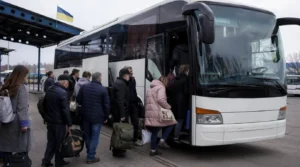
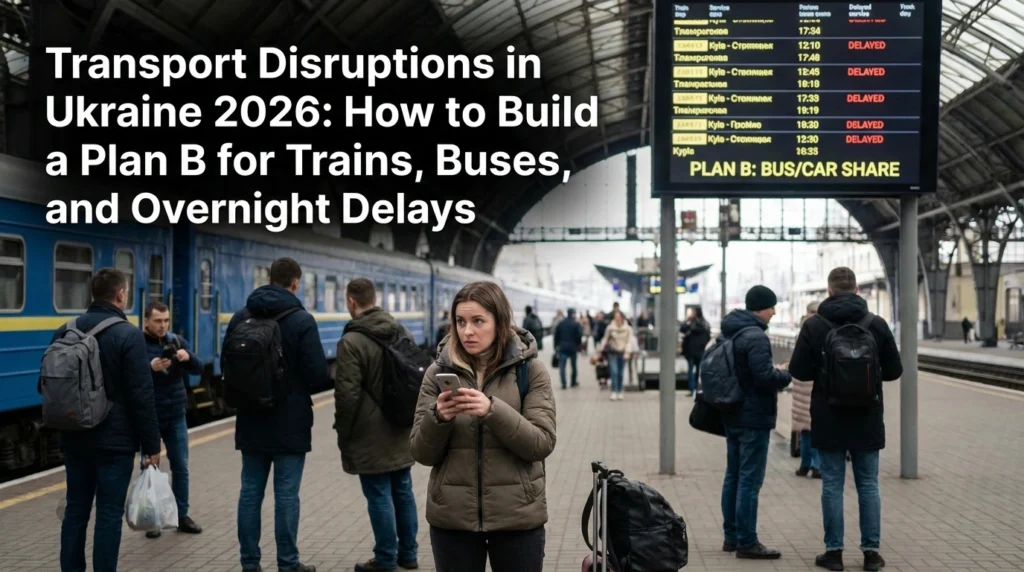
Travel in Ukraine in 2026 is very doable, but it rewards travelers who plan for interruptions. Trains can pause during alerts, buses can be rescheduled at short notice, and long border queues can turn a simple transfer into an overnight delay. A “Plan B” is not pessimism—it’s a practical travel skill that keeps your trip comfortable, safe, and on budget.
This article focuses on what actually helps on the ground: why disruptions happen, how to book with flexibility, what to carry for long waits, and how to reroute quickly using hub cities and cross-border alternatives.
Why disruptions happen: alerts, curfews, and infrastructure constraints
Most transport disruptions in Ukraine fall into a few predictable categories. If you understand them, you can build a schedule that absorbs shocks instead of collapsing.
- Air-raid alerts and safety protocols. Depending on the region and operator, trains may slow down, pause, or adjust routing. Stations can become crowded quickly, and onward connections may be missed.
- Curfews. Curfew hours vary by region and can change. If your arrival time drifts into curfew, you may be unable to continue by city transport, check in smoothly, or reach a rural destination. In Kyiv, curfew is often overnight (commonly 00:00–05:00), but you must confirm locally for each region on your route.
- Infrastructure limits. Track capacity, maintenance, and operational constraints can reduce frequency on some lines. Buses may be added or removed depending on demand and road conditions.
- Border and checkpoint delays. Land border crossings can fluctuate from fast to very slow. A missed connection after a border queue is one of the most common reasons travelers end up needing an unplanned night near a station.
Plan B mindset: assume that at least one segment of a multi-leg journey will shift by 1–6 hours. If you’re crossing a border and connecting onward the same day, plan for a bigger buffer.
Booking strategy: flexible tickets, buffer nights, and station-area lodging
The best Plan B is built before you travel. In Ukraine, a smart booking strategy is less about “finding the cheapest fare” and more about protecting your time and sleep.
1) Build buffers where delays hurt most
- Before a flight: If you’re flying out of a neighboring country, avoid arriving at the airport city on the same day as your flight. Add a buffer night in the airport city (or at least arrive by early afternoon the day before).
- Before an important event: If you have a wedding, conference, or fixed tour start, arrive in that city at least one day early.
- After border crossing: Treat the first Ukrainian city after the border as a potential “reset point” for a night if queues are long.
2) Prefer tickets and routes that keep options open
- Choose frequent corridors when possible. Routes between major hubs (for example, Lviv–Kyiv) typically offer more alternatives if you miss a departure.
- Split long journeys into two bookable chunks. Instead of one tight chain of connections, plan a hub stop where you can rebook onward travel if needed.
- Keep a “shadow itinerary.” Before travel day, identify at least two later departures (train or bus) that could replace your primary option.
3) Book lodging with disruption in mind
When delays happen, the hardest part is often finding a place to sleep near your arrival point—especially late at night. A few tactics reduce stress:
- Pick accommodation with 24/7 or late check-in (or confirm a self check-in method).
- Stay near the station for “transfer nights.” For one-night stops, a station-area hotel or apartment can be more valuable than a prettier neighborhood across town.
- Save 3–5 nearby options in advance. Keep a shortlist at different price points within walking distance or a short taxi ride.
4) Use nearby EU airports as part of your Plan B
For many travelers, the most stable “anchor” is an airport in a neighboring country, followed by land transport into Ukraine. If you need to reroute fast, it helps to know the closest airports to the border:
- Poland: Rzeszów and Lublin are common entry points for onward land travel toward western Ukraine.
- Moldova: Chișinău is a key hub for reaching southern and central Ukraine via land routes.
- Romania: Suceava, Iași, and Cluj-Napoca can be practical depending on your destination in Ukraine.
- Hungary: Debrecen can work for certain western routes.
- Slovakia: Košice is a useful option for travelers targeting western Ukraine.
Even if you don’t plan to fly, knowing these hubs helps if a disruption forces you to exit and re-enter via a different corridor.
What to pack for long waits: power, water, documents, and offline navigation
A delayed train or a late-night bus reschedule is manageable if you can keep your phone alive, stay hydrated, and access your documents without relying on a perfect internet connection.
Power and connectivity
- Power bank (high capacity) plus a short cable you can’t easily lose.
- Two charging methods: wall plug + power bank. If you have multiple devices, a compact multi-port charger helps.
- Offline essentials on your phone: saved addresses in Ukrainian/English, screenshots of tickets/QR codes, and your accommodation’s check-in instructions.
Water, food, and comfort
- Water: at least 0.5–1 liter per person for station waits; more for long bus rides.
- Food: shelf-stable snacks (nuts, bars, crackers). Don’t rely on late-night kiosks.
- Warm layer and socks: stations and vehicles can be cold at night, even outside winter.
- Small hygiene kit: tissues, wet wipes, hand sanitizer.
Documents and money
- Passport + copies: carry a physical photocopy and a secure digital copy.
- Cash backup: keep a small amount in hryvnia and/or euros in case card terminals are unavailable or queues are long.
- Travel details on paper: write down your hotel name, address, and phone number. If your phone dies, this matters.
Offline maps and “no-signal” planning
- Download offline maps for your arrival city and the station area.
- Pin key locations: your lodging, the station, a 24-hour pharmacy (if available), and a couple of cafes.
- Know the station exits: some large stations have multiple exits; saving the correct side can cut a late-night walk significantly.
How to reroute fast: cross-border alternatives and hub cities
When your original plan breaks, speed comes from having a simple decision tree. The goal is not the “perfect” route—it’s a safe route that gets you moving again with minimal uncertainty.
Step 1: Decide if you should wait, reroute, or stop for the night
- Wait if the delay is short and you still have a realistic connection window.
- Reroute if missing the connection will strand you late at night, push you into curfew complications, or cause you to lose a booked night in another city.
- Stop for the night if onward options are limited, you’re arriving very late, or you’re traveling with family and comfort matters more than speed.
Step 2: Use hub cities to regain control
Hub cities offer more departures, more lodging, and more help if something goes wrong. In practice, travelers often stabilize their itinerary by routing through:
- Lviv (western hub for many cross-border routes)
- Kyiv (central hub with extensive rail connections)
- Odesa (southern hub, useful for Black Sea-region plans when feasible)
If your final destination is smaller, aim first for a hub, sleep if needed, then continue in daylight with more frequent options.
Step 3: Keep cross-border alternatives in your pocket
If you’re entering or exiting Ukraine and your corridor becomes impractical, switching border direction can save a day. A workable Plan B often looks like this:
- Primary corridor: Poland ↔ western Ukraine
- Backup corridor: Romania or Moldova ↔ southern/central Ukraine (depending on where you need to be)
- Emergency reset: return to a nearby EU airport city (Rzeszów, Lublin, Chișinău, Suceava, Iași, Cluj-Napoca, Debrecen, Košice), sleep, and re-enter on the next available route
This is where your buffer nights pay off: a single flexible night near an airport or border city can turn a chaotic disruption into a controlled reroute.
Step 4: Protect your nights—overnight delays are the costliest
Overnight delays create the biggest chain reaction: missed hotel check-ins, curfew complications, and expensive last-minute bookings. Reduce the risk with these habits:
- Avoid late arrivals in unfamiliar cities when you can choose an earlier departure.
- Message your accommodation early if your arrival time is slipping; confirm how they handle late check-in.
- Keep one “sacrificial night” flexible in your itinerary—usually the first or last night—so you can absorb a disruption without losing prepaid bookings.
Quick checklist: your Plan B in 10 minutes
- Save two later departures for each major leg (train and/or bus).
- Download offline maps for your next two cities.
- Screenshot tickets, hotel address, and check-in instructions.
- Identify one station-area hotel and one budget option in each hub city.
- Pack: power bank, water, snacks, warm layer, cash backup.
Transport disruptions are part of Ukraine travel in 2026, but they don’t have to ruin your trip. A realistic schedule, one buffer night, and a well-packed day bag turn delays into a detour instead of a disaster.