Navigating Ukrainian Entry Requirements in 2026
Traveling to Ukraine in 2026 requires a blend of traditional travel preparation and specific attention to current border protocols. As the country continues its recovery and reconstruction, the border guard service maintains rigorous checks to ensure the safety of both visitors and residents. Success at the border depends entirely on having a complete document portfolio and a clear understanding of your legal status upon entry.
The first step for any traveler is determining their visa status. Ukraine maintains a liberal visa policy for many nations, but the rules are strictly enforced. Citizens of the European Union, the United Kingdom, the United States, Canada, Japan, South Korea, and Australia enjoy visa-free entry for stays up to 90 days within a 180-day period. This is a rolling window, meaning you must count back 180 days from any date of your stay to ensure you have not exceeded the 90-day limit.
For those not on the visa-free list, the Ukrainian e-visa system remains the most efficient route. This digital authorization is typically processed within a few business days and is suitable for tourism, business, or private visits. If your purpose of travel involves long-term volunteering, employment, or religious work, you must apply for a Type D visa at a Ukrainian consulate abroad before your journey begins. Attempting to enter on a tourist status for long-term work is a frequent cause for entry denial and potential future bans.
The Essential Document Portfolio for Border Crossing
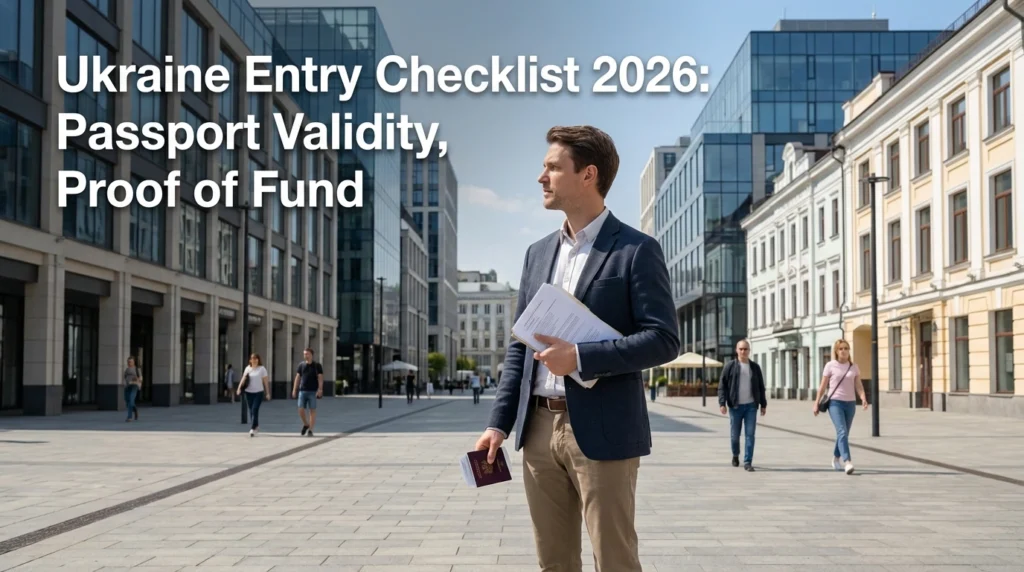
Possessing a valid passport is the baseline, but the Ukrainian State Border Guard Service frequently requests additional evidence of your intent and means. In 2026, the ‘Big Four’ documents are mandatory for a seamless entry process. Missing even one of these can lead to secondary questioning or a refusal of entry.
1. Passport Validity and Condition
Your passport must be valid for at least six months beyond your planned date of departure from Ukraine. It must also have at least two blank pages for entry and exit stamps. Border guards are particularly observant of the physical condition of the document; significant wear, water damage, or loose pages can result in the document being deemed invalid.
2. Proof of Financial Solvency
Foreigners must demonstrate they have sufficient funds to cover their stay and their return trip. The current calculation requires travelers to have approximately $45 USD per day of stay, plus an additional $225 USD as a reserve buffer. You can prove this through cash, recent bank statements (translated or clearly legible), or by showing a functional credit card along with a recent ATM balance inquiry. If a host is covering your expenses, a notarized invitation letter stating their financial responsibility is required.
3. Confirmed Accommodation and Itinerary
Vague plans are often flagged as a risk. You should provide printed or digital confirmations of hotel bookings, apartment rentals, or a formal invitation from a host. If your trip involves multiple cities—such as moving from Lviv to Kyiv and then to the Carpathians—have a chronological list of your stays ready. Border guards may ask for the specific address and contact number of your host or hotel to verify the booking.
4. Return or Onward Travel Tickets
Since most travelers enter Ukraine via land borders from Poland, Slovakia, Hungary, Romania, or Moldova, you must show a return bus or train ticket, or a flight confirmation departing from a neighboring country’s airport. If you are traveling by private vehicle, you must possess a Green Card insurance policy and valid registration documents for the car.
Avoiding Common Refusal Reasons and Security Protocols
Entry denials in 2026 are rarely random; they are usually the result of inconsistencies in a traveler’s story or missing mandatory paperwork. One of the most common reasons for refusal is the lack of specialized health coverage. Standard international travel insurance often excludes regions with specific security risks. To meet the legal requirements for entry, travelers must have a policy that covers medical expenses and emergency repatriation. Obtaining a policy from ensures that your coverage meets the specific criteria demanded by Ukrainian border authorities, including coverage for accidents related to the current security climate.
Inconsistent itineraries are another red flag. If you claim to be a tourist but cannot name a single landmark you plan to visit, or if your hotel booking is in a city five hours away from your entry point without a transport plan, guards may suspect the true purpose of your visit. Be honest and specific. If you are visiting for volunteer work, have your organization’s registration documents and a signed invitation letter on hand.
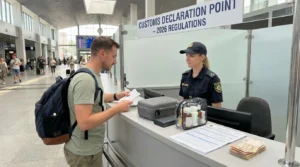
Customs regulations are also strictly monitored. Travelers can import goods for personal use up to a value of €500 when entering via land borders. This includes personal electronics like a laptop and a smartphone. However, bringing in items in commercial quantities (multiple new iPhones in original packaging, for example) without declaration will lead to confiscation and fines. Prohibited items include narcotics, explosives, and materials that incite violence or promote illegal ideologies. Always check the current list of restricted medications, as some common over-the-counter drugs in the West may require a doctor’s prescription and a formal declaration in Ukraine.
Procedures for Minors, Dual Citizens, and Residents
Traveling with children or under complex citizenship statuses requires additional layers of documentation. For minors (under 16) traveling with only one parent, a notarized consent form from the non-traveling parent is highly recommended, even if not strictly required by your home country. This prevents delays related to international child safety protocols. The child must have their own passport; being listed in a parent’s passport is no longer sufficient for entry.
Dual citizenship presents a specific legal landscape. Ukraine does not recognize dual nationality for its citizens. If you hold a Ukrainian passport and a foreign passport, the Ukrainian authorities will treat you exclusively as a Ukrainian citizen while on their territory. This means you must enter and exit on your Ukrainian passport. For foreign nationals holding two different foreign passports (e.g., US and UK), you must use the same passport for both entry and exit to avoid confusion in the electronic tracking system.
Foreigners holding temporary or permanent residence permits for Ukraine must ensure their documents are not expired and that they have not exceeded the permitted time outside the country. If your permit was issued in a region currently under reconstruction or limited access, check with the State Migration Service before arrival to ensure your residency status remains active in the national database. Having a backup digital copy of all permits on a secure cloud drive is a wise precaution for any traveler in 2026.