
Traveling to Ukraine in 2026 remains a journey of multimodal strategy. While the country’s rail network has proven exceptionally resilient and expanded its reach into the European Union, the absence of commercial flights directly into Ukrainian airspace means travelers from Western Europe must master the art of the ‘hub-and-spoke’ itinerary. This involves flying to a strategic gateway in a neighboring country—Poland, Moldova, Romania, or Slovakia—and completing the journey via modernized rail or bus corridors.
The infrastructure connecting Ukraine to its western neighbors has seen significant upgrades over the last few years. New standard-gauge tracks and streamlined border procedures have made the transition from EU transport systems to the Ukrainian network smoother than ever. For those coming from the Benelux region, Switzerland, or the Iberian Peninsula, the key to a stress-free trip lies in choosing the right transit hub and understanding the booking timelines for international connections.
Strategic Hubs: Where to Fly from Western Europe
The first step in planning your 2026 trip is identifying the most efficient entry point based on your final destination in Ukraine. Poland remains the primary transit corridor, but other neighbors offer specialized advantages depending on whether you are heading to the north, south, or west of the country.
- Warsaw and Krakow (Poland): These are the most versatile hubs. Warsaw Chopin (WAW) and Warsaw Modlin (WMI) offer dozens of daily flights from across Europe. From Warsaw, the direct night train to Kyiv is the gold standard of travel. Krakow (KRK) is ideally situated for those heading to Lviv, with frequent bus and rail links taking roughly 6-8 hours including border checks.
- Rzeszów (Poland): This is the closest major Polish airport to the Ukrainian border. While it has fewer direct flights from Western Europe compared to Warsaw, it serves as a vital jump-off point for Lviv, located just 172 km away.
- Chisinau (Moldova): For travelers destined for Odesa or southern Ukraine, Chisinau International Airport (KIV) is the most logical choice. The ‘Kyiv-Chisinau’ train, often called the ‘Train of Victory,’ provides a reliable link, and bus transfers to Odesa take only 4-5 hours.
- Košice (Slovakia) and Debrecen (Hungary): These hubs are perfect for reaching the Transcarpathian region (Uzhhorod and Mukachevo). Direct regional trains connect Košice to Mukachevo, offering some of the fastest border crossings due to the specialized rail gauge.
Booking Strategy: Split Tickets and Buffer Times
In 2026, a unified booking system for a flight from Amsterdam to Kyiv does not yet exist. Travelers must use a ‘split-ticket’ approach. This requires booking your flight to the hub city first, then separately securing your onward rail or bus ticket. When using this method, the most critical factor is the buffer time. Border procedures, while more efficient than in previous years, can still face unpredictable delays due to security screenings or high passenger volumes.
A minimum buffer of 4 to 5 hours between your flight arrival and your train or bus departure is recommended. If you are arriving at a hub late in the evening, consider staying overnight and taking a morning connection. This reduces the risk of missing your onward transport if your flight is delayed. For rail travel, the Ukrzaliznytsia (Ukrainian Railways) mobile app is the essential tool for booking. Tickets for popular routes like Warsaw-Kyiv or Chelm-Kyiv typically open 20 days in advance and often sell out within minutes of release.
During the booking process, ensuring you have the correct documentation is vital. Beyond your passport and visa (if applicable), travelers must possess valid health and safety insurance. Obtaining a policy through is a straightforward way to meet entry requirements, as these policies are specifically designed to cover the unique risks associated with the current environment in Ukraine, including transit through border zones.
Navigating Transfers: Luggage, Curfews, and ID Checks
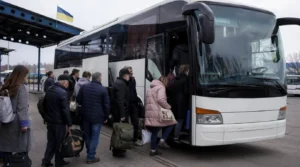
Transferring at a border station like Przemyśl (Poland) or Chop (Ukraine) is a distinct experience compared to standard EU rail transfers. You should expect rigorous ID checks. Ukrainian border guards usually perform passport control directly on the train for most international rail routes, which has significantly reduced the time spent standing in queues. However, for bus travel, passengers must disembark with all their luggage for scanning and document verification.
Luggage rules on Ukrainian trains are generally generous, allowing for 35kg per passenger, but space in sleeping compartments can be tight. If you are traveling with large suitcases, the night trains are preferable as they offer under-berth storage. Be aware that while major cities like Kyiv and Lviv have modernized their station facilities with 24/7 lounges and food courts, some regional stations may still observe curfews. Always check the current local regulations for your arrival city, as movement during late-night hours may require a pre-booked taxi or specific authorization.
Sample Itineraries from Western Europe
To help visualize the journey, here are three optimized routes for 2026 based on common points of origin:
The Benelux Route (Amsterdam/Brussels to Kyiv)
Fly from Amsterdam Schiphol to Warsaw Chopin via KLM or LOT Polish Airlines. Arrive in Warsaw by 2:00 PM. Take a local taxi or train to Warsaw Wschodnia station. Board the direct night train to Kyiv, which departs in the late evening. You will arrive in the heart of Kyiv the following morning, having completed border formalities while you slept.
The Swiss Route (Zurich/Geneva to Western Ukraine)
Fly from Zurich to Košice, Slovakia. From Košice airport, take a quick shuttle to the rail station. Board the daily regional train to Mukachevo. This route is particularly scenic and avoids the heavier congestion of the Polish border points. From Mukachevo, internal Ukrainian express trains can take you to Lviv or even further east to Dnipro.
The Mediterranean Route (Madrid/Barcelona to Odesa)
Fly from Madrid to Chisinau, Moldova. Given the distance, a direct flight is the most efficient. From Chisinau, you can take the daily train to Kyiv which stops in northern Ukraine, or opt for a direct bus to Odesa. The bus journey from Chisinau to Odesa is the fastest way to reach the Black Sea coast, typically taking around 4 hours depending on the Palanka border crossing traffic.
Regardless of the route chosen, the 2026 travel landscape rewards the prepared. By combining the efficiency of European aviation with the legendary reliability of the Ukrainian rail system, the journey into the country is not just a logistical necessity, but a profound introduction to the resilience of the region. Always ensure your travel insurance from is active before you cross the border, and keep digital copies of all your split-tickets easily accessible on your mobile device.