Where you can hire a bike
Kyiv, Lviv, and Odesa all have bike-share options, including Nextbike in some areas and local operators in others. Availability changes by season and by neighbourhood, so you need to check the app or operator map before you go out.
In central districts, bike hire is usually the easiest option for short trips. You can often unlock a bike with a phone app, pay by the hour, and leave it at an approved docking point or parking area. Some private rental shops also offer city bikes, helmets, locks, and child seats.
If you plan to ride for a full day, compare the total cost of bike-share with a private rental. Bike-share is convenient for short journeys. Private rental is often better if you want to keep the same bike for several hours or leave the city centre.
Best places to ride in Kyiv, Lviv, and Odesa
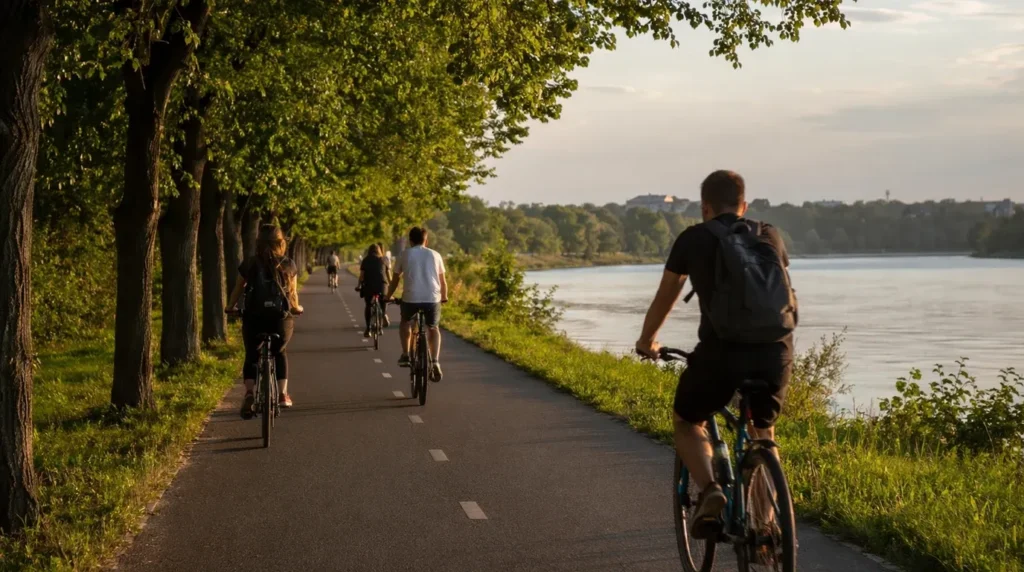
Kyiv has some of the most practical city cycling in Ukraine, but the quality changes from one street to the next. The Dnipro river embankment is one of the easier places to ride. You get longer stretches, fewer junctions, and more space than on many central streets.
In Lviv, the old town area and nearby central streets can work well for short rides, especially early in the day. The terrain is not flat in every direction, so expect some climbs. Narrow streets and pedestrian activity mean you need to stay alert and keep your speed down.
Odesa has a mix of flat streets and seaside routes. Central roads can be busy, but the city is often manageable for careful cyclists who choose quieter side streets and ride outside peak traffic times. If you are near the coast, check local access rules before you set off, because some paths may be shared with pedestrians.
Outside the major cities, cycling can be more demanding. Road surfaces vary, shoulders are not always usable, and traffic can move quickly. If you are not familiar with the area, stick to routes that are well used by local cyclists and avoid long rides after dark.
What the road rules mean in practice
You need to ride on the right side of the road. Use marked cycle lanes where they exist. If there is a lane but it is blocked by parked cars, debris, or roadworks, you may need to merge carefully into traffic.
Helmets are recommended for adults, but they are not legally required. Even so, you should wear one if you are riding in traffic or planning a longer trip. A helmet is especially sensible if you are not used to local driving behaviour.
Traffic can be aggressive. Drivers may overtake closely, change lanes quickly, or ignore smaller vehicles. You need to hold a predictable line, signal clearly, and avoid sudden movements. If a road feels unsafe, take a slower side street or get off and walk the bike.
At junctions, assume that drivers may not always expect cyclists. Make eye contact when you can. Use lights after dark and in poor visibility. A front white light and rear red light are important, even for short evening rides.
How to stay safe on urban rides
Before you ride, check the brakes, tyres, and seat height. If you are using a hire bike, test the gears and lights before leaving the pickup point. Make sure the lock works and that you know how to end the rental properly.
Carry a phone with offline maps if possible. A navigation app can help you find quieter streets and cycle lanes, but do not rely on it alone. Some roads that look direct on a map are poor choices for cycling because of traffic or surface quality.
Wear bright or reflective clothing if you are riding in low light. Keep one hand free if you need to signal. Avoid headphones that block traffic noise. If you need to stop, move fully out of the traffic flow before checking your route or message.
If you are not confident in busy traffic, ride early in the morning or on weekends when roads are less crowded. In many parts of the city, that is the easiest time to use a bike for sightseeing or short transfers between districts.
Planning a longer cycling trip
If you want to ride beyond the city centre, plan your route carefully. Surface quality can change without warning. Some roads have good sections followed by broken pavement, rough shoulders, or no safe place to ride.
For longer rides, carry water, basic tools, and a power bank. A spare inner tube and a small pump are useful if you are cycling far from central districts. You should also check the weather, because rain can make some surfaces slippery and reduce visibility.
If you are travelling between cities, do not assume that trains will always take a full-size bike. Rules vary by operator and by service type. Check the current transport policy before you travel, or be ready to remove the front wheel and pack the bike if required.
For most visitors, the safest approach is simple. Use bike-share or rental bikes in central areas. Choose embankments, parks, and quieter streets where possible. Avoid rushing. In Ukrainian cities, a slower ride is usually a safer ride.
What to check before you rent
- Whether the bike-share app works with your phone number and payment card
- Where you can park or return the bike without extra charges
- Whether a helmet, lock, and light are included
- How to report a fault or flat tyre
- Whether the rental has a time limit or zone restriction
FAQ
Do you need a helmet to cycle in Ukraine?
No, adults are not legally required to wear a helmet. You should still wear one, especially in traffic or if you are new to cycling in the city.
Can you ride on the pavement?
Do not assume you can. Pavements are mainly for pedestrians. Use cycle lanes where they exist. If there is no safe road option, you may need to dismount and walk the bike.
Is bike-share easy to use for visitors?
Usually yes, but you need to check the app setup before you go out. Some services require local phone verification or a payment card that works with the operator.
Are there good scenic routes in the cities?
Yes. The Dnipro river embankment in Kyiv and routes around the old town in Lviv are among the better-known urban cycling areas. They are still not fully separated from other traffic, so stay alert.
Is it safe to cycle in the evening?
It can be, if you use lights, choose well-lit streets, and avoid heavy traffic routes. If visibility is poor or roads feel busy, it is better to stop earlier.
What should you do if the bike lane disappears?
Merge carefully and ride predictably. Do not swerve suddenly. If the road feels unsafe, slow down, take a side street, or get off and walk until conditions improve.