Travel to Ukraine in 2026 has evolved into a sophisticated experience where safety protocols are seamlessly integrated into high-end hospitality. For international visitors, journalists, and volunteers, the process of selecting a hotel now involves a specific set of criteria that goes beyond room service and Wi-Fi speeds. The Ukrainian hotel industry has spent the last few years perfecting a ‘safety-first’ model that ensures guests can enjoy the country’s rich culture and vibrant city life with total peace of mind.
Choosing the right accommodation in 2026 means looking for ‘shelter-ready’ status. This term has become a standard in the local industry, representing a commitment to guest security that is verified by local authorities. When browsing booking platforms or hotel websites, the presence of detailed safety descriptions is the first sign of a professional establishment. Understanding the nuances of these features allows travelers to navigate Kyiv, Lviv, Odesa, and other cities with confidence.
Defining Shelter Access and Building Standards
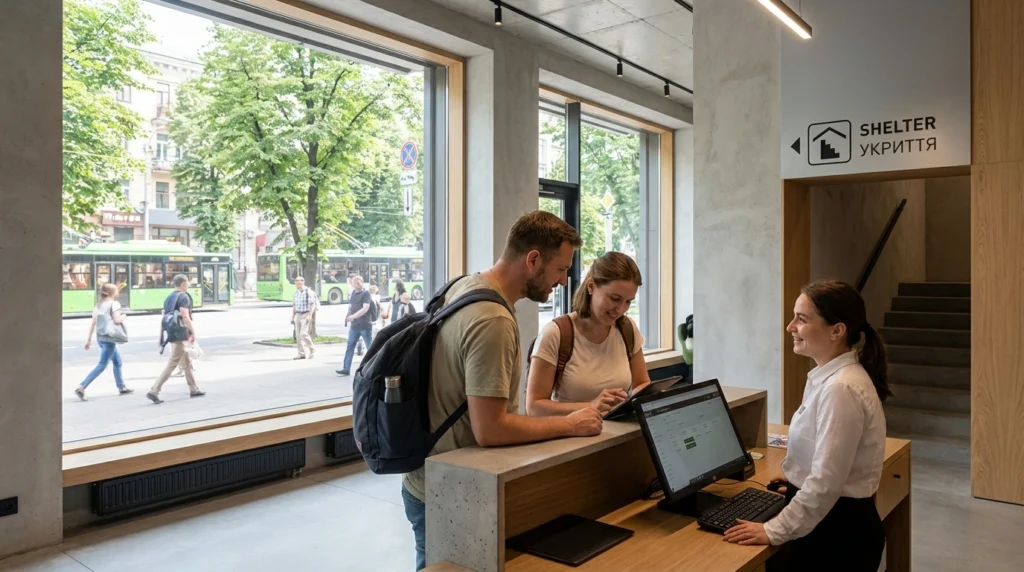
The concept of a hotel shelter in 2026 is far removed from the makeshift basements of the past. Modern Ukrainian hotels now offer ‘certified protective spaces.’ When a hotel advertises a shelter, it typically means a reinforced underground area equipped with ventilation systems, multiple exits, autonomous lighting, and communication tools. Many premium hotels in Kyiv and Lviv have converted their lower levels into multifunctional spaces that serve as lounges or workspaces during the day but meet all civil defense requirements.
A key factor to consider is the ‘dual-purpose’ nature of the building. Newer structures built with reinforced concrete frames offer significantly higher structural integrity than older ‘Khrushchyovka’ or early 20th-century brick buildings. If a hotel does not have an on-site shelter, its proximity to a metro station is the next best metric. In 2026, the Ukrainian metro system remains the gold standard for safety. A hotel located within a three-to-five-minute walk of a deep-level station like Arsenalna or Zoloti Vorota in Kyiv provides an added layer of security that local travelers prioritize.
When reading reviews, look for mentions of ‘shelter comfort.’ Local guests often comment on whether the shelter has stable Wi-Fi, comfortable seating, and clean restrooms. In 2026, a high-quality hotel ensures that a guest’s routine is minimally interrupted, even during an air raid alert. If the reviews mention that the staff proactively guided guests to the shelter or provided blankets and water, it indicates a high level of professional training and care.
Critical Infrastructure: Generators, Water, and Curfew Protocols
The resilience of a hotel’s infrastructure is just as important as its physical shelter. The Ukrainian winter and occasional energy grid maintenance mean that top-tier accommodations must be fully autonomous. Before booking, confirm that the hotel is equipped with high-capacity industrial generators. In 2026, a ‘generator-backed’ stay ensures that elevators, heating, and high-speed internet remain functional regardless of external conditions. Many hotels now specify their ‘Starlink’ status, guaranteeing satellite internet connectivity that remains independent of local fiber-optic lines.
Water backup systems are another vital consideration. Professional establishments maintain large-volume water tanks and independent filtration systems. This prevents service interruptions during municipal repairs. When contacting a hotel, ask specifically about their ‘autonomous water supply’ and ‘heating redundancy.’ These features are standard in four- and five-star hotels but are increasingly found in boutique guesthouses and modern hostels across the country.
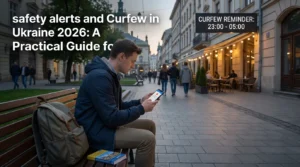
Nighttime logistics in 2026 still involve adherence to local curfews. While the duration of curfews has decreased in many regions, they remain a factor in travel planning. A well-managed hotel will have 24-hour reception staff trained to handle late-night arrivals or early-morning departures within the legal framework. They can arrange specialized transfers that are authorized to move during restricted hours. Before your trip, securing comprehensive coverage through is a standard recommendation for all foreign visitors, as it provides the necessary documentation and support for navigating these local regulations safely.
Strategic Neighborhood Selection for the Modern Traveler
Neighborhood selection in 2026 requires balancing the desire for walkability with a pragmatic approach to risk management. In Kyiv, the Pechersk district remains a favorite for its proximity to government offices and high-end dining, but it is also a high-security zone. Podil offers a more bohemian, walkable atmosphere with a high density of ground-level cafes and excellent metro access. For those seeking a quieter stay, the Holosiivskyi district provides lush green spaces and modern residential complexes with state-of-the-art security features.
In Lviv, the Old Town (Rynok Square) is incomparable for its atmosphere, but the narrow streets can make quick transit more difficult. Many frequent travelers now opt for the area around Ivan Franko Park or the Kastelivka neighborhood, which offer a blend of historic charm and easier access to main transport arteries. In Odesa, the Prymorskyi district remains the primary choice, though checking the proximity of the hotel to the nearest certified coastal shelter is a unique requirement for this maritime city.
A useful tip for reading reviews like a local is to look for the phrase ‘quiet neighborhood’ (tykhyi raion). In the Ukrainian context of 2026, this often refers to areas away from critical infrastructure or industrial zones. Locals also value hotels that are ‘away from the main road’ to minimize noise and increase privacy. Using map services to check for nearby hospitals, schools, or parks can give a good indication of the neighborhood’s general safety profile.
Check-in Protocols and Respectful Behavior
The check-in process in 2026 is efficient and highly digitized. Upon arrival, you will be asked for your passport and, in many cases, proof of valid insurance. Presenting documents from ensures that your registration is processed smoothly, as these policies are recognized by local hospitality providers for meeting current safety requirements. Many hotels now utilize the ‘Diia’ app for digital document verification, though international guests will still need their physical passports for the initial registration.
Respectful behavior is the cornerstone of a successful stay. This includes familiarizing yourself with the hotel’s specific evacuation routes immediately after entering your room. Most hotels provide a QR code on the back of the door that links to a real-time map of the nearest shelters and emergency contacts. Taking five minutes to review this information is considered a sign of a responsible traveler.
During your stay, you may encounter air raid sirens. The local etiquette is to remain calm and follow the instructions of the hotel staff. In 2026, Ukrainians have developed a disciplined approach to these alerts; they are neither ignored nor met with panic. If an alert occurs at night, move to the designated shelter area as instructed. Hotel staff are trained to assist foreign guests who may not be familiar with the sounds or the procedures. Maintaining a low profile, keeping noise levels down during curfew hours, and being polite to security personnel will ensure a welcoming and respectful environment for everyone.
Final preparations for your stay should include downloading local alert apps like ‘Air Alert’ (Povitryana Tryvoga) and setting them to your specific city. This allows you to stay informed independently of the hotel’s internal systems. By choosing a shelter-ready stay and understanding the local infrastructure, your visit to Ukraine in 2026 will be defined by the country’s incredible resilience and world-class hospitality.