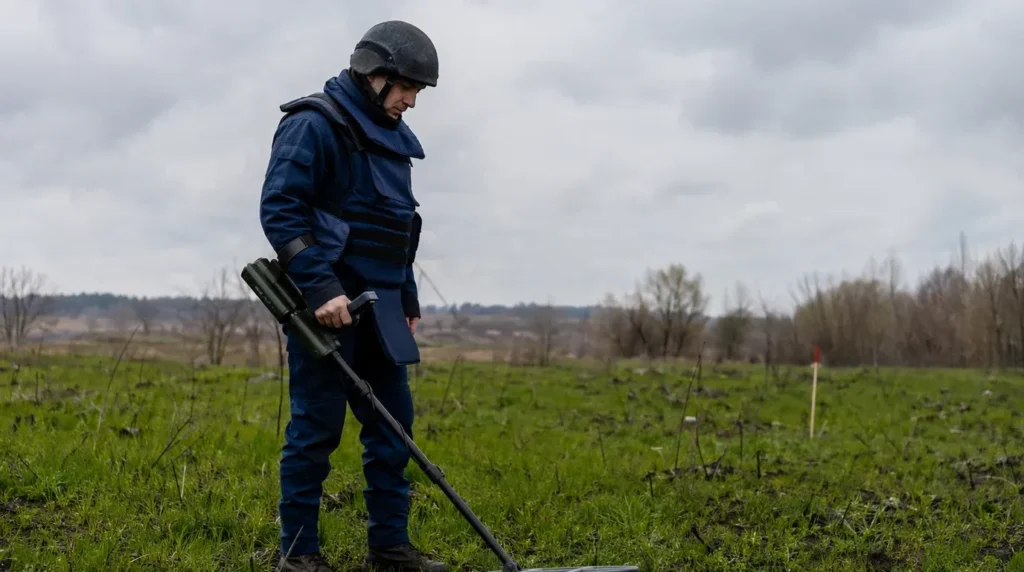
Landmines and unexploded ordnance remain a serious risk in some parts of Ukraine in 2026. The risk is concentrated in areas that were occupied, shelled, or fought over. If you are travelling for work or tourism, you need to treat official safety advice as part of your trip planning.
The main rule is simple. Stay on paved roads and marked paths. Do not enter closed areas. Do not pick up objects from the ground. If you are unsure about a place, do not go there.
Where the mine risk is highest
The highest risk is in formerly occupied or contested areas of eastern and southern Ukraine. That includes parts of Kharkiv, Kherson, Zaporizhzhia, Donetsk, and Mykolaiv regions. Some districts in these regions may be safe, while others are not. You cannot judge this by looking at the landscape.
You should also expect risk near former front lines, military positions, fields, tree lines, abandoned buildings, riverbanks, and roads that were damaged during fighting. Mines and unexploded shells can be hidden in grass, mud, rubble, and shallow water. Some devices are triggered by pressure. Others are triggered by movement or disturbance.
Western Ukraine is not contaminated in the same way. Lviv, Ivano-Frankivsk, Chernivtsi, and Zakarpattia are not considered mine-contaminated areas. Normal city travel there does not carry the same ground-contamination risk found in the east and south.
How to move safely in affected regions
If you need to travel in a higher-risk region, stay on main roads and use routes that local authorities and your host have confirmed as open. Do not take shortcuts across fields, verges, empty lots, or river banks. Even a short detour can take you into an unsafe area.
In towns and cities, avoid damaged buildings, collapsed walls, basements, and courtyards that have not been cleared. Do not enter abandoned houses, warehouses, or industrial sites. Do not climb fences or barriers. They may be there to keep people out of danger.
If you are driving, do not leave the vehicle except in a place that is clearly open and used by others. If you stop on a rural road, check first that the verge is safe. Do not park on grass or dirt if you do not know the area.
If you are hiking, cycling, or taking photos, stay on marked trails. Do not walk into long grass, wooded strips, or open ground to reach a viewpoint or a better angle. In affected regions, the safest path is the one that is already in use.
What to do if you find a suspicious object
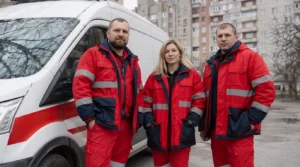
Never touch it. Never move it. Never try to open it, clean it, bury it, or take a picture from close range. Back away the way you came. Warn other people not to approach. Then report it to 101, the State Emergency Service of Ukraine, also known as DSNS.
If you are with a guide, driver, hotel staff member, or local contact, tell them immediately and follow their instructions. If the object is on a road or near a building, keep others away until emergency services arrive. Do not use sticks, stones, or tools to test the object.
If you hear an explosion nearby, move to cover if you can do so without leaving a safe surface. If the area is already known to be unsafe, do not rush out to look. Wait for official instructions and emergency responders.
How to check whether an area is safe before you go
Before travelling, ask your accommodation, driver, employer, or local host whether the area has any ground-contamination risk. Do not rely on social media posts or old travel advice. Conditions can change after shelling, flooding, construction, or new clearance work.
Look for official guidance from local authorities, the State Emergency Service, and recognised mine-action organisations. HALO Trust and UN Mine Action operate in Ukraine and publish useful safety information. If a route, park, beach, or village is marked closed, treat that as a hard stop.
If you are booking a day trip or transfer in a rural area, ask whether the route uses only cleared roads. If the answer is unclear, choose another route. This is especially important in southern and eastern regions.
Practical rules you can follow every day
- Stay on paved roads, sidewalks, and marked paths.
- Do not enter fields, forests, ruins, empty lots, or damaged buildings.
- Do not touch shells, drones, wires, boxes, toys, tools, or metal objects on the ground.
- Do not cross barriers, tape, signs, or fences that restrict access.
- Do not assume a place is safe because other people are nearby.
- Report suspicious objects to 101 and move away.
If you are travelling with children, keep them close and explain the rule before you leave the hotel. Children may be tempted to pick up unusual objects. Tell them that anything unknown on the ground is not for touching.
Mine risk is manageable if you stay in known safe areas and follow local instructions. The key is not to improvise. In Ukraine, the safest decision is often to turn back and use a different route.
FAQ
Can I travel normally in Lviv, Ivano-Frankivsk, Chernivtsi, and Zakarpattia?
Yes. These western regions are not considered mine-contaminated areas. You still need normal urban safety awareness, but you do not face the same ground-mines and unexploded-ordnance risk found in parts of the east and south.
Are beaches and riverbanks safe in southern Ukraine?
Not always. Some are safe and open, but others may be contaminated or restricted after fighting or shelling. You need to check local advice before going, and you should not walk onto isolated beaches, dunes, or banks that are not clearly open.
What should I do if I see a sign warning about mines?
Stop. Do not go past the sign. Turn back the way you came. Do not search for a better route on foot. If the sign is damaged or unclear, treat the area as unsafe.
Is it safe to drive on rural roads in affected regions?
Only if the route is confirmed open and you stay on the road. Do not pull over onto grass, dirt, or the roadside. Do not take shortcuts. If you need to stop, do it in a clearly used and maintained area.
Who do I call if I find a suspicious object?
Call 101, the State Emergency Service of Ukraine, also known as DSNS. Give the location, describe the object from a safe distance, and wait for instructions. Do not try to deal with it yourself.
Can mine risk disappear after clearance work?
Yes, but only in the specific area that has been cleared and checked. Clearance does not mean the whole region is safe. You still need to follow current local guidance and stay on marked routes.