 Ukraine Entry Guide for Guinea Bissau Citizens 2026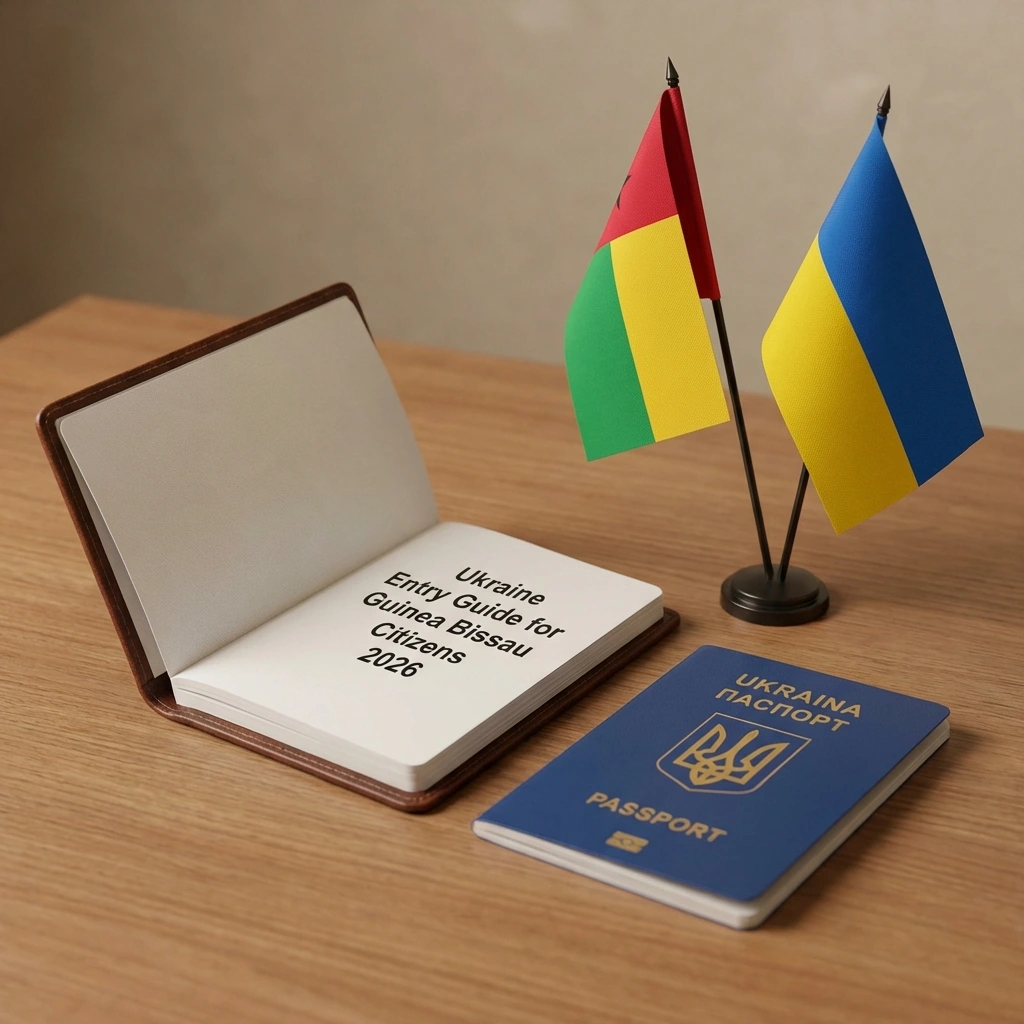
Key facts
Entry Rules for Guinea-Bissau Citizens
Citizens of Guinea-Bissau need a visa to enter Ukraine. For short trips, you generally apply for a short-term Type C visa, which allows a stay of up to 90 days within any 180-day period (depending on the visa issued).
Where to apply: submit your application through a Ukrainian embassy/consulate or other authorized Ukrainian consular offices. Plan ahead: applications are typically accepted no earlier than 3 months before your intended travel date.
No visa on arrival: Ukraine does not issue short-term visas at the border. You must obtain the visa before travel.
COVID-19: Ukraine has no COVID-related entry restrictions in 2026.
Required Documents
Prepare a complete set of documents for both the visa application and border control checks. Consular requirements can vary by location, but Guinea-Bissau applicants commonly need:
- International passport valid for at least 3 months after the planned departure from Ukraine.
- Visa application form (completed as required by the consular office).
- One recent photo (typically 35×45 mm).
- Travel medical insurance with coverage of at least €30,000, valid in Ukraine.
- Proof of sufficient funds for the trip (for example: bank statement, income certificate, or a sponsor letter).
- Proof of travel purpose (one of the following, depending on your trip): hotel booking/tourist voucher, private invitation, business invitation, event invitation, medical documents for treatment, or onward tickets for transit.
- Visa fee payment receipt.
Visa fees (typical): standard processing USD 65; urgent processing USD 130. Visas for children under 18 are commonly free of charge (confirm with the consular office handling your application).
Financial means at the border: Ukrainian rules require travelers to demonstrate adequate funds for the stay. The minimum is calculated using a government formula based on the 2026 subsistence minimum (3,209 UAH) and the number of travel days. Practical proof includes a recent bank statement, cash, card limits, or a sponsor’s documents.
Travel Insurance
Travel medical insurance is mandatory for Guinea-Bissau citizens applying for a Ukrainian visa and is strongly recommended for the entire stay. Choose a policy that covers:
- Emergency outpatient and inpatient care
- Emergency transportation and hospitalization
- Repatriation in case of serious illness or accident
- Coverage that remains valid during travel under martial law conditions, including risks linked to military actions (where available in policy terms)
You can arrange suitable coverage online; many travelers use insurance-ukraine.com to purchase a policy that meets visa requirements and provides broader protection for travel in Ukraine.
Safety
Ukraine remains under martial law in 2026, and the security situation can change quickly by region. Take these steps before and during your trip:
- Plan routes carefully and confirm that your destination is operating normally (transport, accommodation, curfews, local restrictions).
- Follow air-raid alerts and immediately go to shelter when sirens sound.
- Carry originals and copies of your passport, visa, insurance, and accommodation details.
- Expect checkpoints on roads and at city entrances; keep documents accessible and follow instructions calmly.
- Do not photograph or film military personnel, checkpoints, air defense, or sensitive infrastructure.
Emergency number: dial 112 in Ukraine for emergency assistance (dispatches police, ambulance, and fire services).
Customs
Green corridor (no written declaration): you may bring personal belongings and, in general, goods valued up to €500 and weighing up to 50 kg. Food for personal use is generally allowed up to €200. You may carry cash up to €10,000 (or equivalent) without declaring; higher amounts require declaration and supporting bank documents.
Medicines: non-controlled medicines are generally allowed in limited personal quantities (commonly up to 5 packages of each medicine per person). Controlled substances (narcotic/psychotropic) require strict compliance and documentation.
Red corridor (written declaration required): use it for goods above limits, items requiring permits, currency above thresholds, cultural valuables, securities, and controlled medicines. Keep receipts to support declared value.
Prohibited imports: narcotics and psychotropic substances (without proper authorization), explosives and toxic substances, certain uncertified food products, materials promoting violence/racism/war or pornography, unidentified animals, wanted cultural property, and weapons without required permits.
Pets (cats/dogs): for entry, pets must have an ISO 11784/11785 microchip, a rabies vaccination after chipping, and a veterinary health certificate issued shortly before travel (commonly within 10 days). Confirm the exact certificate format required for your departure country and transit route.
Exports from Ukraine: goods valued under €10,000 may generally be exported without a written declaration. Higher values require declaration. Certain categories (cultural items, weapons, controlled substances) are restricted or prohibited.
Driving
Ukraine has right-hand traffic. Foreign drivers should carry a valid driving licence, passport, and vehicle registration documents. Seat belts are mandatory for the driver and front passenger.
Speed limits (typical):
- Residential/pedestrian zones: 20 km/h
- Within cities/towns: 50 km/h
- Outside settlements: 90 km/h
- Divided roads outside settlements: 110 km/h
- Motorways: 130 km/h
Driving during martial law: expect checkpoints, military and emergency vehicles, and sudden road changes (barriers, defensive structures). Do not film checkpoints or military equipment. Follow instructions, keep lights and hazard signals as requested, and drive slowly through controlled areas.
Foreign-plate vehicles: foreign citizens may generally drive a car with foreign plates in Ukraine for up to one year for personal use. If staying longer than two months, temporary registration at an Interior Ministry service center may be required. After one year, the vehicle must leave Ukraine.
Children in cars: children under 12 must use appropriate child restraints; transporting a child in the front seat without a child seat is prohibited. Children over 12 must wear seat belts.
Frequently asked questions
Do Guinea-Bissau citizens need a visa for Ukraine in 2026?
Yes. Guinea-Bissau passport holders must obtain a visa before traveling to Ukraine. A short-term Type C visa is commonly used for trips up to 90 days within a 180-day period.
Can I get a Ukrainian visa on arrival?
No. Ukraine does not issue short-term visas on arrival. Apply in advance through a Ukrainian embassy/consulate or other authorized consular office.
How long must my passport be valid to apply?
Your passport should be valid for at least 3 months after your planned departure date from Ukraine.
Is travel medical insurance mandatory for the visa?
Yes. You need medical insurance valid in Ukraine with coverage of at least €30,000, and it should cover emergency care and repatriation.
How much does a Ukrainian visa cost for Guinea-Bissau citizens?
Typical consular fees are USD 65 for standard processing and USD 130 for urgent processing. Children under 18 are commonly exempt from the visa fee, but confirm with the consular office.
How can I prove the purpose of my trip to Ukraine?
Provide supporting documents such as a hotel booking or tourist voucher, a private or business invitation, event documents, medical treatment papers, or onward tickets for transit.
How much cash can I bring into Ukraine without declaring it?
Up to €10,000 (or equivalent) can typically be carried without declaration. Larger amounts must be declared and supported by bank documentation.
What number should I call in an emergency in Ukraine?
Dial 112 for emergency assistance in Ukraine.