 Ukraine Entry Guide for South Korea Citizens 2026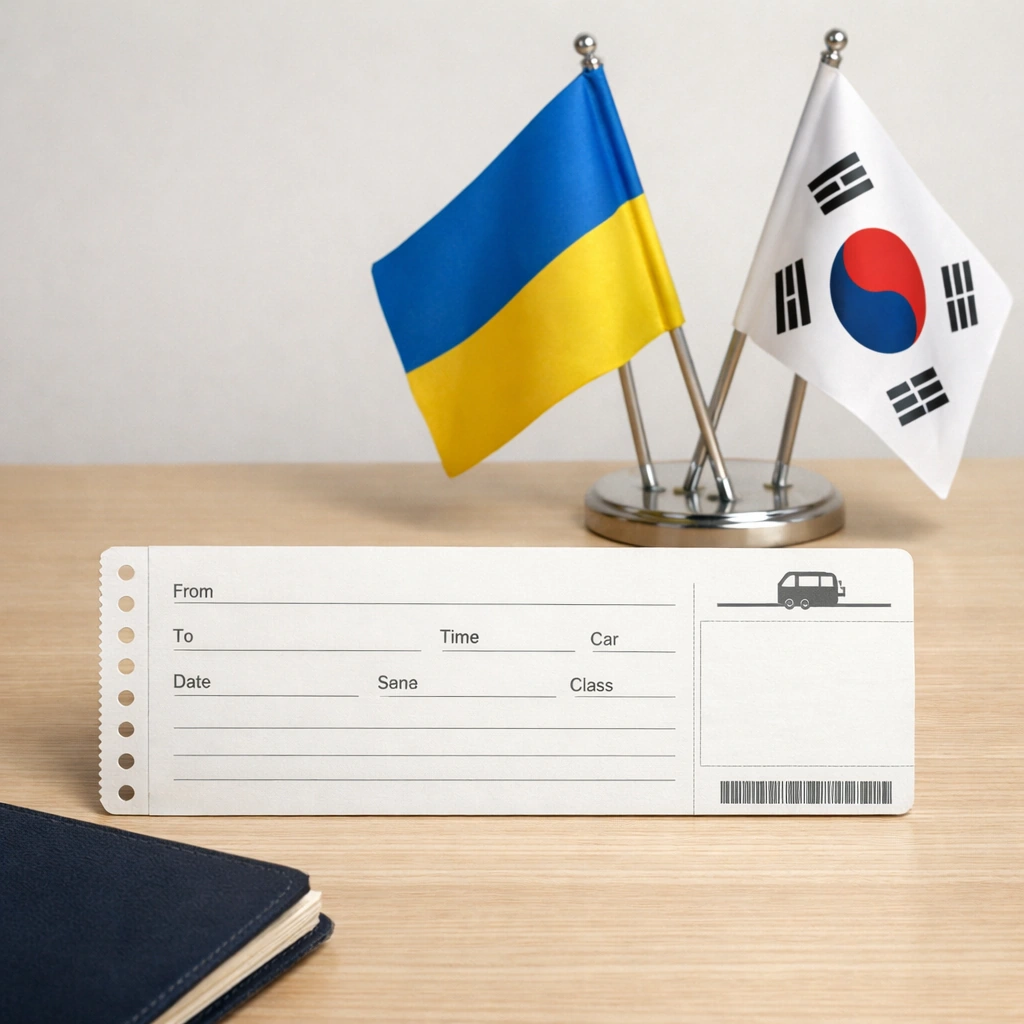
Key facts
Entry Rules for South Korea Citizens
South Korean citizens can enter Ukraine visa-free for up to 90 days within any 180-day period for tourism, business meetings, private visits, or transit. Entry is allowed with a valid passport only—national ID cards are not accepted for border crossing.
Border officers may ask standard questions about your itinerary and may request supporting documents (accommodation, return/onward tickets, funds, and insurance). If you plan to stay longer than 90 days, you must arrange a legal basis for a longer stay (for example, a temporary residence permit) before your visa-free days run out.
Required Documents
Prepare these items for a smooth border crossing:
- Passport (recommended: valid for at least 3 months after your planned departure).
- Travel medical insurance valid for Ukraine (mandatory for foreigners).
- Proof of purpose of travel: hotel booking, rental agreement, invitation letter (private or business), tour voucher, medical appointment documents, or transit tickets.
- Proof of sufficient funds for the full stay (cash, bank statement, bank card balance, prepaid accommodation, or a host’s guarantee letter).
- No active entry ban (checked by the State Border Guard Service).
Financial means formula used by border authorities (2026): FO = ((20 × Pm) ÷ 30) × (Kd + 5), where Pm = 3,209 UAH (subsistence minimum for 2026) and Kd is the number of days in Ukraine. Example: for 30 days, the minimum is 24,344 UAH.
Travel Insurance
Ukraine requires foreign visitors, including South Korean citizens, to have a medical insurance policy. Choose a policy that clearly covers:
- Outpatient and inpatient treatment
- Emergency care
- Medical evacuation and repatriation
- COVID-19-related medical expenses (if needed)
- War-related risks (recommended due to martial law and security conditions)
Buy and save your policy digitally and on paper so you can show it at the border and during check-ins. Many travelers arrange coverage online in advance via insurance-ukraine.com.
Safety
Ukraine remains under martial law, and the security situation can change quickly by region. Practical steps that help travelers:
- Check the curfew rules for the city/region you will visit and plan evening travel accordingly.
- Install the “Air Alarm” app for real-time air-raid alerts and follow local instructions.
- Carry your passport (or a copy plus original stored safely) and keep emergency contacts available.
- Do not photograph or film military sites, checkpoints, air defense, or troop movements.
Emergency number: dial 112 (single number for emergency services). Separate lines: 101 fire, 102 police, 103 ambulance, 104 gas emergency.
Customs
Green corridor is for items not subject to declaration/tax, but you must still comply with customs rules. Common allowances for travelers arriving from abroad include:
- Personal belongings
- Goods up to EUR 500 total value and up to 50 kg
- Food products (not for sale) up to EUR 200
- Cash up to EUR 10,000 (or equivalent) without written declaration; above this, be ready to show bank documents proving withdrawal from your account
- Medicines (non-narcotic/non-psychotropic): generally up to 5 packages of each medicine per person
Red corridor is required for items that must be declared (permit-required goods, higher-value goods, certain medicines, cultural values, larger cash amounts, etc.). Keep receipts for expensive items—customs may assess value if documents are missing.
Prohibited imports include narcotic/psychotropic substances, explosives/poisons, certain food products without certificates, materials promoting violence/racism/war or pornography, unidentified animals, wanted cultural property, and weapons (including gas sprays) without required permits.
Export rules: goods under EUR 10,000 can usually be exported without a written declaration; higher values require declaration. Certain categories (cultural/historical items, weapons, controlled substances) are restricted or prohibited. Some food products and medicines have strict limits; if you carry prescription medication, keep the prescription and original packaging.
Driving
Ukraine has right-hand traffic. If you drive, carry your driver’s license, passport, and vehicle registration documents. Seat belts are mandatory for the driver and front passenger.
Speed limits (typical):
- Residential/pedestrian zones: 20 km/h
- In settlements (cities/towns): 50 km/h
- Outside settlements: 90 km/h
- Divided highways: 110 km/h
- Motorways: 130 km/h
Car insurance: if entering with your own vehicle, arrange mandatory third-party liability coverage required in Ukraine. Consider additional coverage for damage and war-related risks; travelers often compare options online before arrival.
Foreign plates: foreign citizens may use a car with foreign license plates in Ukraine for up to one year for personal use. If you plan to stay longer than two months, you may need to contact an Interior Ministry service center for temporary registration requirements. After one year, the vehicle must leave Ukraine.
Checkpoints: slow down, follow instructions, and have documents ready. Turn off and remove dashcams/phones from visible recording positions when requested. Do not exit the car unless asked. Expect possible inspection of the trunk and interior.
Children in cars: children under 12 must use seat belts and appropriate child restraints; transporting children in the front seat without a child seat is prohibited. Children over 12 must wear seat belts.
Frequently asked questions
Do South Korean citizens need a visa for Ukraine in 2026?
No. South Korean citizens can enter visa-free for up to 90 days within any 180-day period, provided they meet entry requirements and have a valid passport.
What documents can prove the purpose of my trip at the Ukrainian border?
Common proofs include a hotel booking or rental agreement, an invitation letter (private or business), a tour voucher, medical appointment documents, or onward tickets if you are transiting.
Is travel medical insurance mandatory for Ukraine?
Yes. Foreign visitors must have medical insurance valid in Ukraine. Choose coverage that includes emergency care, hospitalization, repatriation, and preferably war-related risks.
How much money do I need to show to enter Ukraine?
Border officers may check funds using the 2026 formula FO = ((20 × 3,209 UAH) ÷ 30) × (days of stay + 5). For a 30-day trip, the minimum example amount is 24,344 UAH. Proof can be cash, bank statements, card balance, prepaid accommodation, or a host guarantee letter.
Can I extend my stay beyond 90 days without a visa?
You cannot simply “extend” visa-free days. To stay longer, arrange a legal basis such as a temporary residence permit, or leave Ukraine and wait until you have available days again within the 180-day rule.
What should I do if I overstay in Ukraine?
Overstaying can lead to fines, entry bans, and removal. Contact the State Migration Service as soon as possible to clarify your options and minimize penalties.
Are there COVID-19 entry restrictions for Ukraine in 2026?
No. Ukraine has no COVID-19 entry restrictions in 2026, but travel medical insurance is still required.
What is the main emergency number in Ukraine?
Dial 112 for emergencies. Separate lines: 101 fire, 102 police, 103 ambulance, 104 gas emergency.