In 2026, Ukraine’s western land borders remain open for Ukrainian citizens and foreign nationals who meet entry requirements. For many travelers coming from Europe, the most predictable way to arrive is to fly to a nearby hub in Poland, Slovakia, Hungary, Romania, or Moldova and continue by train or bus to Ukraine. The border itself is usually straightforward, but timing can be unpredictable: queues, additional inspections, and schedule changes can turn a “short crossing” into a long travel day.
This guide focuses on the practical realities of crossing into Ukraine by train or bus in 2026: how to choose between them, what to book early, what luggage is most often inspected, what onboard checks look like, and what to do if border delays make you miss a connection.
Train vs bus in 2026: time, comfort, reliability, and where delays happen
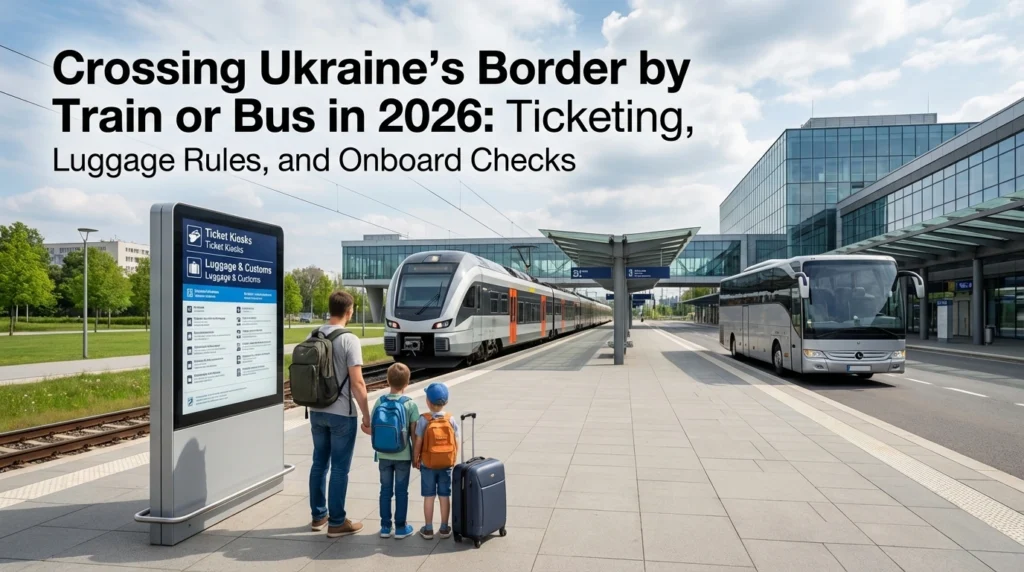
Both trains and buses cross the border daily, especially on routes via Poland and (less frequently) via Slovakia, Hungary, and Moldova. Your best choice depends on your priorities: sleep, predictability, budget, or flexibility.
Typical strengths of trains
- More comfortable for long distances: You can move around, use a restroom more easily, and (on night services) sleep in a berth.
- Weather and road-traffic resilience: Trains are less affected by road congestion, accidents, and winter road conditions.
- Border processing can happen onboard: On many international services, passport checks occur in your carriage, reducing the “everyone off the vehicle” stress.
Typical strengths of buses
- More departure options: Buses run frequently from border-region cities and major hubs, often with multiple operators per day.
- Direct routes to smaller cities: If your destination isn’t on a main rail line, a bus may be the simplest.
- Last-minute flexibility: It’s often easier to find a seat on a bus on short notice (outside peak dates), though comfort varies widely.
Where delays usually happen
- At the border checkpoint itself: Queue length, staffing, and security posture can change quickly.
- Secondary inspections: Random or targeted luggage checks, document clarifications, or vehicle inspections can add time.
- On bus routes: Delays can also occur before the border due to highway traffic, rest stops, and passenger boarding time.
- On train routes: Some services may have operational pauses for border procedures and technical operations (depending on route and rolling stock).
Practical choice rule: If you need to arrive by a specific hour (meeting, onward transport), choose a route that arrives the day before or build a large buffer. If you want the least physically tiring crossing, trains usually win. If you want the most route options and easy rebooking, buses often win.
Ticketing and seat selection: what to book early and what can be flexible
Border-crossing trips are easiest when your ticketing strategy matches the reality of delays. The key is to lock in what sells out, and keep flexibility where border time is unpredictable.
What to book early
- Night trains and popular weekend departures: These are the first to sell out, especially around holidays and school breaks.
- Lower-berth or specific comfort classes: If you care about sleeping quality, reserve the berth/seat you want as soon as it’s available.
- Cross-border segments with limited frequency: Some routes run only once daily (or less). Missing one can mean a long wait.
What can be flexible
- Domestic connections inside Ukraine: If you’re crossing by bus or a train that can be delayed, avoid tight same-day connections. Consider buying a domestic ticket later (or choose a later departure).
- City-to-border transfers: In Poland, Slovakia, Hungary, Romania, and Moldova, there are often multiple ways to reach the border region (regional trains, buses, shuttles). Keep options open.
Seat selection tips that matter at the border
- Bus: Seats near the front can reduce motion sickness and make it easier to hear driver instructions during checks. Seats near the aisle help if you need to access documents and small bags quickly.
- Train: If passport control is onboard, keep your passport and supporting documents in a small pouch you can reach without opening your main luggage.
Document readiness affects ticketing outcomes
Foreign nationals should travel with a valid passport and, if required, a visa. Border officers may ask for purpose of visit, accommodation details, return/onward plan, and proof of funds. A health insurance policy is commonly requested; many travelers arrange coverage in advance (for example via ) to avoid last-minute scrambling.
Luggage handling and customs screening: what gets inspected most often
Most travelers pass without any special issues, but inspections are a normal part of crossing. Your goal is to pack so that a check is quick, calm, and compliant.
How luggage checks typically work
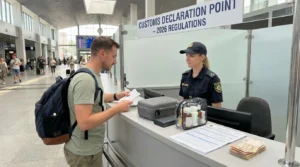
- Bus crossings: Officers may ask passengers to disembark, open the luggage compartment, and present specific bags for inspection. Sometimes all bags are lined up; sometimes only selected passengers are checked.
- Train crossings: Checks may happen in the carriage, with officers asking questions and occasionally requesting that you open a suitcase. In some cases, passengers may be directed to a separate inspection area.
What gets attention most often
- Large quantities of identical new goods: Multiple boxed electronics, stacks of new clothing with tags, or bulk cosmetics can look like commercial import.
- High-value items: Laptops, cameras, drones, and professional equipment may prompt questions about purpose and ownership.
- Medication: Especially prescription medications in large quantities or without original packaging. Carry prescriptions or a doctor’s note when possible.
- Cash and valuables: If you carry significant cash, be prepared to declare it if required and explain its purpose.
- Humanitarian/volunteer supplies: These are common in 2026. Pack an inventory list and any letters confirming the destination organization if you have them.
Pack to make inspections fast
- Use a “border pouch”: Passport, insurance, hotel address, invitation/volunteer letter (if relevant), and a pen in one place.
- Keep electronics accessible: Put laptops/cameras near the top of your bag so you can show them without unpacking everything.
- Separate new items from personal items: If you’re bringing gifts, keep them together with receipts if you have them.
- Label medications: Original boxes/blister packs help; avoid loose pills in unmarked bags.
Onboard checks: what to expect and how to answer
Questions are usually short and factual. Typical topics include: where you’re going in Ukraine, how long you’ll stay, where you’ll sleep, and what you do for work. Answer calmly and consistently. If you don’t understand a question, ask for it to be repeated. Keep your phone charged so you can show bookings or addresses if requested, but don’t rely on internet access at the border—save key documents offline.
What to do if you miss a connection due to border delays
Missed connections are one of the most common stress points on border-crossing days. The best approach is to plan for it and know your options before you’re standing on a platform with a departing train you can’t catch.
Before you travel: build a delay-proof plan
- Avoid tight connections: If your itinerary depends on a domestic train inside Ukraine, aim for a connection with a generous buffer or travel the next morning.
- Choose refundable or changeable fares when possible: Especially for onward travel on the same day.
- Save alternatives: Screenshot timetables for later trains/buses from your arrival city (e.g., Lviv, Uzhhorod, Chop, Chernivtsi) to your final destination.
If you miss a train connection
- Go to the station ticket office immediately: Explain that the delay was due to border control and ask about the next available service and exchange rules.
- Check for later departures from nearby stations: Sometimes a short taxi ride to a neighboring station opens more options.
- Consider an overnight reset: If it’s late, booking a simple hotel near the station can be safer than chasing multiple transfers at night.
If you miss a bus connection
- Contact the operator as soon as you can: Some companies will move you to the next bus if seats exist; others treat a missed departure as a new ticket.
- Use major hubs: From border-region cities, it may be easier to reach a larger terminal (e.g., Lviv) and re-route from there.
Keep a “border delay kit” for long waits
- Water and snacks that won’t spoil
- Power bank and charging cable
- Warm layer (buses can get cold during long stops)
- Small cash for toilets, food, or local transport
If your plans are time-sensitive (medical appointment, business event, onward international flight), consider arriving in the border region the day before and crossing early in the morning. It’s the simplest way to reduce the impact of unpredictable queues.
Border-crossing checklist (quick reference)
- Passport valid for your trip duration (and visa if required)
- Purpose-of-trip proof: hotel booking, invitation, itinerary, volunteer letter if relevant
- Health insurance suitable for Ukraine (carry digital + printed copy)
- Offline copies of key documents and addresses
- Pack for inspection: meds labeled, electronics accessible, gifts grouped
- Connection buffer or backup plan for delays
For travelers who want extra peace of mind, having a clear insurance policy and emergency contacts ready before you reach the checkpoint can make the entire crossing feel more controlled and less stressful.